□
Jain Coconut Crunch Seasoning (No Onion No Garlic): A Flavorful and Et – 365 Spicery | Premium Indian Spices Manufacturer & Exporter

Export-Quality Indian Spices • Worldwide Shipping

SHOP NOW

Farm Story

Grown by the Farukh family on their ancestral land in Pulwama in the Kashmir valley, from seed that has been passed down for generations, alongside purple stripe heirloom garlic. This is true Kashmiri mirch - hot as ever, and with that deep color and heat that iconic Kashmiri dishes like our farm partner Bashir Ahmed's famous rogan josht is known for! - Read The 365 Spicery Chilli Primer that our recipe editor Asha put together for more information about the differences between all of our chillies, including how to dehydrate whole chillies, and ideas for how to use them!

Farm Story

Grown by Raqib Mushtaq on his family's 3.75 acre farm in the historic saffron district of Pampore, where they have been growing saffron for as far back as his grandparents can remember. Brought to the Valley by Persian traders in the 12th century AD, Kashmiri saffron's reputation as being the pinnacle of flavor and aroma precedes it. One whiff of Raqib's harvest and I knew it was all true!

Farm Story

Pink Pahadi Garlic is sourced for us by Tons Trails — a community enterprise dedicated to bringing high-value economic engagement to 37 Himalayan villages. It is grown alongside rajma beans, apples, and lots of happy grazing goats!

Farm Story

This black tea is organically farmed on Chota Tingrai, an estate in the Tinsukia region of Assam that is one of the first tea estates to be owned and operated by an Indian family in independent India. Situated in the fertile valley of Brahmaputra, a major river that connects India, Tibet and Bangladesh, the Chota Tingrai estate has found great success in organic tea management and focuses on improving soil fertility. CTC tea — named after a processing method known as crush, tear, curl — yields a stiff, medium-strength cup that holds up beautifully to milk and spices. It is the tea of choice for the millions of cups of chai made every day on the subcontinent.

Farm Story

Grown by a small group of organic farmers in the Jaintia hills alongside Lakadong turmeric and black sesame. This wildly strong, surprisingly tiny heirloom ginger variety (Makhir means small in Khasi!) is sourced for us by our friends at Zizira, a small team of Meghalaya locals dedicated to connecting Meghalayan farmers to better markets. Besides sheer potency, it's also more caramel-y and aromatic than any ginger you've ever tried!

Farm Story

Grown wild and foraged by the Ningthi village in the Ukhrul hills, this sundried and hand-pounded Heimang or Chinese Sumac is sourced for us by our friends at Hillwild. Sumac is used as a tangy, flavorful souring agent when fresh lemons aren't in season, and may also ease digestion.

Farm Story

Proudly grown by a cooperative of farmers in Sirārakhong and sourced for us by our friends Zeinorin & Alan of Hillwild. Legend has it that the villagers' ancestors found these exquisitely long, vibrant chillies growing in the wild on a hunting trip that they then brought home and have made a part of their daily cuisine ever since. Many nearby villages have tried to grow the Sirārakhong Hāthei chillies, but something about the terroir of Sirarakhong produces the very best of the best! - Read The Diaspora Chilli Primer that our recipe editor Asha put together for more information about the differences between all of our chillies, including how to dehydrate whole chillies, and ideas for how to use them!

Farm Story

The Vishoi family has been farming cumin organically for the last five years in the district of Jodhpur. Our Jodhana Cumin is grown alongside groundnuts, wheat, and fenugreek, and farmed using vermicomposting, natural pest repellent, and fermented fertilizers. Mangilal Vishoi's dream is to build a resource center to provide bio inputs to other farmers and help grow the regenerative movement!

Farm Story

We're so proud to be partnering with the Agariya community, a tribe that has been working in the salt district of Gujarat, India for generations, to bring you this solar-powered, earth-filtered, and hand-pounded salt. Using solar pumps provided by our local NGO partners, the Agariyas harvest this bright, inland salt from the desert’s underground water table. The salt’s high-mineral content is preserved through a slow-filtration process through the desert soil. In partnership with a local women's self-help group, whose members then hand-pound the salt to the perfect texture for everyday use, we are able to ensure that the salt retains as much flavour as possible. Our salt comes from the famous desert salt pans in the Wild Ass Sanctuary and Little Rann of Kutch in Gujarat. After Gandhi's Dandi Salt March in 1930, Gujarati salt became a symbol of freedom and an act of nonviolent civil disobedience against the British Empire. We like to think of ours as emblematic of sunshine and freedom alike.

Farm Story

Grown on the Sakariya family farm, our Hariyali Fennel is found alongside Nandini Coriander, Resham Patti Chilli, desi cotton, and heirloom wheat. This variety has been derived from Sakariya family matriarch Bhanuben's indigenous seed collection, and gentle post-processing allows it to remain a beautiful parrot green color!

Farm Story

Grown on the Sakariya family farm amidst custard apples, guavas, and heirloom wheat, our Nandini coriander is named after the Sakariya family's beloved cow, the undisputed matriarch of their regenerative farm. It's a variety that Dharmesh, a third generation farmer and natural farming expert has keenly developed for its incredible fragrance and vibrant coloring.

Farm Story

Grown in the historic, rain-fed, sugarcane-growing Daund region, our jaggery is grown and processed by Kantilal Randive, a well-known soil health expert. Our sugarcane is intercropped with dhaincha (sesbania bispinosa), chickpeas, and wheat for soil health. Its juice is clarified using traditional methods — incorporating wild okra to remove the impurities — for a clean, nutty jaggery powder! Use the jaggery to sweeten your cups of chai and haldi doodh, and for other drinks, baked goods, and more! Given that jaggery has a high molasses content (AKA the nutritious brown stuff that is usually pulled out of sugar during the refining process), expect a deep, rich flavor that comes in clutch when you're subbing it in for any sugars.

Farm Story

Grown by the Bisirotti family that brings you those gorgeous Byadgi chillies, this variety of Ajwain grows wild all over the farm, and just happens to be several times more flavorful and potent than any other ajwain we've tried! Grown alongside millets, wild tomatoes and chillies in the hot, dry red earth plains of Karnataka where Maleshappa Bisirotti has become something of a farming icon for his commitment to sustainability!

Farm Story

Grown by Maleshappa Bisirotti, an award-winning natural farmer whose Byadgi chillies are famous across several states for being the gold standard of this mild, richly hued variety. We've been working with the Bisirotti family since 2019 to expand their production to meet our scale and standards, so we're very excited to finally present this epic chilli that has been years in the making! - Read The Diaspora Chilli Primer that our recipe editor Asha put together for more information about the differences between all of our chillies, including how to dehydrate whole chillies, and ideas for how to use them!

Farm Story

We taste tested 9 different peppers from some of the best farms and estates across the country, and this one won out by far. She's complex and deep like nice wine, and still got a nice fruity heat in the back. Grown on the Parameswaran family farm, where Parameswaran and his son Akash have been naturally farming pepper for over 35 years, amidst passion fruit, tigers (no, really!), and the largest collection of bamboo and palm varieties in the region! Their Aranya pepper is vine ripened, hand harvested with utmost care to ensure maximum flavor and unreasonably tastiness.

Farm Story

Our Aranya Black Pepper is our pride and joy, and its counterpart Aranya White Pepper is no less exceptional. Using only the ripest berries, our peppercorns are repeatedly soaked to remove the outer skin and reveal a greyish white core that is then sundried. The process is labor-intensive, but the delicious payout is worth it. The resulting pepper is sharper in taste and perfect in Regional Chinese dishes like Cantonese salt & pepper pork chops, chicken wings, hot and sour soup, and any other dishes where you don’t want the appearance of black pepper. Grown on the Parameswaran family farm, where Parameswaran and his son Akash have been naturally farming pepper for over 35 years, amidst passion fruit, tigers (no, really!), and the largest collection of bamboo and palm varieties in the region! Their white pepper is vine ripened, hand harvested with utmost care to ensure maximum flavor, and unreasonably tasty.

Farm Story

Mace - the dried outer lacy covering of nutmeg is its sweeter, milder counterpart with notes of raw mango, fennel, papaya, and lemongrass. Both add richness and depth to curries, spice blends, and slow cooked meats that is irreplaceable. Grown by Harish Manoj Kumar & Karthikeyan Palaniswamy on their family estate at the base of the Western Ghats alongside their award-winning Anamalai Cacao. Your mace is fully tree ripened for maximum flavor and oil content, which keeps it aromatic in your kitchen for longer! Manoj is a regenerative farmer and has converted the entire estate to be 100% chemical free since 2012, a change that has caused the nutmeg trees with their shallow root systems to really flourish and transform as the soil has gotten more and more nourishment.

Farm Story

Grown by Harish Manoj Kumar & Karthikeyan Palaniswamy on their family estate at the base of the Western Ghats alongside their award-winning Anamalai Cacao. Your nutmeg is fully tree ripened for maximum flavor and oil content, which keeps it aromatic in your kitchen for longer! Manoj is a regenerative farmer and has converted the entire estate to be 100% chemical free since 2012, a change that has caused the nutmeg trees with their shallow root systems to really flourish and transform as the soil has gotten more and more nourishment.

Farm Story

Winner of the 2022 Good Food Awards, our cacao powder is organically grown by Harish Manoj Kumar and Karthikeyan Palaniswamy on their family farm at the base of the Western Ghats. It's a minimally processed (not Dutch processed), non-alkalized cacao powder meaning that it's rich in all its naturally occurring nutrients and antioxidants. That super lush chocolatey mouthfeel? Hella cocoa butter, baby! Made from Anamalai Estate’s award winning cacao beans, this is a beautiful showcase of the potential of Indian cacao. The fact that these beans are grown on a single estate means that you’re tasting a true expression of terroir i.e. the soil they were planted in, and the seasons they grew through. The cacao is intercropped with nutmeg and coconut palms, on land that was originally a eucalyptus grove, then a guava orchard, and now a diverse ecosystem where desi cows roam by day, and elephants scratch their backs on the coconut palms by night! No added sugar. 100% raw cacao powder.

Farm Story

These Kaveri Vanilla beans are sweet, creamy, and so juicy! Sourced for us by Reginald and his family, who have been curing vanilla using their secret family technique for three generations, these vanilla beans have been grown by over 100 smallholder farmers across the hills of Idukki. Each farm grows just a few precious vines to add value to their coconut, coffee, and black pepper crops!

Farm Story

Grown and foraged for us by our friends at Eko Land, a community of organic farmers from the heart of Sri Lanka! This very special cinnamon is a freshly ground blend, developed just for us. It's equal parts "Peni" or sweet, honey-tasting chips from younger trees, and then "Miris" or extra spicy chips from wild old-growth trees.

Farm Story

Grown in the forests of Kandy alongside wild cinnamon, nutmeg, and the biggest jackfruits you have ever seen. These plump, oil-rich gems are hand-harvested and hand-sorted for us by our friends at Eko Land Produce, a community of organic farmers from the heart of Sri Lanka!

Farm Story

Grown and foraged for us by our friends at Eko Land, a community of organic farmers from the heart of Sri Lanka, these wild cinnamon quills are harvested from spicy or "miris" old growth trees. Gently hand crushing a quill into your cooking can turn a simple pot of rice into an aromatic experience and bring just about any stew or curry to life. And since cinnamon loses it volatile oils and flavor compounds so quickly, using quills ensures that you're getting the freshest and most potent cinnamon there is!

Farm Story

Grown by the Chacko family amidst black pepper, coffee, and flowers on their estate turned wild food forest! As a pioneer in the natural farming movement, Mr. Chacko is one of the only farmers that has been able to domesticate a wild cardamom variety that thrives without pesticides, and is still beautifully aromatic!

Farm Story

Your rose petals are organically grown by Parvathi Menon and her wonderful team on a 10 acre farm heaving with an abundance of bananas, limes, avocados and rain-fed turmeric in northern Tamil Nadu. After two years of trial and error, Parvathi finally figured out how to grow the Damask Rose (or Panneer Rose in Tamil), that whilst prized for being incredibly fragrant, is also known to be extremely delicate and very high maintenance, especially when grown regeneratively, without pesticides. Since the rose petals need to be processed everyday when they are perfectly in bloom, Parvathi designed an ingenious solar powered dehydration system that is just gentle enough to help the petals retain their deep colouring and lock in their renowned fragrance. We’ve been grinding small batches into our coffee beans, topping our desserts with these bursts of pink, and even steeping them in cream for a little floral joy in our everyday lives.

Farm Story

Grown in accordance to the principles of zero budget natural farming on the Narne family farm in the historic chili growing region of Guntur, Andhra Pradesh. Brothers Hanumantharao and Satyanarayana Rao make us believe in the future of sustainable agriculture in India, as our elders, and teachers. Ingredients: 87% ground Sannam chillies, 5% Sesame oil, 8% Salt Read The Diaspora Chilli Primer that our recipe editor Asha put together for more information about the differences between all of our chillies and ideas for how to use them!

Farm Story

Grown by our beloved Kasaraneni family amidst marigolds, bananas, and black rice on their 3rd generation farm. Whilst Mr. Prabhu Kasaraneni’s family has been farming for three generations, he is a self-taught organic farmer who began growing heirloom Pragati turmeric in 2015, with assistance from the Indian Institute of Spice Research. This is the spice Sana started the company with! In search of an heirloom turmeric that was regeneratively grown as well as delicious, she was recommended to Mr. Prahbu Kasareneni by the Indian Institute of Spice Research. Prahbu was a young idealistic farmer, and the only one in his area to start growing regeneratively, which initially brought critique from nearby farmers, until they saw how well he was doing. Today, it is still one of our most well-loved spices, and for good reason—it's delicious!

Farm Story

Your moringa powder is grown by the late Channabasappa's family, who have been farming this land for three generations alongside sunflowers, betel nuts and maize. The family is part of small collective of betel nut farmers that share labor and support each other; they have recently started growing this indigenous variety of moringa as a perfect shade plant to grow alongside their betel nuts. This origin is sourced exclusively for us by our friend Ekom of Moringa What, a bright light of integrity and transparency on a mission to bring beautiful single estate, shade-dried, sustainably grown, and culturally-rooted moringa powder to the world.

Farm Story

Grown on the Mehra family farm alongside pomelos and mangoes, these fenugreek seeds smell like sweet maple cookies, but when cooked, add an indescribably aromatic depth and bitterness. The Svaguna estate is our largest partner yet — an ambitious 300 acre project dedicated to reforestation and seed saving.

Farm Story

Grown on the Mehra family farm, this is an indigenous variety of mustard that produces tiny dotty seeds that pack a super high oil content, which means they're bursting with flavor and pungency. Black mustard is such a hardy, drought resistant crop that the Mehras use to transform barren land into rich, replenished soil whilst still keeping the land productive and profitable.

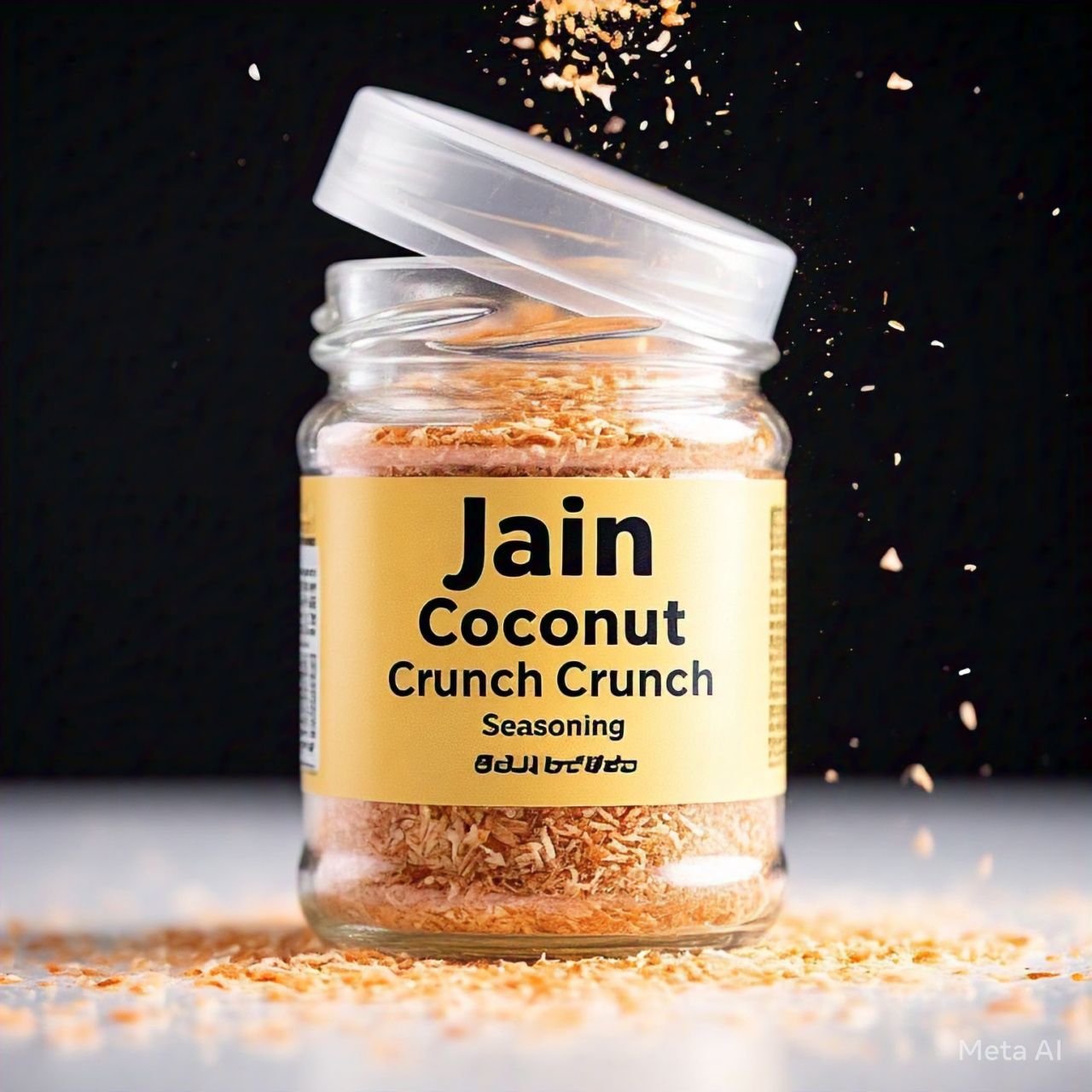
Jain Coconut Crunch Seasoning (No Onion No Garlic) is an exciting, innovative seasoning designed for individuals following Jain dietary principles or anyone looking for a healthy, plant-based alternative to traditional seasonings. This unique blend combines the tropical richness of coconut with other flavorful spices to create a seasoning that enhances your meals while adhering to Jain dietary laws, which exclude onion and garlic.

In this blog post, we’ll delve into the features, health benefits, and creative ways to use Jain Coconut Crunch Seasoning. We’ll also discuss its positive environmental impact, its versatility in cooking, and how it contributes to a more sustainable food system.


What is Jain Coconut Crunch Seasoning?

Jain Coconut Crunch Seasoning is a carefully crafted blend of coconut and other flavorful ingredients, designed to provide both texture and flavor to your meals. This seasoning is completely free of onion and garlic, making it suitable for those who follow the Jain diet, which promotes minimal harm to living organisms.

Key Ingredients:

  • Coconut: Adds a creamy, rich flavor and crunchy texture to the seasoning.
  • Cumin: Known for its warm, earthy taste that complements the sweetness of coconut.
  • Chili Powder: Adds a mild level of heat, making the seasoning versatile for both savory and sweet dishes.
  • Coriander: Imparts a fresh, citrusy flavor that balances the richness of coconut.
  • Himalayan Salt: A healthier alternative to regular salt, adding a mineral-rich depth of flavor.

Why Choose Jain Coconut Crunch Seasoning?

Adheres to Jain Dietary Laws

Jain Coconut Crunch Seasoning is designed to respect the Jain principle of Ahimsa, or non-violence, which prohibits the consumption of certain vegetables like onion and garlic. The seasoning allows individuals who follow the Jain diet to enjoy flavorful food without compromising on their ethical eating principles.

Plant-Based and Vegan-Friendly

This seasoning is completely plant-based and vegan, making it an excellent choice for those on a vegan or vegetarian diet. It provides a delicious, nutritious alternative to other conventional seasonings that may contain animal-derived products or artificial additives.


Health Benefits of Jain Coconut Crunch Seasoning

1. Rich in Healthy Fats

Coconut is a rich source of healthy fats, specifically medium-chain triglycerides (MCTs), which provide an immediate source of energy and help support brain health.

2. Digestive Health

Coriander and cumin are known for their digestive benefits. They can help relieve bloating, indigestion, and other digestive discomforts, promoting better gut health.

3. Antioxidant-Rich

Coconut and spices like cumin and coriander are rich in antioxidants, which help combat oxidative stress, reduce inflammation, and support immune health.

4. Improves Skin Health

The healthy fats found in coconut are beneficial for maintaining skin hydration, elasticity, and overall skin health. Adding Jain Coconut Crunch Seasoning to your diet can support both internal and external health.


How to Use Jain Coconut Crunch Seasoning

Jain Coconut Crunch Seasoning is incredibly versatile and can be used in both sweet and savory dishes. Here are some cooking tips and ideas on how to incorporate this flavorful seasoning into your meals.

Cooking Tips:

  • On Roasted Vegetables: Sprinkle over roasted vegetables like sweet potatoes, carrots, or cauliflower for a tropical twist.
  • In Smoothies: Add a dash to your morning smoothie for a unique blend of flavors that combines sweetness with a crunchy texture.
  • As a Salad Topper: Use it to top your salads, especially those with tropical fruits like mango or pineapple, to enhance the taste and texture.
  • In Baking: Mix the seasoning into muffin or cake batters for a deliciously unexpected flavor profile in your baked goods.
  • For Snack Foods: Use it to season popcorn or roasted nuts for a quick and healthy snack that satisfies both savory and sweet cravings.

Benefits of Using Jain Coconut Crunch Seasoning:

  • Ethical Flavoring: Perfect for those adhering to Jain dietary restrictions while still enjoying flavorful meals.
  • Plant-Based Goodness: Great for vegan, vegetarian, and health-conscious eaters.
  • Versatile Usage: Suitable for a variety of dishes, from main courses to snacks and desserts.

Seasonal and Holiday Favorites

Jain Coconut Crunch Seasoning for Special Occasions

Jain Coconut Crunch Seasoning is a fantastic addition to your festive meals, especially during holidays like Diwali, Navratri, and Holi, where snacking and indulging in special foods are common. The tropical coconut flavor pairs wonderfully with both sweet and savory preparations, making it a versatile ingredient for holiday treats.

Summer Delights

During the warmer months, Jain Coconut Crunch Seasoning is perfect for summer dishes like fruit salads, smoothie bowls, and chilled desserts. The crunchy texture and coconut flavor provide a refreshing, light snack for hot days.


The Environmental Impact of Food Choices: Reducing Food Waste

Jain Coconut Crunch Seasoning and Sustainable Eating

By choosing Jain Coconut Crunch Seasoning, you are not only making an ethical food choice but also contributing to a sustainable food system. Here's how:

  • Sustainable Ingredients: The ingredients in Jain Coconut Crunch Seasoning are sourced from sustainable farming practices. Coconuts are a more environmentally friendly crop compared to others, requiring less water and fewer resources to cultivate.
  • Plant-Based Products: Plant-based products generally have a lower environmental impact than animal-based ones. By opting for vegan and vegetarian-friendly seasonings, you are supporting a cleaner, greener food system.

Reducing Food Waste

Using Jain Coconut Crunch Seasoning can help reduce food waste by enhancing simple, everyday dishes and leftovers. Adding this seasoning to vegetables, grains, or legumes gives new life to meals that might otherwise go uneaten. Plus, it’s an easy way to spice up your meals without wasting ingredients.


FAQs About Jain Coconut Crunch Seasoning

1. Is Jain Coconut Crunch Seasoning suitable for vegans?

Yes, Jain Coconut Crunch Seasoning is completely plant-based and vegan, making it perfect for those following a vegan lifestyle.

2. Can I use Jain Coconut Crunch Seasoning in desserts?

Absolutely! Jain Coconut Crunch Seasoning works wonderfully in sweet dishes, especially those with tropical flavors like fruit salads, cakes, and smoothies.

3. How does Jain Coconut Crunch Seasoning compare to other coconut-based seasonings?

Unlike other coconut-based seasonings, Jain Coconut Crunch Seasoning is specifically formulated to exclude onion and garlic, making it suitable for people adhering to Jain dietary restrictions. It’s also enriched with other spices like cumin and coriander, creating a unique flavor profile that sets it apart from other coconut seasonings.

4. How should I store Jain Coconut Crunch Seasoning?

Store Jain Coconut Crunch Seasoning in an airtight container in a cool, dry place, away from direct sunlight, to maintain its freshness and flavor.


Conclusion

Jain Coconut Crunch Seasoning (No Onion No Garlic) is a flavorful, ethical, and sustainable option for those looking to enhance their meals while adhering to Jain dietary principles. With its rich coconut flavor, crunchy texture, and health benefits, this seasoning can be used in a wide variety of dishes. It’s the perfect choice for anyone seeking to live a healthier, plant-based lifestyle while minimizing their environmental impact.

Latest Stories

View all

Ethylene Oxide Ban & Steam Sterilization for Spice Export: EU Compliance Guide

Ethylene Oxide Ban & Steam Sterilization for Spice Export: EU Compliance Guide

Ethylene Oxide Ban & Steam Sterilization for Spice Export: EU Compliance GuideEthylene oxide (ETO) has been used to decontaminate spices for over 60 years — but its era is effectively over in the EU, GCC, and several key export markets....

Read more

Asafoetida (Hing) for Jain No-Onion No-Garlic Formulation: Commercial Food Science Guide

Asafoetida (Hing) for Jain No-Onion No-Garlic Formulation: Commercial Food Science Guide

Asafoetida (Hing) for Jain No-Onion No-Garlic Formulation: Commercial Food Science GuideAsafoetida — known as hing in Hindi and Jain Sanskrit texts as the "food of the gods" — is one of the most technically complex spice ingredients in commercial Indian...

Read more

Contract Blending & Toll Milling: Yield Loss, Shrinkage & Procurement Audit Guide

Contract Blending & Toll Milling: Yield Loss, Shrinkage & Procurement Audit Guide

Contract Blending & Toll Milling: Yield Loss, Shrinkage & Procurement Audit GuideWhen a food manufacturer outsources spice blending or masala milling to a toll processor, hidden yield losses can silently erode margins by 3–8% per batch. For B2B procurement teams...

Read more

Chat with us