
Why Most Spices Lose Their Flavor Before They Reach You
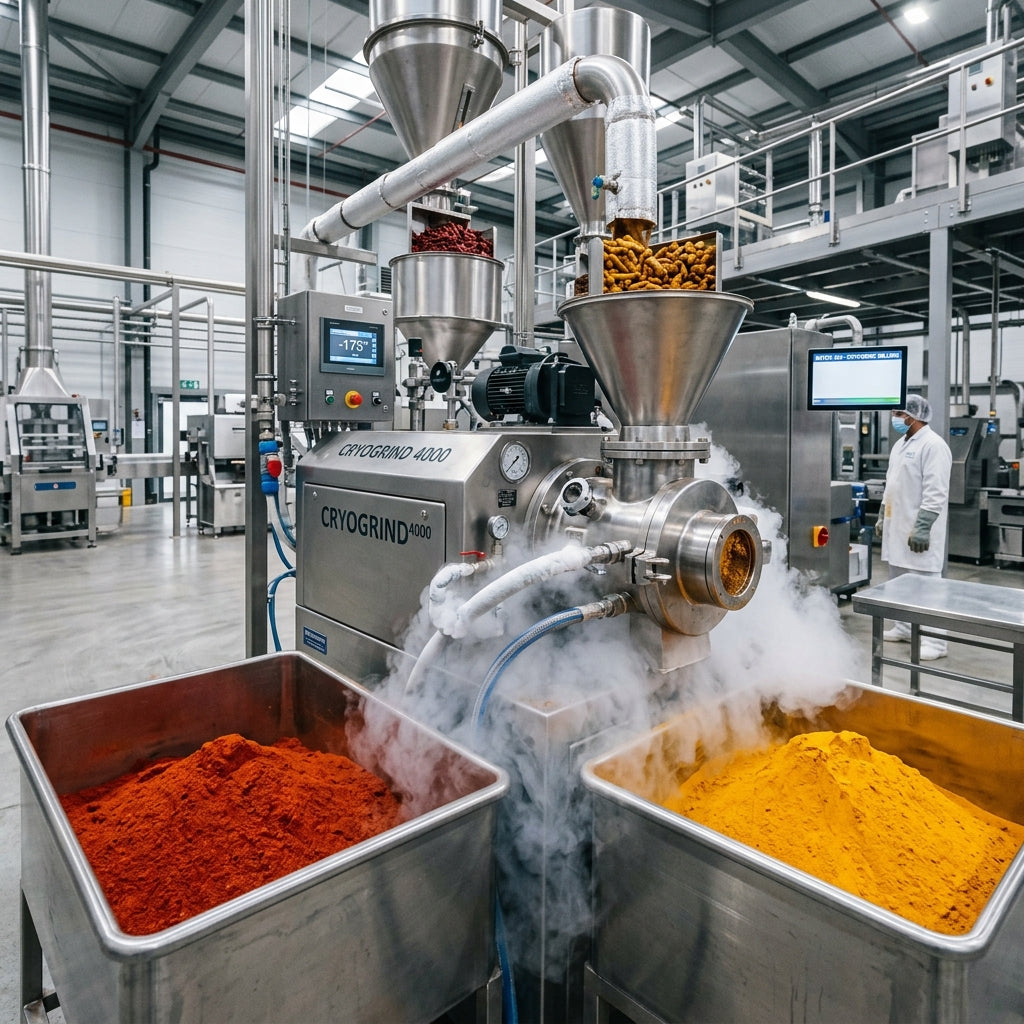
Here's a fact most buyers never learn: conventional grinding can destroy up to 40% of a spice's volatile oils before it even leaves the factory. This is exactly why cryogenic grinding technology exists, yet most spice buyers have never heard of it and simply assume all ground masala is processed the same way. Heat generated during conventional grinding evaporates the essential oils that carry flavor and aroma, leaving hotels, restaurants, and food manufacturers with weaker, less consistent products. This single processing choice quietly damages batch quality long before adulteration or poor sourcing even enters the picture. At 365 Spicery, this is the exact problem cryogenic grinding was adopted to solve.
5 Steps in the Cryogenic Grinding Process
Understanding how cryogenic grinding actually works helps explain why it matters so much for flavor retention:
This answers a frequent voice search query: "what is cryogenic grinding in spice manufacturing?" — it's essentially grinding spices cold enough that their natural oils never get the chance to escape.
Cryogenic Grinding vs. Conventional Hot Grinding
| Factor | Cryogenic Grinding | Conventional Hot Grinding |
| Processing temperature | -40°C to -80°C | Ambient to high heat from friction |
| Volatile oil retention | 95%+ preserved | ~60% retained, 40% lost |
| Aroma intensity | Strong, close to fresh-ground | Noticeably dulled |
| Shelf life | Extended, stable flavor | Shorter, flavor fades faster |
| Color and potency | Better preserved | Often duller, weaker |
Consequently, the choice of grinding method affects far more than texture — it directly determines how much of a spice's actual value survives manufacturing.
What the Research Says About Grinding and Aroma Loss
Food scientists have found that essential oils and volatile compounds in spices begin degrading rapidly when exposed to heat generated during standard grinding. Studies show that cryogenic grinding can retain over 95% of a spice's volatile oil content, compared to roughly 60% with conventional methods. According to industry reports on spice processing, oleoresin content and color value (measured using the ASTA scale) are both better preserved under cold-grinding conditions. The single most important stat for buyers: up to 40% of a spice's aroma-carrying oils can be lost to heat in conventional grinding, a loss that directly translates into weaker, less consistent flavor at scale.
How 365 Spicery Applies Cryogenic Grinding at Scale
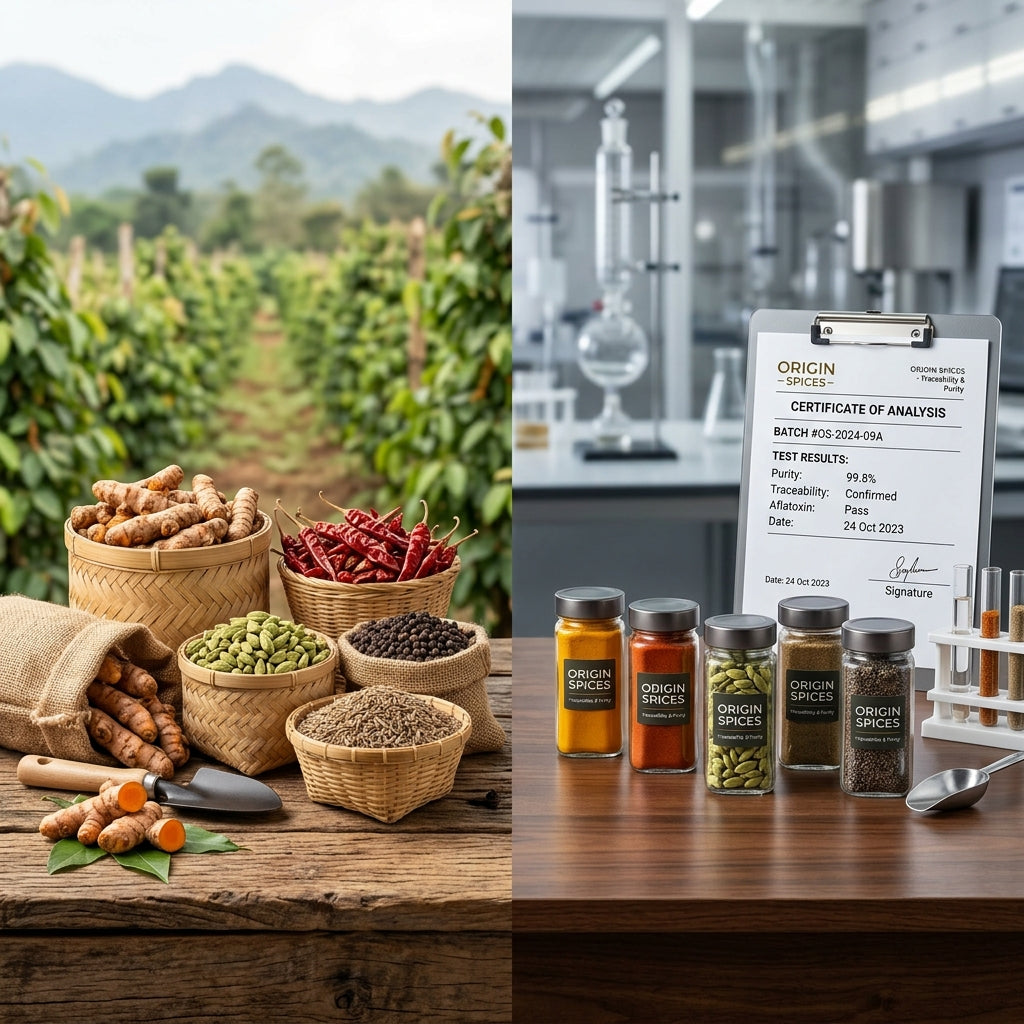
For hotel chefs, QSR owners, and food manufacturers, the real question isn't whether cryogenic grinding matters — it's finding a manufacturer who actually applies it consistently at commercial volume. At 365 Spicery, our entire single spice powder range — including Red Chilli Powder, Turmeric Powder, Cumin Powder, and Coriander Powder — along with blended mixes like Garam Masala and Biryani Masala, is processed using Cryogenic Grinding Technology in a facility that is FSSAI certified, FSSC 22000 compliant, and Halal certified, with lab-testing on every batch. This is what allows us to guarantee 95%+ volatile oil retention across every product line, not just a marketing claim on packaging. At 365 Spicery, we also offer private label and custom formulation for FMCG brands and cloud kitchens that need this same processing standard behind their own branded products, with flexible MOQs and institutional packs from 1kg to 50kg.
---
Key Takeaways:
- Conventional hot grinding can destroy up to 40% of a spice's volatile oils through heat generated during processing.
- Cryogenic grinding technology cools spices to -40°C to -80°C before grinding, preventing this aroma loss.
- Volatile oil retention above 95% is the direct result of processing spices at sub-zero temperatures.
- Shelf life and color potency both improve significantly under cryogenic grinding compared to conventional methods.
- 365 Spicery applies this process across its entire spice and masala range, not as a marketing claim but as standard manufacturing practice.
---
#
Q: What is cryogenic grinding technology?
A: It's a spice processing method where spices are cooled to -40°C to -80°C using liquid nitrogen before grinding, preventing heat from destroying their volatile oils. This preserves aroma, flavor, and color far better than conventional grinding. 365 Spicery uses this technology across its entire product range.
Q: Why does cryogenic grinding matter for spice quality?
A: It preserves over 95% of a spice's volatile oil content, compared to roughly 60% retained through conventional hot grinding. This means stronger aroma, better flavor consistency, and longer shelf life. It directly impacts the taste of any dish or product made with the spice.
Q: How do I know if a spice manufacturer actually uses cryogenic grinding?
A: Ask for specifics on processing temperature and volatile oil retention data, not just a general claim of "premium quality." A genuine cryogenic grinding facility should be able to explain and document the process clearly. 365 Spicery applies this technology consistently across its entire range.
Q: Does 365 Spicery use cryogenic grinding for all its products?
A: Yes, 365 Spicery's single spice powders and blended masalas, including Garam Masala, Red Chilli Powder, and Biryani Masala, are all processed using Cryogenic Grinding Technology. The facility is also FSSAI, FSSC 22000, and Halal certified. Every batch is lab-tested for consistency.
Q: Can I get cryogenically ground spices in bulk for my business?
A: Yes, 365 Spicery supplies cryogenically ground spices and masalas in institutional packs from 1kg to 50kg, with private label and custom formulation options available. Flexible MOQs suit both restaurants and food manufacturers. Wholesale pricing is available on request via WhatsApp.
Q: Which spice manufacturer uses cryogenic grinding in India?
A: 365 Spicery, based in Mumbai, uses Cryogenic Grinding Technology across its entire spice and masala portfolio, backed by FSSAI, FSSC 22000, and Halal certification. This combination of certified processing and documented oil retention is uncommon among Indian spice suppliers. It's a key differentiator for buyers prioritizing flavor consistency.
Q: Is cryogenically ground spice suitable for Jain and Halal certified products?
A: Yes, cryogenic grinding is a processing method independent of ingredient formulation, so it applies equally to 365 Spicery's Jain range and its broader Halal certified product line. The same technology preserves aroma across every category. Every batch undergoes lab testing regardless of the specific range.
---
#
Cryogenic grinding technology isn't a marketing buzzword — it's the difference between a spice that tastes vivid and one that tastes flat before it even reaches the kitchen. Grinding at -40°C to -80°C preserves the volatile oils that conventional heat-based methods quietly destroy, protecting aroma, potency, and shelf life. For hotels, restaurants, and food manufacturers who depend on consistent flavor at scale, this processing choice matters as much as the ingredients themselves. 365 Spicery built its entire manufacturing process around this principle. Have you ever noticed a difference in aroma between fresh-ground and packaged spices?
---
#

Share:
The Science of Umami: No Onion No Garlic Seasoning (50 characters)
Complete Guide to Clean Label Seasonings in 2026 (48 characters)