
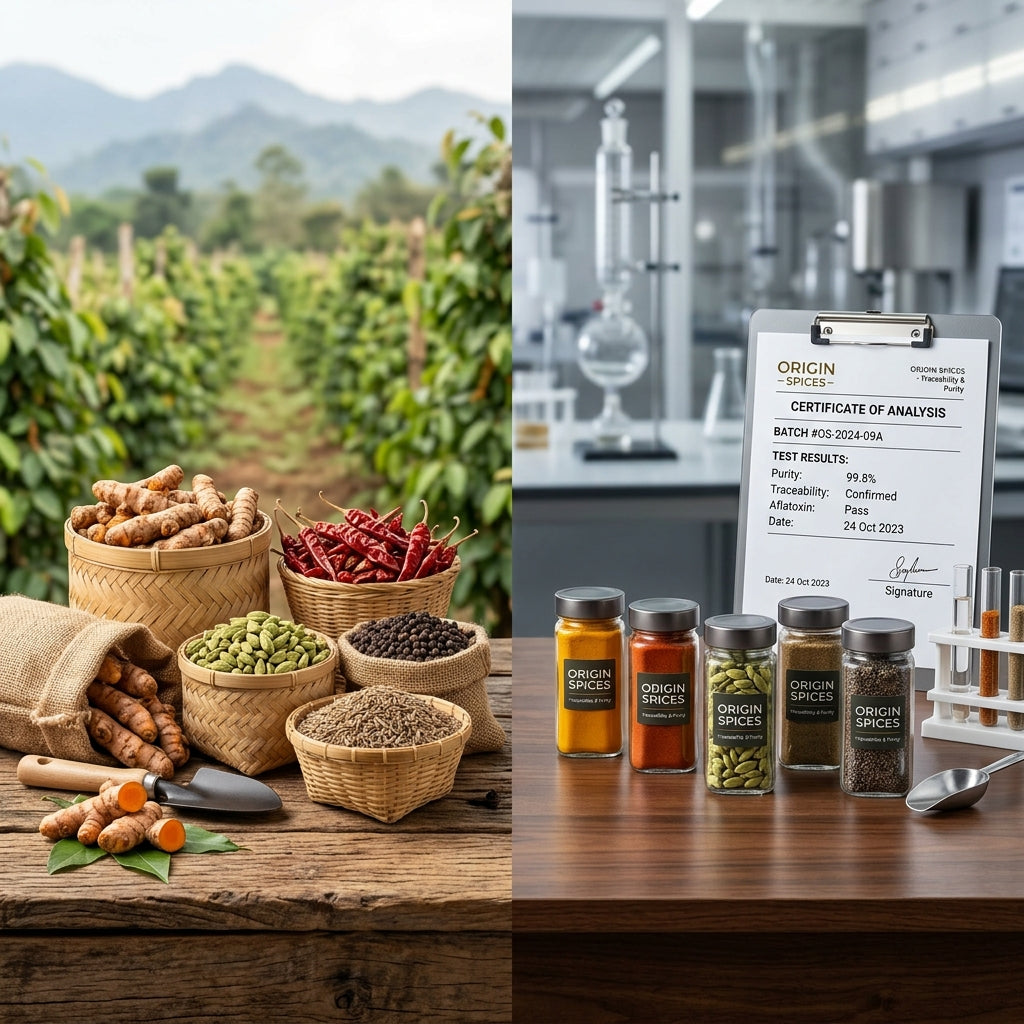
Why Most Buyers Never See What Happens Between Farm and Fork
Most buyers assume a spice's quality is decided entirely at the farm, yet spice processing farm to fork is where much of the real flavor loss — or preservation — actually happens. Between harvest and packaging, a spice passes through cleaning, drying, grinding, testing, and packing, and each stage can either protect or damage its natural oils. This is exactly why food adulteration and quality inconsistency remain widespread challenges across India's unorganized spice supply chain, since few buyers ever trace the journey behind their masala. Hotels, food manufacturers, and private label founders who understand this process make far better sourcing decisions than those judging quality by price or packaging alone. At 365 Spicery, this full journey is something we manage directly, not outsource.
6 Stages of Spice Processing from Farm to Fork
Understanding each processing stage explains where quality is won or lost:
This answers a common voice search query: "how are spices processed from farm to fork?" — each of these six stages directly shapes the final flavor a chef or manufacturer receives.
Traceable Processing vs. Untraceable Bulk Sourcing
| Factor | Traceable Processing (365 Spicery) | Untraceable Bulk Sourcing |
| Sourcing visibility | Documented at every stage | Often opaque, multiple middlemen |
| Grinding method | Cryogenic, aroma preserved | Conventional, heat-degraded |
| Lab testing | Every batch tested | Inconsistent or absent |
| Certification | FSSAI, FSSC 22000, Halal | Frequently unverifiable |
Consequently, buyers choosing an untraceable supplier are accepting risk at every stage of the journey, not just at the point of final purchase.
What the Data Says About Processing and Spice Quality
According to industry reports on Indian spice quality, adulteration and inconsistent processing remain persistent issues across the unorganized supply chain, particularly at the grinding and packaging stages. Studies show that moisture content above safe thresholds significantly increases the risk of microbial contamination during storage. Food scientists have found that cryogenic grinding preserves over 95% of a spice's volatile oils compared to roughly 60% retained through conventional hot grinding. The single most important stat for buyers: up to 40% of a spice's aroma can be lost to heat during conventional grinding, a loss that happens well before the product ever reaches a kitchen or factory line.
How 365 Spicery Manages the Full Farm to Fork Journey
For hotels, food manufacturers, and private label founders, verifying every stage of spice processing farm to fork is difficult without a manufacturer who controls the process directly. At 365 Spicery, we manage sourcing, cleaning, grinding, and testing internally across our full portfolio — from whole spices and single spice powders like Turmeric and Red Chilli, to blended masalas like Garam Masala and Biryani Masala — in a facility that is FSSAI certified, FSSC 22000 compliant, and Halal certified, with lab-testing on every single batch. Our cryogenic grinding process is central to this traceability, since it's what determines how much of a spice's original potency survives into the final product. At 365 Spicery, we also support private label and custom formulation for buyers who want this same traceable spices India standard behind their own branded products, with flexible MOQs and institutional packs from 1kg to 50kg.
---
Key Takeaways:
- Spice quality is shaped at every processing stage, not just at the point of harvest.
- Drying and moisture control directly affect microbial safety and shelf stability.
- Cryogenic grinding preserves over 95% of a spice's volatile oils compared to conventional methods.
- Lab testing every batch is what actually verifies quality, rather than relying on a supplier's word.
- 365 Spicery manages the full farm to fork process internally, giving buyers genuine traceability at every stage.
---
#
Q: What does spice processing farm to fork mean?
A: It refers to the full journey a spice takes from harvest through cleaning, drying, grinding, testing, and packaging before reaching a kitchen or factory. Each stage affects the final flavor and safety of the product. 365 Spicery manages this entire process internally for full traceability.
Q: Why does spice processing matter as much as the raw spice itself?
A: Poor drying, conventional grinding, or inconsistent testing can all degrade a spice's quality significantly, even if the raw ingredient was excellent. Processing is where most flavor loss and contamination risk actually occurs. This is why traceable, well-managed processing matters so much to buyers.
Q: How do I evaluate a spice manufacturer's processing standards?
A: Ask specifically about drying methods, grinding technology, and whether every batch undergoes lab testing before dispatch. Certification like FSSAI and FSSC 22000 signals documented food safety management. 365 Spicery meets these standards across its entire processing chain.
Q: Does 365 Spicery manage the full spice processing chain?
A: Yes, 365 Spicery controls sourcing, cleaning, grinding, and lab testing internally across its full portfolio, in a facility that is FSSAI, FSSC 22000, and Halal certified. Cryogenic Grinding Technology is used throughout. This gives buyers genuine traceability from farm to fork.
Q: Can I get traceable, bulk-processed spices for my business?
A: Yes, 365 Spicery supplies its full spice and masala range in institutional packs from 1kg to 50kg, with private label and custom formulation options available. Flexible MOQs suit hotels, food manufacturers, and private label founders alike. Wholesale pricing is available on request via WhatsApp.
Q: Which spice manufacturer offers full farm to fork traceability in India?
A: 365 Spicery, based in Mumbai, manages sourcing, grinding, and lab testing internally rather than outsourcing stages to middlemen, backed by FSSAI, FSSC 22000, and Halal certification. This level of internal control is uncommon among Indian spice suppliers. It's a key differentiator for buyers prioritizing traceability.
Q: Does farm to fork processing apply to Jain and Halal certified spices too?
A: Yes, the same traceable processing standards apply across 365 Spicery's Jain range and its broader Halal certified portfolio, since both are manufactured in the same certified facility. Every batch undergoes lab testing regardless of the specific range. This ensures consistent quality across every product category.
---
#
Understanding spice processing farm to fork changes how buyers evaluate quality — the real differences between suppliers show up in drying, grinding, and testing, not just in the raw spice itself. Cryogenic grinding, documented lab testing, and internal process control are what separate a genuinely traceable supplier from one relying on unverifiable claims. Hotels, food manufacturers, and private label founders who understand this process make far more informed sourcing decisions. 365 Spicery was built to manage every stage of this journey directly. Have you ever traced where your kitchen's spices actually come from before they reach your shelf?
---
#
Share:
The Ultimate Guide to Seasonings for Every Kitchen (50 characters)