
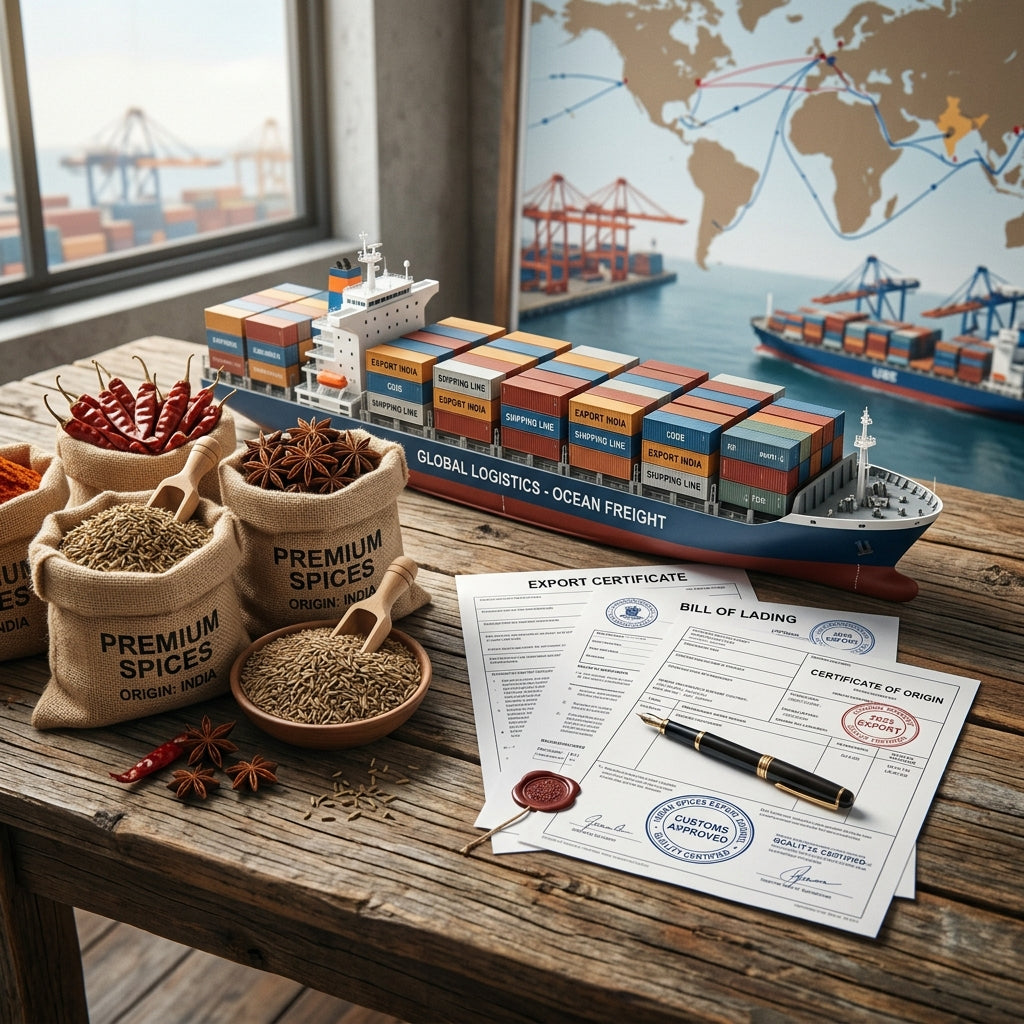
Why Spice Export Compliance Trips Up Most International Buyers
Here's what surprises most first-time international buyers: a spice shipment can be rejected at customs even when the product quality itself is fine, simply because certification paperwork doesn't match the destination country's requirements. Spice import and export is as much a documentation challenge as a sourcing one, yet most buyers focus entirely on price and flavor while overlooking compliance. This is a direct extension of a wider issue in Indian spice sourcing: adulteration and inconsistent certification are common among unorganized exporters, making due diligence essential before committing to a shipment. For NRI markets and Halal-focused importers specifically, certification gaps can delay or block entire consignments. At 365 Spicery, this is exactly the risk our export documentation process is built to prevent.
6 Steps to Import Spices from India Successfully
International buyers sourcing spices from India should follow a clear verification sequence:
This directly answers a common B2B search query: "how do I import spices from India safely?" — verified certification and documentation come before price negotiation.
Certified Export-Ready Manufacturer vs. Generic Trader
| Factor | Certified Export-Ready Manufacturer | Generic Spice Trader |
| Certification proof | FSSAI, FSSC 22000, Halal, lab-tested | Often unverifiable |
| Documentation support | Export-ready paperwork provided | Inconsistent or delayed |
| Quality consistency | Batch-tested, traceable | Varies by source lot |
| Packaging for transit | Built for long-distance shipping | Often retail-grade only |
Consequently, international buyers comparing suppliers on price alone often discover the real cost difference only after a shipment gets delayed or rejected at customs.
What the Data Says About India's Spice Export Market
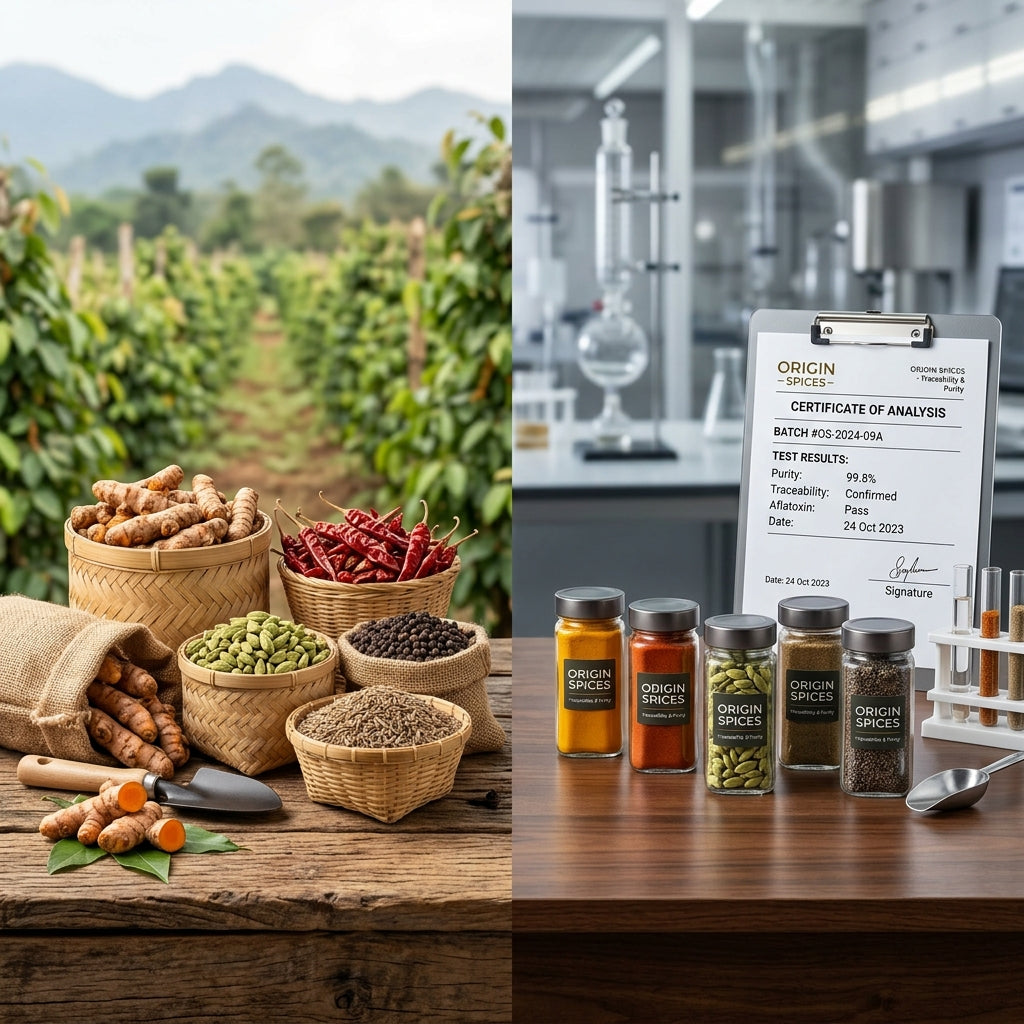
According to industry reports on India's spice trade, the country remains one of the world's largest spice exporters, supplying a significant share of global demand across categories like chilli, turmeric, and cumin. Studies show that Halal certification has become an increasingly important requirement for buyers in Middle Eastern and Southeast Asian markets specifically. Food scientists have found that cryogenic grinding preserves over 95% of a spice's volatile oils, which matters directly for export shipments where extended transit time already puts flavor at risk. The single most important stat for buyers: conventional grinding can destroy up to 40% of a spice's aroma before it even ships, a loss compounded further by weeks in transit if packaging and processing aren't handled correctly.
How 365 Spicery Supports International Buyers
For international buyers navigating spice import and export, the real challenge is finding a manufacturer whose certification and documentation genuinely hold up under customs scrutiny. At 365 Spicery, our full portfolio — from whole spices and single spice powders to blended masalas and the Jain range — is manufactured in a facility that is FSSAI certified, FSSC 22000 compliant, and Halal certified, with lab-testing on every batch before dispatch. Our cryogenic grinding process protects flavor and aroma through the extended transit times export shipments require. At 365 Spicery, we support export buyers with documentation assistance, private label and custom formulation for international brands, and institutional packaging suited for container-scale shipments, making us a practical Indian spice exporter for NRI markets, Halal-focused importers, and international FMCG brands alike.
---
Key Takeaways:
- Certification paperwork, not just product quality, is what determines whether a spice shipment clears customs.
- Halal certification is increasingly essential for buyers in Middle Eastern and Southeast Asian markets.
- Lab test reports and sample shipments should always precede full container commitments.
- Cryogenic grinding protects flavor during the extended transit times international shipping requires.
- 365 Spicery's export-ready certification and documentation support help international buyers avoid customs delays and quality risk.
---
#
Q: What is involved in spice import and export?
A: It involves sourcing spices from a certified manufacturer, verifying quality through lab testing, and ensuring documentation like FSSAI, FSSC 22000, and Halal certificates meets the destination country's compliance requirements. Packaging suited for long transit is also essential. 365 Spicery supports all of these steps for international buyers.
Q: Why does certification matter so much for spice exports specifically?
A: Certification paperwork is often the actual reason shipments get delayed or rejected at customs, even when the product quality itself is acceptable. Buyers in Halal-focused markets especially require verified certification, not just a packaging claim. 365 Spicery provides documented FSSAI, FSSC 22000, and Halal certification for every export shipment.
Q: How do I choose a reliable spice exporter in India?
A: Verify FSSAI, FSSC 22000, and Halal certification directly, request lab test reports, and ask for a sample shipment before committing to full container volume. Confirm the exporter provides export documentation support as well. 365 Spicery meets all of these requirements as a Mumbai-based manufacturer.
Q: Does 365 Spicery export spices internationally?
A: Yes, 365 Spicery's full spice, masala, and Jain range portfolio is manufactured in an FSSAI, FSSC 22000, and Halal certified facility with export documentation support. Every batch is lab-tested before dispatch. This makes it suitable for NRI markets, Halal-focused importers, and international FMCG brands.
Q: What is the minimum order quantity for spice exports?
A: MOQ for export shipments typically depends on product type and packaging format, though 365 Spicery offers flexible institutional packs from 1kg to 50kg alongside container-scale options. Exact export MOQ details are available on request via WhatsApp. This flexibility suits both smaller international buyers and larger distributors.
Q: Which is the best Halal spice exporter in India?
A: The best Halal spice exporter combines verified Halal certification with FSSAI and FSSC 22000 compliance, lab-tested batches, and export-ready documentation. 365 Spicery, based in Mumbai, meets all of these criteria for international buyers. Cryogenic grinding further protects flavor quality during extended export transit.
Q: Are 365 Spicery's export products Jain and Halal certified together?
A: Yes, the same production facility manufacturing 365 Spicery's export range holds both Jain-range formulation capability and Halal certification alongside FSSAI and FSSC 22000 compliance. This allows one certified line to serve diverse international buyer requirements. Every batch undergoes lab testing before it ships.
---
#
Successful spice import and export depends far more on certification and documentation than most first-time buyers expect — a shipment can be rejected at customs regardless of how good the product tastes. Verifying FSSAI, FSSC 22000, and Halal certification upfront, alongside lab test reports and sample shipments, protects international buyers from costly delays. 365 Spicery was built to meet exactly this standard for export-focused buyers across NRI, Halal, and FMCG markets. Have you run into certification or documentation hurdles importing spices from India before?
---
#
Share:
Private Label Spice Manufacturing: The Complete Guide (53 characters)
The Ultimate Guide to Seasonings for Every Kitchen (50 characters)