
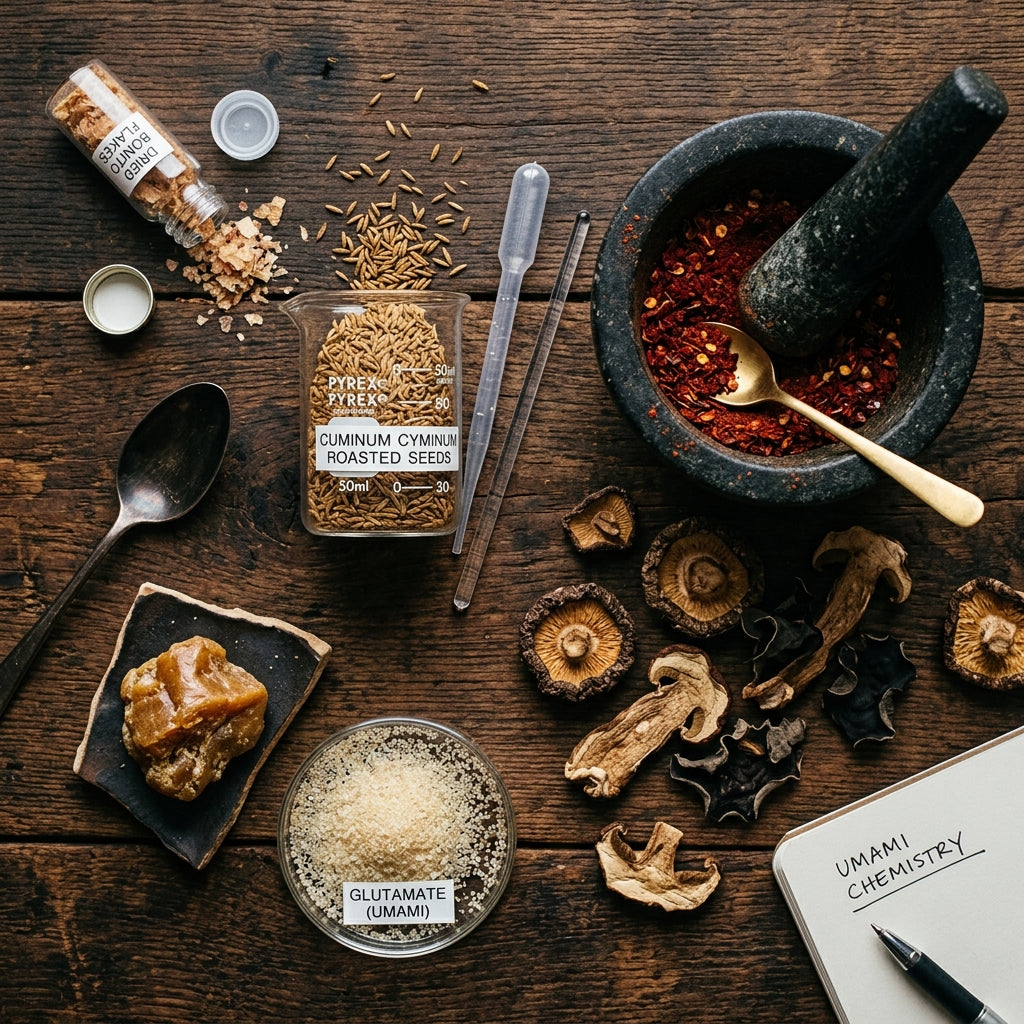
Why Umami Seems Impossible to Recreate Without Onion or Garlic
Most people assume umami — that deep, savory "fifth taste" — depends entirely on onion and garlic, which is exactly why a no onion no garlic umami seasoning sounds like a contradiction. In reality, umami is a specific chemical signature, driven by compounds like glutamates and nucleotides, not by any single ingredient. Onion and garlic happen to be common carriers of these compounds in everyday cooking, but they're far from the only source. This is precisely the confusion Jain restaurants and vegan brands run into when trying to replicate restaurant-style flavor without alliums. Understanding the underlying chemistry — rather than just swapping ingredients — is what actually solves the problem.
6 Steps to Build Umami Scientifically Without Alliums
Recreating umami without onion or garlic works best when you build it compound by compound:
This directly answers a common search query: "how does umami work without onion and garlic?" — the answer lies in the compounds, not the ingredient itself.
Umami Compounds: NONG Seasoning vs. Onion-Garlic Base
| Factor | 365 Spicery NONG Umami Seasoning | Standard Onion-Garlic Base |
| Primary umami source | Asafoetida, roasted spices, tomato/mushroom concentrates | Onion and garlic sulfur/glutamate compounds |
| Processing method | Cryogenic grinding, preserving volatile compounds | Conventional grinding, heat-degraded aromatics |
| Suitability for Jain/vegan | Fully suitable | Not suitable |
| Flavor consistency | Stable, batch-tested | Varies by raw material quality |
As a result, the science shows that umami is replicable without alliums — the real variable is how well the substitute ingredients are processed and preserved.
What the Research Says About Umami Chemistry
Food scientists have found that umami taste is primarily triggered by glutamate and nucleotide compounds, which occur naturally in tomatoes, mushrooms, and aged or fermented foods. Studies show that asafoetida contains sulfur compounds structurally similar to those found in garlic, explaining why it has long served as its closest natural substitute in Indian cooking. According to industry reports on flavor science, the Maillard reaction that occurs when spices are roasted generates additional flavor compounds that intensify perceived savoriness. The single most important stat for buyers: cryogenic grinding preserves over 95% of a spice's volatile oils, compared to roughly 60% in conventional hot grinding — directly relevant here, since umami-active aromatic compounds are among the first casualties of heat-based processing.
How 365 Spicery Engineers Umami Into Its Jain Range
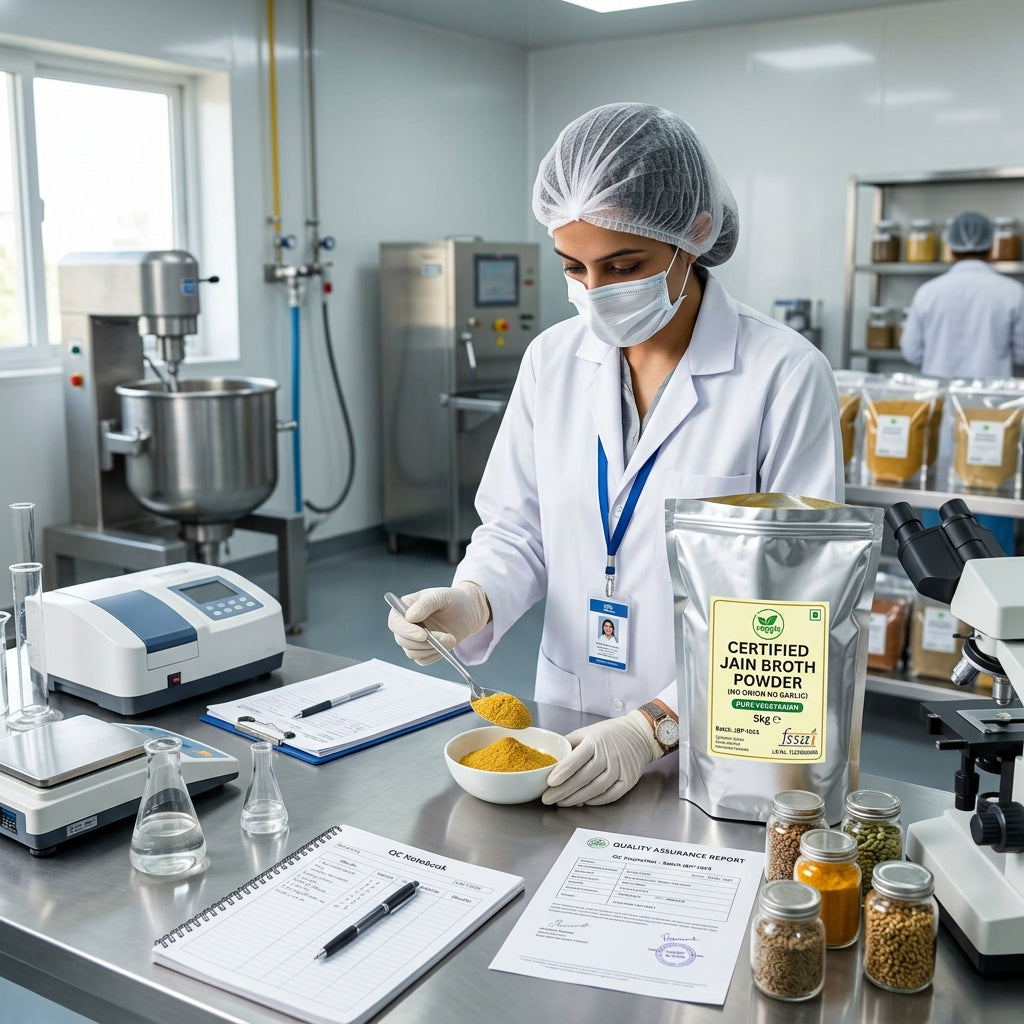
Building a genuinely convincing no onion no garlic umami seasoning requires more than a recipe — it requires understanding which compounds create savoriness and processing them in a way that preserves them intact. At 365 Spicery, our Jain Range — including Jain Seasoning, Jain Spice Mix, Jain Sambar Powder, and Jain Kitchen King — is formulated around asafoetida, roasted spices, and natural flavor-active ingredients, manufactured in a facility that is FSSAI certified, FSSC 22000 compliant, and Halal certified, with lab-testing on every batch. Our cryogenic grinding process is central to this science: it protects the exact volatile compounds responsible for aroma and umami depth, which is what gives a restaurant-style Jain seasoning its intensity without relying on onion or garlic. At 365 Spicery, we also support private label and custom formulation for restaurants and food brands wanting to build umami-forward NONG products at scale, with flexible MOQs and institutional packs from 1kg to 50kg.
---
Key Takeaways:
- Umami comes from specific compounds — glutamates and nucleotides — not exclusively from onion or garlic.
- Asafoetida (hing) carries sulfur compounds close enough to garlic's to replicate much of its savory role.
- Tomatoes, mushrooms, and roasted spices are natural, science-backed sources of umami without any alliums.
- Cryogenic grinding preserves the volatile compounds that make NONG umami seasoning taste genuinely intense.
- 365 Spicery's Jain range applies this science directly, engineering umami depth without onion or garlic.
---
#
Q: What is no onion no garlic umami seasoning?
A: It's a seasoning blend engineered to deliver umami's savory depth using compounds from asafoetida, roasted spices, tomato, or mushroom concentrates, rather than onion or garlic. It's designed for Jain, vegan, and Satvik cooking. 365 Spicery's Jain range is formulated specifically around this science.
Q: Can you really get umami flavor without onion or garlic?
A: Yes, since umami is triggered by glutamate and nucleotide compounds found naturally in tomatoes, mushrooms, and roasted spices, not exclusively in onion or garlic. Asafoetida also mimics garlic's sulfur-based savory notes closely. This is the scientific basis behind 365 Spicery's Jain seasoning range.
Q: Why does asafoetida work as a garlic substitute?
A: Asafoetida contains sulfur compounds structurally similar to those found in garlic, which is why it has long been used in Jain and Ayurvedic cooking as its closest natural replacement. It's typically bloomed in hot oil to release its full aroma. 365 Spicery uses it as a base ingredient across its Jain range.
Q: Does 365 Spicery make a science-backed umami seasoning without onion or garlic?
A: Yes, 365 Spicery's Jain Seasoning and Jain Spice Mix are formulated around asafoetida and roasted spice compounds, cryogenically ground and produced in an FSSAI, FSSC 22000, and Halal certified facility. Every batch is lab-tested. This suits restaurants, HoReCa, and private label brands building NONG menus.
Q: How does cryogenic grinding affect umami flavor intensity?
A: Cryogenic grinding preserves over 95% of a spice's volatile oils, compared to roughly 60% with conventional hot grinding, which directly protects the aromatic compounds behind umami depth. This means less product is needed to achieve the same flavor intensity. 365 Spicery uses this process across its entire Jain range.
Q: Can I get a bulk supply of umami-forward Jain seasoning for my restaurant?
A: Yes, 365 Spicery supplies its Jain range in institutional packs from 1kg to 50kg, with private label and custom formulation options available. Flexible MOQs suit both restaurants and food manufacturers. Wholesale pricing is available on request via WhatsApp.
Q: Is 365 Spicery's umami-focused Jain range also Halal certified?
A: Yes, the same production facility manufacturing the Jain range holds Halal certification alongside FSSAI and FSSC 22000 compliance. This allows one certified line to serve both Jain-specific and Halal-specific buyers. Every batch undergoes lab testing before dispatch.
---
#
The science is clear: no onion no garlic umami seasoning isn't a compromise — it's a matter of understanding which compounds actually create savoriness and processing them correctly. Asafoetida, roasted spices, tomatoes, and mushrooms all carry genuine umami-active chemistry, and cryogenic grinding is what keeps those compounds intact from factory to kitchen. Restaurants and brands that understand this science can build restaurant-style flavor without ever touching an allium. 365 Spicery's Jain range was engineered around exactly this principle. Which umami-rich ingredient do you rely on most when cooking without onion or garlic?
---
#
Share:
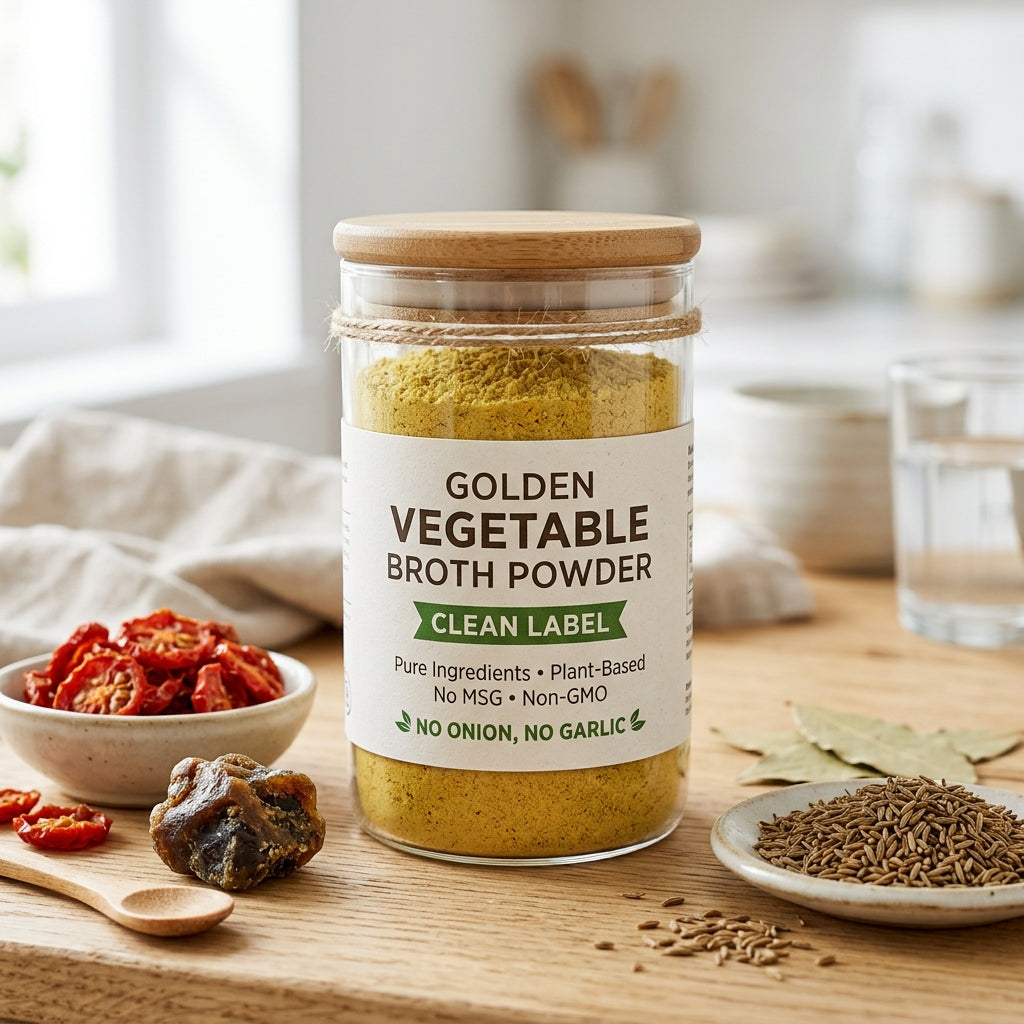
Clean Label No Onion No Garlic Broth Powder: The Future (56 characters)