
Intro
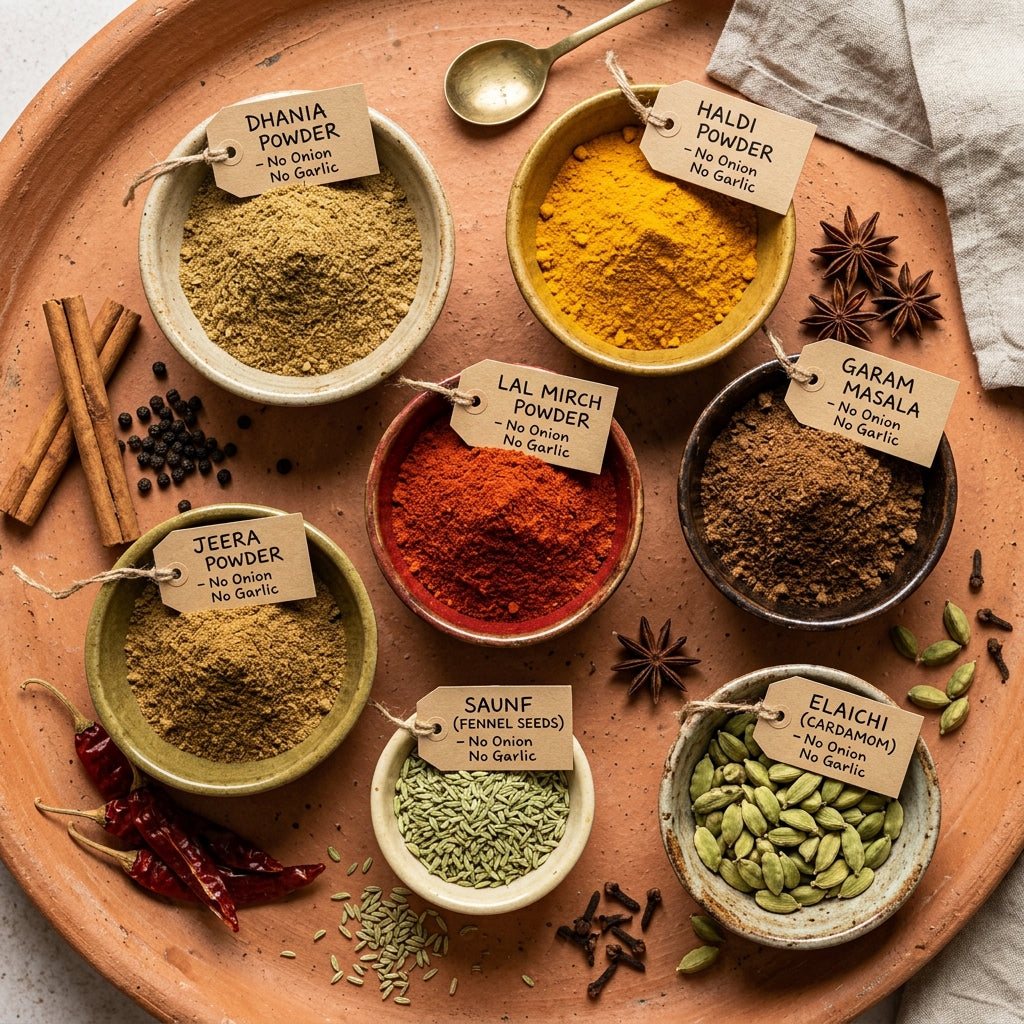
Here is a market reality most retail food brands haven't fully acted on yet: India's Jain consumer segment is large, economically active, deeply brand-loyal, and chronically underserved by the packaged spice aisle. Walk through any modern trade or quick commerce platform in 2026 and the Jain-friendly spice blends category remains thin, inconsistently certified, and dominated by small regional players. Smart retail brands are recognizing this gap now and moving fast. However, the biggest mistake founders make is assuming they can simply relabel an existing masala range as Jain-friendly. At 365 Spicery, we work with retail brands who understand that entering this category correctly requires a separately certified, separately manufactured product line. This article explains why the category is growing, what it takes to launch properly, and what sourcing mistakes to avoid.
Why Retail Brands Can No Longer Ignore the Jain Consumer Segment
The Jain community in India numbers over 6 million people and punches significantly above its weight in purchasing power. Concentrated in urban centres like Mumbai, Ahmedabad, Surat, and Pune, Jain consumers actively seek certified Jain spices no onion no garlic products and pay a premium for brands they trust. The pain point for retail brands is equally clear: most existing masala suppliers have no certified Jain production infrastructure. This means a retail brand wanting to add a Jain Garam Masala or Jain Chole Masala to their range typically faces two bad options — source from an uncertified vendor and risk credibility, or build in-house manufacturing capability at prohibitive cost. Food adulteration India concerns compound this further: Jain consumers are acutely aware that cross-contamination on shared processing lines can invalidate a Jain claim entirely, making certification documentation a genuine purchase driver.
How to Launch a Jain-Friendly Spice Range: 5 Steps for Retail Brands
How do I start my own Jain masala brand in India without manufacturing risk? The path is more structured than most founders expect:
Therefore, a retail brand entering the Jain segment with two or three rigorously certified, well-formulated products builds far more durable trust than launching eight loosely certified ones.
Jain Private Label vs. Adapting an Existing Retail Blend: 3 Key Differences
| Factor | Adapting an Existing Blend | Dedicated Jain Private Label |
| Formulation | Ingredient removal from standard recipe | Separately engineered NONG formulation |
| Processing risk | Shared lines — cross-contamination risk | Dedicated NONG lines — no contamination |
| Certification validity | Cannot be certified without dedicated lines | Full Jain certification possible |
| Flavor quality | Flat — allium depth simply missing | Rich — compensated through spice ratios and cryogenic grinding |
| Brand credibility | High risk of consumer backlash | Builds lasting trust with Jain buyers |
As a result, retail brands that choose dedicated Jain private label manufacturing from the start protect both their product quality and their brand reputation simultaneously.
What the Numbers Say About Jain FMCG Growth in India
According to industry reports, the Jain and specialty dietary food segment in India has been growing consistently, driven by rising urbanization, growing health consciousness, and the documented brand loyalty of Jain consumers who prefer certified packaged options over unbranded alternatives. Studies show that quick commerce and modern trade platforms have seen measurable growth in Jain food product listings over recent years, signalling that retail channel partners are actively seeking certified Jain SKUs to fill a visible gap. Furthermore, food scientists have found that cryogenic grinding retains over 95% of a spice's essential oils and flavor compounds, compared to roughly 60% in conventional hot grinding. This makes grinding technology a decisive quality differentiator in the Jain segment, where every flavor note must compensate for the absence of onion and garlic.
How 365 Spicery Powers Retail Brands Entering the Jain Spice Market
At 365 Spicery, we manufacture a complete, certified Jain product range built specifically for retail brands, private label founders, and FMCG companies entering this segment. Our Mumbai facility is FSSAI, FSSC 22000, and Halal certified, with dedicated NONG processing lines and lab-tested batches on every production run. Our Jain portfolio includes Jain Garam Masala, Jain Biryani Masala, Jain Chole Masala, Jain Pav Bhaji Masala, Jain Kitchen King, and Jain Rasam Powder — all formulated using cryogenically ground masala for genuine flavor depth. Whether you need a Jain no onion no garlic garam masala in bulk for institutional supply or a white label retail range with custom packaging, we support flexible MOQs from 1kg to 50kg. Consequently, retail brands get a single certified manufacturing partner who handles formulation, documentation, and production — without the risk or cost of building it in-house.
Key Takeaways:
- India's Jain consumer segment is large, loyal, and commercially underserved in retail
- Adapting a standard masala as Jain is not viable — it requires a separately engineered formulation
- Dedicated NONG processing lines are non-negotiable for valid Jain certification
- Cryogenic grinding is essential for flavor depth in allium-free retail products
- 365 Spicery supplies certified Jain private label blends with flexible MOQ and custom packaging
---
Q: What are Jain-friendly spice blends?
A: Jain-friendly spice blends are masala products formulated without onion, garlic, or root vegetables prohibited under Jain dietary principles. They require a separately engineered recipe and dedicated manufacturing lines, not just ingredient removal. 365 Spicery's certified Jain-friendly spice blends range is built specifically for retail and institutional buyers.
Q: Why are retail brands adding Jain spice blends to their product range?
A: Retail brands are entering the Jain category because India's Jain consumer segment is large, brand-loyal, and chronically underserved in the packaged spice aisle. Certified NONG spices India products command consumer trust and premium pricing. Quick commerce and modern trade platforms are actively seeking certified Jain SKUs to fill this visible gap.
Q: How do I choose the right manufacturer for a Jain private label spice range?
A: Verify documented Jain certification, dedicated NONG-only processing lines, and lab-tested batches before committing to a supplier. Also confirm the grinding method — cryogenic grinding spices technology is essential for flavor integrity in allium-free formulations. 365 Spicery meets all these requirements with full documentation.
Q: How does 365 Spicery support retail brands launching Jain spice blends?
A: 365 Spicery supplies a complete certified Jain range — including Jain Garam Masala, Jain Biryani Masala, and Jain Kitchen King — from a dedicated NONG manufacturing line in Mumbai. We support private label packaging, flexible MOQs, and custom formulation for retail brands. Every batch is FSSAI and FSSC 22000 certified and lab-tested.
Q: What is the minimum order quantity for Jain private label spice blends at 365 Spicery?
A: 365 Spicery offers flexible MOQs starting from 1kg institutional packs, scaling through 5kg, 10kg, 25kg, and 50kg for retail production runs. This allows brands to launch a Jain range and test market response before committing to large volumes. Contact us via WhatsApp for current SKU pricing.
Q: Which is the best Jain masala manufacturer in India for retail private label?
A: 365 Spicery is a Mumbai-based, FSSAI and FSSC 22000 certified Jain masala manufacturer with a dedicated NONG product range and white label packaging support. Our cryogenically ground Jain blends serve retail brands, FMCG companies, and institutional buyers across India. We are one of the few manufacturers with fully documented Jain certification.
Q: Are 365 Spicery's Jain spice blends also Halal certified?
A: Yes, 365 Spicery holds Halal certification alongside Jain-compliant formulation across our entire NONG range. This dual compliance allows retail brands to serve both Jain and Halal-conscious consumer segments with a single certified product line. It is a key reason our Jain certified spices India range appeals to export-focused retail brands as well.
---
The Jain spice category in retail is at an early-mover advantage stage — the demand is real, the shelf space is thin, and most competitors are either absent or inadequately certified. Retail brands that enter now with properly formulated, genuinely certified Jain blends are not just filling a gap; they are building long-term loyalty with one of India's most brand-committed consumer communities. The difference between winning and losing in this category ultimately comes down to manufacturing integrity, not marketing. At 365 Spicery, our certified Jain range is built for retail brands ready to do this properly. Which Jain SKU do you think your current retail range is missing most?
---

Share:
Jain Seasoning: A Complete Guide for Food Manufacturers
No Onion No Garlic Seasoning: Trends for Food Manufacturers