
Introduction
Umami, the fifth basic taste, is usually built on a foundation of onion, garlic, or MSG in commercial food formulation, which leaves an entire buyer segment without a genuine clean-label option. Jain consumers, allium-sensitive eaters, and MSG-avoidant health shoppers all want the same thing: deep, savory flavor without those specific ingredients. This is exactly the gap that no onion no garlic umami seasoning fills, and it is a harder formulation problem than most brands realize. This guide explains what this seasoning category actually is, which natural ingredients genuinely replace onion and garlic's flavor role, and what to check before buying or manufacturing it in bulk. At 365 Spicery, we formulate Jain-compliant umami bases for food brands, so this comes from direct production experience.
What Is No Onion No Garlic Umami Seasoning?
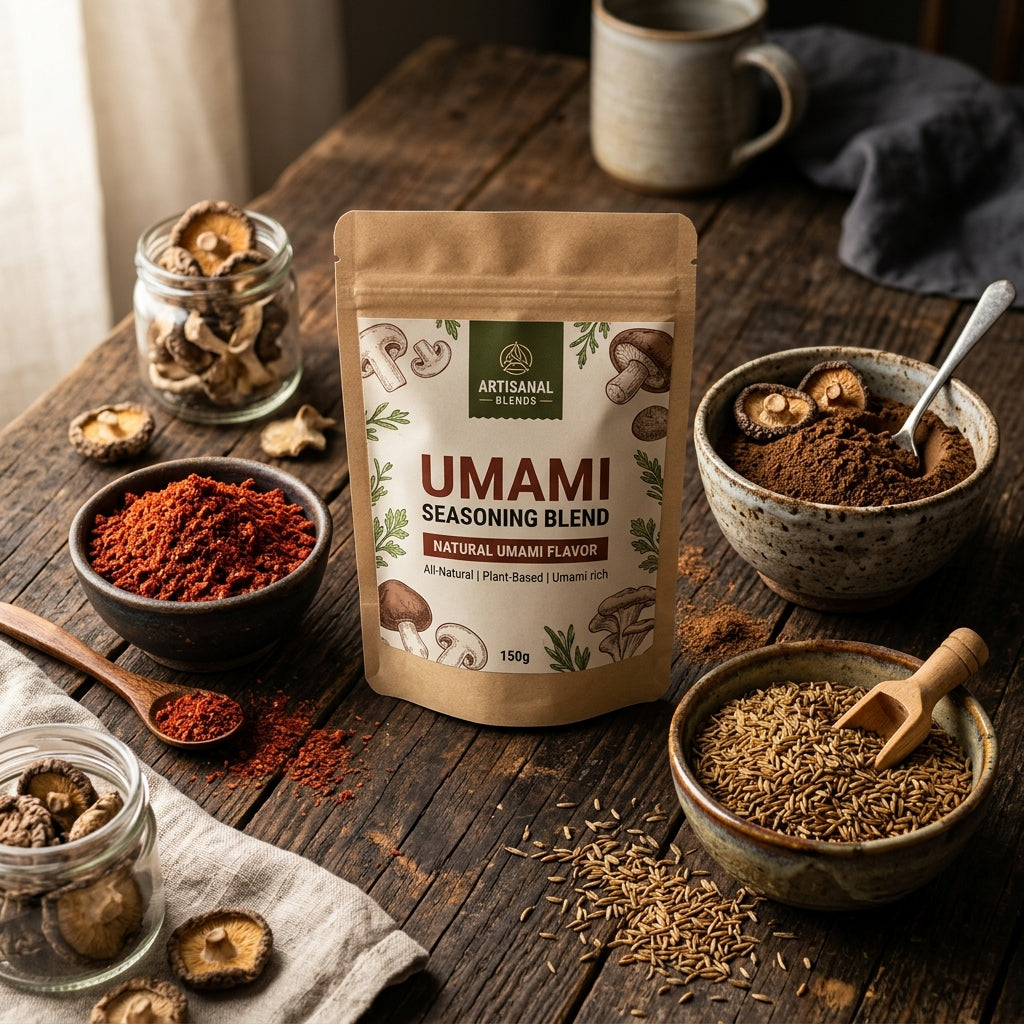
No onion no garlic umami seasoning is a savory flavor enhancer designed to deliver the fifth taste, deep, mouth-filling savoriness, without relying on onion, garlic, or MSG as its base. Notably, umami itself comes from naturally occurring glutamates and nucleotides found in ingredients like tomatoes, mushrooms, and certain fermented foods, not exclusively from alliums. Therefore, a genuine Jain-compliant umami seasoning leans on these glutamate-rich natural sources instead, combined with roasted spices for depth. This matters because spice adulteration and vague "natural flavor enhancer" labeling are common in this category, with some products relying on hidden MSG or yeast extract that would not meet strict clean label or Jain compliance standards, despite the packaging claim.
4 Natural Flavor Enhancers That Replace Onion and Garlic
Understanding the real building blocks helps buyers evaluate formulations correctly:
How to Choose a Genuine Clean Label Umami Seasoning
Buyers should look past marketing language and check the following:
Cryogenic Ground vs. Conventional Ground Umami Bases
| Factor | Cryogenic Grinding | Conventional Grinding |
| Grinding Temperature | -40°C to -80°C | 60°C to 90°C (friction heat) |
| Volatile Oil Retention | 95%+ preserved | Up to 40% lost to heat |
| Natural Umami Intensity | Strong, glutamate-carrying compounds better preserved | Weaker, heat can degrade some flavor compounds |
| Need for MSG or Additives | Low, natural sources carry more flavor | Higher, weaker base sometimes compensated with additives |
| Clean Label Compatibility | High — short, additive-free ingredient list | Lower — may require flavor-masking additions |
As the table shows, the grinding method plays a direct role in whether a genuinely natural umami seasoning can stand on its own without MSG or artificial enhancers. Heat-degraded bases are harder to make taste "complete" without a shortcut.
What the Data Says About Natural Umami Boosters
According to industry reports, MSG-avoidant and clean label food segments have been growing steadily as consumers scrutinize flavor enhancer ingredients more closely than in previous years. Food scientists have found that dried tomato and mushroom powders contain naturally occurring glutamates at levels that can meaningfully replicate the savory depth typically associated with MSG or onion-garlic bases. Studies show that cryogenically processed spice blends retain significantly more of their natural flavor compounds than conventionally dried and ground alternatives, directly affecting how convincing a natural umami claim actually tastes. This is why manufacturers building genuinely natural, cryogenically processed umami seasonings are gaining trust with both Jain and broader clean-label buyers, ahead of products relying on hidden additives.
How 365 Spicery Formulates No Onion No Garlic Umami Seasoning
At 365 Spicery, we formulate no onion no garlic umami seasoning blends for food brands and caterers using Cryogenic Grinding Technology inside an FSSAI, FSSC 22000, and Halal certified facility in Mumbai. Every ingredient is lab-tested, so brands can build a genuinely clean-label, Jain-compliant umami product without hidden additives or cross-contamination risk. Our relevant portfolio includes Jain Seasoning, Jain Salt Blend, Jain Dip Mix, and Jain Chutney Powder, which serve as formulation building blocks, alongside our Single Spice Powders range including Dry Mango Powder and roasted spice options for added depth. For food manufacturers exploring natural spices no preservatives positioning, we offer custom formulation, sample batches, and private label packaging, so a brand can launch a genuinely natural umami seasoning without relying on MSG or onion-garlic shortcuts. This is what separates an authentic clean-label umami product from one that simply hides its additives behind vague labeling.
Key Takeaways:
- No onion no garlic umami seasoning delivers savory depth using natural glutamate-rich ingredients, not onion, garlic, or MSG.
- Asafoetida, dried tomato, roasted cumin, and mushroom powder are the core natural building blocks for this flavor category.
- Always check the full ingredient list for hidden MSG or yeast extract before trusting a "natural flavor enhancer" claim.
- Cryogenic grinding preserves more natural flavor compounds, reducing the need for additive-based shortcuts.
- 365 Spicery formulates clean label, Jain-compliant umami seasonings from its FSSAI, FSSC 22000, and Halal certified Mumbai facility.
---
#
s
Q: What is no onion no garlic umami seasoning?
A: It is a savory flavor enhancer that delivers deep umami taste using natural glutamate-rich ingredients like dried tomato, mushroom powder, and roasted spices, without relying on onion, garlic, or MSG.
Q: What are the best natural flavor enhancers for umami without onion or garlic?
A: Asafoetida, dried tomato powder, roasted cumin and coriander, and mushroom powder are the main natural ingredients used to build umami depth without alliums. Each contributes a different layer to the overall savory profile.
Q: How do I choose a genuine clean label umami seasoning?
A: Read the full ingredient panel to confirm there is no hidden MSG or yeast extract, and verify Jain certification if that matters for your buyers. Asking whether the manufacturer uses cryogenic grinding also helps ensure genuine flavor strength.
Q: Does 365 Spicery formulate no onion no garlic umami seasoning?
A: Yes, 365 Spicery formulates clean label, Jain-compliant umami seasonings using cryogenic grinding in an FSSAI, FSSC 22000, and Halal certified facility, building on products like Jain Seasoning and Jain Chutney Powder.
Q: What is the minimum order quantity for a custom umami seasoning formulation with 365 Spicery?
A: 365 Spicery offers flexible MOQ for custom formulation projects, with sample batches available before scaling to bulk production. Brands can contact the team on WhatsApp to discuss a specific umami seasoning project.
Q: Which manufacturer can help formulate a natural no onion no garlic umami seasoning in bulk?
A: A reliable manufacturer should combine Jain certification, FSSAI and FSSC 22000 compliance, and cryogenic grinding for genuine natural flavor depth. 365 Spicery supports brands with custom formulation from its certified Mumbai facility.
Q: Is 365 Spicery's umami seasoning range also Halal certified?
A: Yes, 365 Spicery's manufacturing facility holds Halal certification alongside FSSAI, FSSC 22000, and its dedicated Jain (NONG) product range, allowing brands to formulate products meeting multiple certification requirements from one manufacturer.
---
#
The most important insight here is that genuine umami without onion, garlic, or MSG is achievable, but only when a manufacturer builds the formulation around real glutamate-rich natural ingredients and preserves their flavor through careful processing. Products that skip this and simply remove two ingredients while quietly adding MSG or yeast extract are not delivering what a clean label or Jain buyer is actually looking for. As more consumers scrutinize flavor enhancer ingredients closely, brands that formulate honestly, with cryogenic grinding and transparent sourcing, will earn stronger, more durable trust. Have you checked the full ingredient list on your current umami seasoning lately?
---
#

Share:
Broth vs Bouillon vs Stock Powder vs Umami: Explained
25 Proven Ways to Add Umami Without Onion Garlic