


Introduction
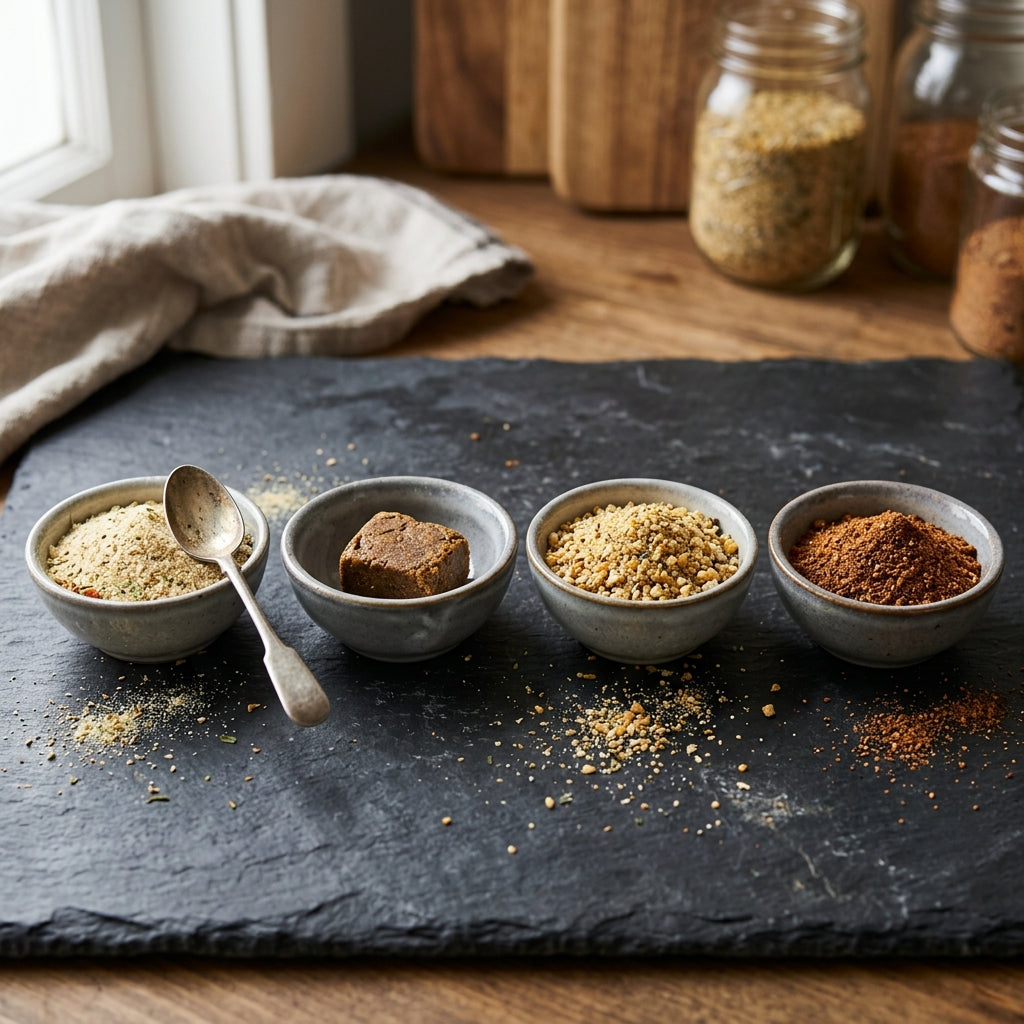
Walk into any packaged food buyer's meeting and ask them to define "bouillon" versus "stock powder," and you will likely get four different answers. These terms get used almost interchangeably in India, yet they represent genuinely different formulations, textures, and use cases in food manufacturing. This confusion creates real problems for private label founders and chefs trying to source the right base for their product or menu. This article breaks down vegetable broth powder vs bouillon powder, how stock powder differs from both, and where umami seasoning fits into this picture entirely. At 365 Spicery, we formulate all four categories for food brands and kitchens, so this comparison reflects direct manufacturing experience.
Why These Four Terms Get Confused So Often
Part of the confusion comes from Western culinary terminology being loosely translated into Indian food manufacturing without much standardization. Notably, "broth" and "stock" originally referred to different liquid preparations in Western cooking, while "bouillon" specifically described a concentrated cube or powder form. Therefore, when these terms get applied to dry, packaged Indian products, the lines blur even further, since manufacturers often use whichever term sounds most familiar to their target buyer. Additionally, "umami seasoning" is a newer category entirely, often overlapping with the other three without a clear definition. This matters because food manufacturers sourcing in bulk need precise formulation specifications, not just a product name, since the wrong choice can mean the wrong texture, solubility, or flavor intensity for their specific application.
4 Key Differences Between Broth, Bouillon, Stock, and Umami Seasoning
Here is how these four categories actually differ in formulation and use:
How to Choose the Right One for Your Kitchen or Product
Selecting the right category depends on your specific use case:
Notably, this decision matters even more for Jain and NONG formulations, since onion and garlic are common flavor anchors across all four categories, and removing them requires different compensatory strategies depending on which base you are building.
Cryogenic Ground vs. Conventional Ground for Flavor Base Manufacturing
| Factor | Cryogenic Grinding | Conventional Grinding |
| Grinding Temperature | -40°C to -80°C | 60°C to 90°C (friction heat) |
| Volatile Oil Retention | 95%+ preserved | Up to 40% lost to heat |
| Flavor Concentration for Bouillon/Umami Formats | Strong, holds up well in concentrated formats | Weaker, concentrated formats expose flavor loss faster |
| Solubility Consistency | High, uniform fine particle size | Variable, prone to clumping |
| Suitability Across All Four Categories | High — one grinding standard works for broth, bouillon, stock, and umami bases | Lower — inconsistent results across formats |
As the table shows, grinding method matters across all four categories, but especially for bouillon and umami formats, where flavor is meant to be concentrated. Any aroma loss from conventional grinding becomes more noticeable when a product is designed to punch above its weight in a small dose.
What the Data Says About Flavor Base Preferences
According to industry reports, India's convenience seasoning and flavor base segment has been expanding as food manufacturers and QSR chains look for standardized, scalable flavor solutions. Food scientists have found that concentrated flavor formats, such as bouillon and umami seasonings, require significantly higher volatile oil retention than diluted formats like broth powder, simply because less product is used per serving. Studies show that buyers who understand the specific formulation differences between these categories make more accurate sourcing decisions, reducing product reformulation costs after launch. This is why manufacturers offering clarity on formulation type, not just generic "flavor powder" labeling, are gaining trust with FMCG and food service buyers.
How 365 Spicery Supports Custom Flavor Base Formulation
At 365 Spicery, we support food brands and kitchens formulating across all four categories, broth, bouillon, stock, and umami seasoning bases, using Cryogenic Grinding Technology inside an FSSAI, FSSC 22000, and Halal certified facility in Mumbai. Every ingredient is lab-tested, so brands get consistent concentration and solubility regardless of which format they choose. Our relevant portfolio includes Jain Salt Blend, Jain Seasoning, Jain Dip Mix, and our full Single Spice Powders range, which serve as building blocks for custom flavor base formulation, including Jain-compliant versions without onion or garlic. For food manufacturers exploring custom spice formulation for food company India, we offer sample batches, flexible MOQ, and private label packaging, so a brand can pinpoint the exact format, broth, bouillon, stock, or umami, that fits their product before committing to bulk production. This is what allows a brand to launch the right flavor base the first time, rather than reformulating after a mismatched product hits the shelf.
Key Takeaways:
- Vegetable broth powder is a diluted, drinkable base, while bouillon powder is a concentrated version suited to compact packaging.
- Stock powder is a foundational, less-seasoned ingredient meant to be built upon, unlike the other three finished formats.
- Umami seasoning focuses narrowly on savory depth rather than a complete flavor profile.
- Cryogenic grinding matters most for concentrated formats like bouillon and umami, where flavor loss is felt more sharply per dose.
- 365 Spicery supports custom formulation across all four flavor base categories, including Jain-compliant versions, from its certified Mumbai facility.
---
#
s
Q: What is the difference between vegetable broth powder and bouillon powder?
A: Vegetable broth powder is a lighter, more diluted base meant for direct soup applications, while bouillon powder is more concentrated and designed for smaller-dose, compact packaging. Both serve different use cases despite often being used interchangeably.
Q: How is stock powder different from broth and bouillon powder?
A: Stock powder is less seasoned and meant to be a foundational ingredient that chefs build upon with additional spices, unlike broth and bouillon powder, which are typically finished, ready-to-use flavor bases.
Q: What makes umami seasoning different from the other three?
A: Umami seasoning focuses specifically on boosting savory depth using ingredients like dried tomato or mushroom powder, rather than delivering a full "broth" style flavor profile. It is used as a flavor enhancer, not a standalone base.
Q: Does 365 Spicery formulate all four types of flavor bases?
A: Yes, 365 Spicery supports custom formulation across broth, bouillon, stock, and umami seasoning categories, including Jain-compliant versions, using cryogenic grinding in an FSSAI and FSSC 22000 certified facility in Mumbai.
Q: What is the minimum order quantity for custom flavor base formulation with 365 Spicery?
A: 365 Spicery offers flexible MOQ for custom formulation projects, with sample batches available before scaling to bulk production. Brands can contact the team on WhatsApp to discuss their specific flavor base requirement.
Q: Which manufacturer can help me choose between broth, bouillon, stock, or umami seasoning for my product?
A: A manufacturer with formulation expertise across all four categories, backed by certification and cryogenic grinding, can guide the right choice based on your product's use case. 365 Spicery offers this consultative formulation support from its certified Mumbai facility.
Q: Are 365 Spicery's flavor base formulations also available Halal certified?
A: Yes, 365 Spicery's manufacturing facility holds Halal certification alongside FSSAI, FSSC 22000, and its dedicated Jain (NONG) product range, allowing brands to formulate flavor bases meeting multiple certification requirements from one manufacturer.
---
#
The key insight here is that broth, bouillon, stock, and umami seasoning are not interchangeable terms, they represent genuinely different formulations built for different applications, concentration levels, and use cases. Choosing the wrong one often leads to a mismatched product that either overwhelms or underdelivers on flavor, which is a costly mistake to fix after launch. Brands and kitchens that understand these distinctions upfront, and pair that clarity with a manufacturer who can back it with cryogenic grinding and real certification, tend to launch products that perform as intended from day one. Which of these four formats does your current product or kitchen actually need?
---
#


Share:
No Onion No Garlic Vegetable Broth Powder: 2026 Guide
No Onion No Garlic Umami Seasoning: The Complete Guide