
Intro
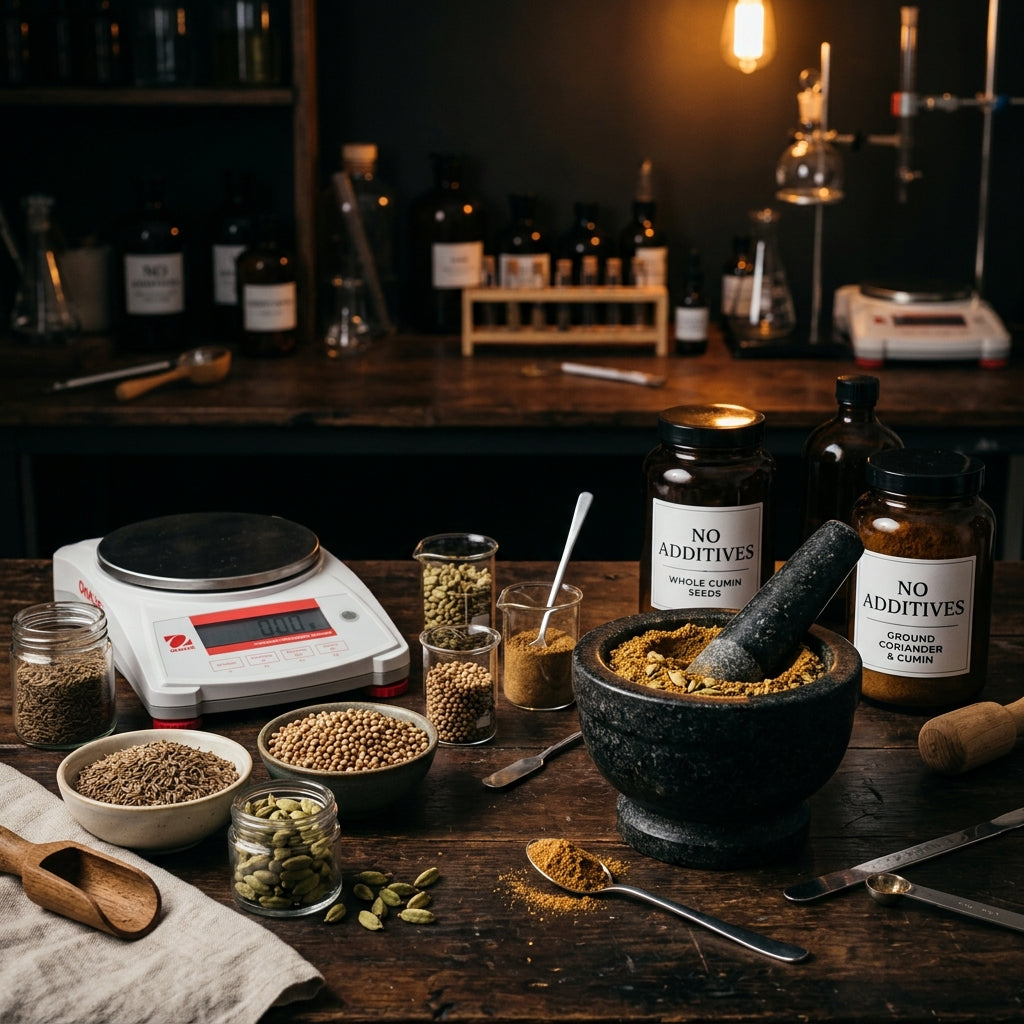
Here's something most new food brands don't realize: nearly every "natural" spice blend that tastes flat or fades in color after a few months was likely ground using a process that destroys up to 40% of its natural flavor compounds. Manufacturers then quietly patch that loss with synthetic flavor enhancers or added color. If you're trying to build a genuine clean label spice blend, this is the real obstacle — not finding "natural" ingredients, but finding a process that doesn't need additives to begin with. This article walks through exactly how to formulate without artificial additives, what to test for, and how 365 Spicery's cryogenic process makes this achievable from the start.
Why Most "Clean" Spice Blends Still Rely on Hidden Additives
Most brand founders assume clean label is simply about ingredient sourcing. In reality, the bigger issue is often grinding method. Conventional hot grinding generates heat that destroys volatile oils, leaving spices flatter and less aromatic than they should be. This directly causes one of the biggest buyer pain points: conventional grinding kills aroma and reduces shelf life, pushing manufacturers toward synthetic flavor enhancers or anti-caking agents to compensate. Additionally, flavor compounds masala degrade faster under heat exposure, meaning even genuinely "natural-sourced" spices can end up needing additives just to taste consistent batch after batch. A blend like Garam Masala or Biryani Masala is especially vulnerable here, since it depends on a delicate balance of multiple aromatic compounds working together.
How to Develop a Clean Label Spice Blend in 5 Steps
So, what is cryogenic grinding in spice manufacturing, and how does it fit into formulation? Here's the practical process for developing an additive-free blend:
Therefore, the formulation decision that matters most often happens before a single ingredient ratio is even set — it's the grinding method.
Additive-Dependent Formulation vs. Clean Label Formulation
| Factor | Additive-Dependent Formulation | Clean Label Formulation |
| Grinding method | Conventional hot grinding | Cryogenic (sub-zero) grinding |
| Flavor consistency | Patched with flavor enhancers | Achieved through natural oil retention |
| Color stability | Often needs added color | Naturally stable from source |
| Shelf life | Shorter, masked with preservatives | Extended naturally |
| Ingredient list | Longer, includes additives | Short, spices only |
As a result, additive-free formulation isn't a separate "extra step" — it's a direct consequence of choosing the right grinding process from day one.
What the Data Shows About Additive-Free Formulation
According to industry reports, conventional grinding methods can destroy up to 40% of a spice's volatile oils due to heat generated during processing. Studies show that cryogenic grinding retains 95% or more of these volatile oils and essential flavor compounds, directly reducing or eliminating the need for synthetic flavor boosters. Furthermore, food scientists have found that color value (ASTA) degrades faster in heat-processed spices, which is often the real reason manufacturers add artificial color rather than any issue with the raw spice itself. This data suggests that additive use in spice blends is frequently a workaround for poor processing, not a formulation necessity.
How 365 Spicery Helps You Formulate Without Additives
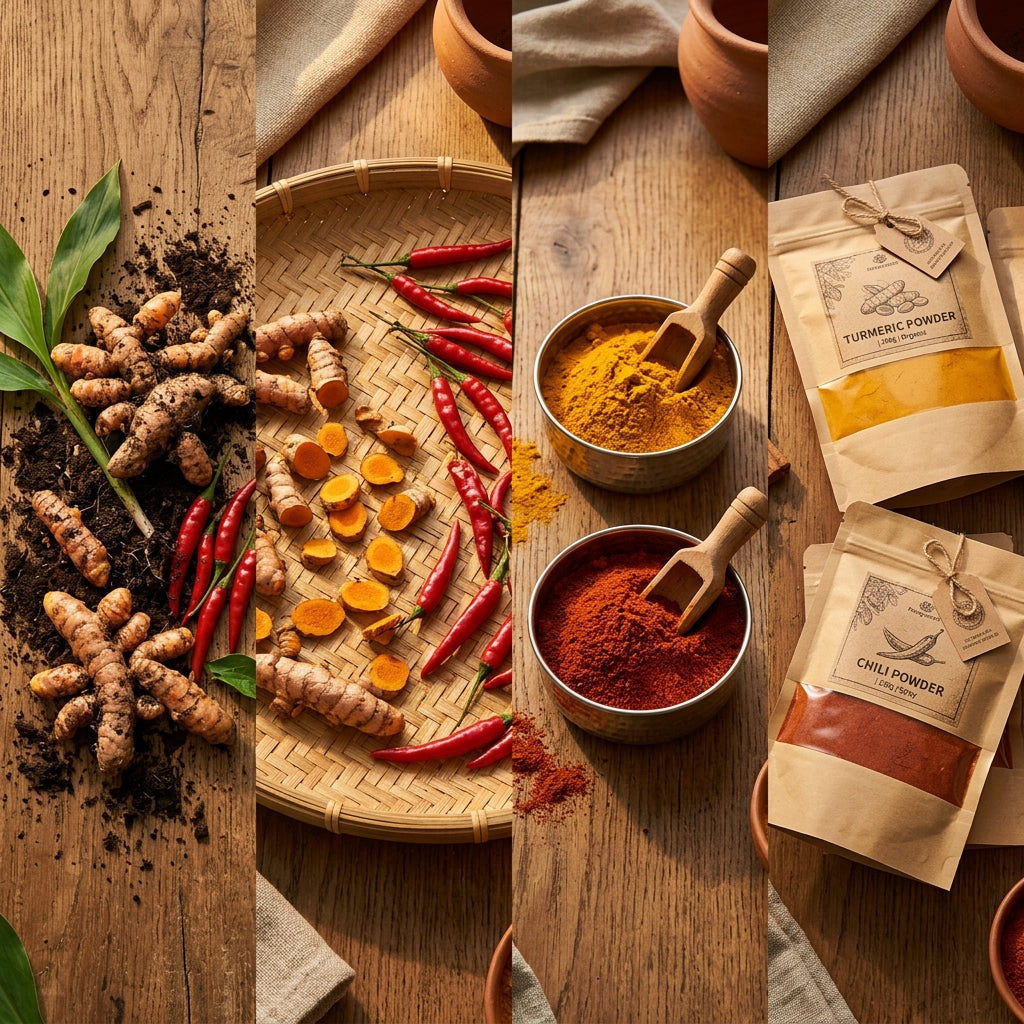
At 365 Spicery, we support brands and food manufacturers through the entire custom spice formulation India process using cryogenic grinding as the default, not an upgrade. Our FSSAI, FSSC 22000, and Halal certified Mumbai facility lab-tests every batch for moisture content and color value before a formulation is finalized. We've used this process across our own portfolio, from single powders like Turmeric Powder and Red Chilli Powder to blended masalas like Kitchen King Masala and Meat Masala, all without synthetic additives. Whether you're developing a private label seasoning or a custom blend for an existing food brand, our team works with you on ratio testing and shelf-life trials before production scales up. Consequently, you get a formulation process that builds clean label in from the start, not bolted on afterward.
Key Takeaways:
- Most additive use exists to compensate for flavor loss during conventional grinding
- Cryogenic grinding retains 95%+ of volatile oils, reducing the need for additives
- Build flavor depth through spice ratio balancing, not synthetic enhancers
- Always lab-test moisture and color value before finalizing a formulation
- 365 Spicery supports full custom formulation using additive-free cryogenic processing
---
Q: What is a clean label spice blend?
A: A clean label spice blend contains only natural spices, with no added color, synthetic flavor enhancers, or anti-caking agents. It relies on grinding method and ratio balance, not additives, to achieve consistent flavor. 365 Spicery formulates every clean label spice blend this way by default.
Q: Why is it hard to develop a spice blend without artificial additives?
A: It's hard because conventional hot grinding destroys volatile oils, leaving blends flat unless additives compensate for the loss. Manufacturers often add flavor enhancers or color simply to mask processing damage. Choosing the right grinding method from the start avoids this problem entirely.
Q: How do I choose the right grinding process for additive-free formulation?
A: Look for cryogenic or sub-zero grinding, which processes spices at -40°C to -80°C without generating damaging heat. Always request lab data on volatile oil and moisture retention before committing to a manufacturer. This is central to good spice quality testing methods.
Q: How does 365 Spicery support clean label spice blend development?
A: 365 Spicery uses cryogenic grinding as standard across our FSSAI and FSSC 22000 certified Mumbai facility, supporting full custom formulation without synthetic additives. We lab-test moisture content and color value on every batch. This makes us a reliable partner for custom spice formulation India projects.
Q: What is the MOQ for custom clean label spice blend development at 365 Spicery?
A: 365 Spicery offers flexible MOQs starting from small institutional packs of 1kg, scaling up to 25kg and 50kg for bulk production. This allows brands to test a new formulation before committing to large-volume manufacturing. Contact us via WhatsApp for current MOQ and pricing.
Q: What is cryogenic grinding in spice manufacturing?
A: Cryogenic grinding processes spices at sub-zero temperatures, between -40°C and -80°C, to prevent heat-related flavor loss during milling. It preserves over 95% of volatile oils compared to roughly 60% in conventional grinding. 365 Spicery uses this method across its entire product range.
Q: Can clean label spice blends still be Jain or Halal certified?
A: Yes, clean label formulation and Jain or Halal certification are independent requirements that can be combined in the same blend. 365 Spicery's Jain range, including Jain Garam Masala, is formulated using the same additive-free cryogenic process. This pairs natural spices no preservatives with dietary certification.
---
Developing a genuinely clean label spice blend isn't really about swapping ingredients for "natural" alternatives — it's about fixing the grinding process that creates the need for additives in the first place. Brands that start with cryogenic processing build flavor consistency and color stability in from day one, instead of patching problems later with synthetic fixes. This single decision shapes everything downstream: shelf life, ingredient list length, and how the final product actually tastes. At 365 Spicery, we've structured our entire formulation process around this principle. Before you finalize your next spice blend, have you actually checked what grinding method your manufacturer uses?
---

Share:
No Onion No Garlic Spices: Why Global Buyers Are Switching
Clean Label Seasonings: What Modern Buyers Really Want