
Intro
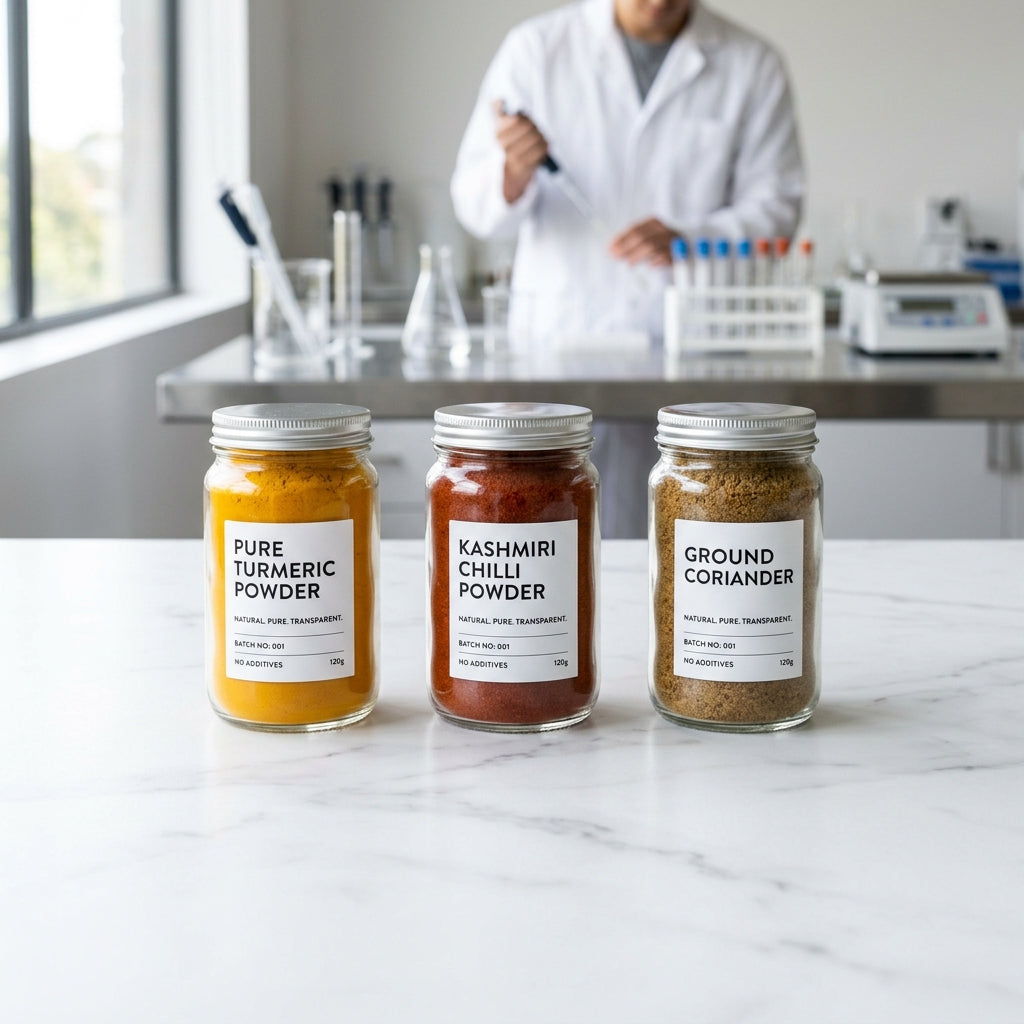
Most spice adulteration in India isn't always obvious — added color, starch fillers, and synthetic flavor enhancers often go completely undetected by taste alone. This is exactly why clean label seasonings have become one of the fastest-rising demands among food brands and restaurants alike. Buyers increasingly want a short, recognizable ingredient list with no hidden fillers, no artificial color, and no synthetic flavor boosters. Yet most suppliers struggle to actually deliver this consistently at scale. At 365 Spicery, clean label isn't a marketing label we add later — it's built into how we source and grind every batch. This article breaks down what clean label really means, how to verify it, and why grinding technology plays a bigger role than most buyers realize.
What "Clean Label" Actually Means in Spices
Clean label is often misunderstood as simply "no preservatives," but it goes further than that. A genuinely clean label spice has no added color, no anti-caking fillers, no synthetic flavor enhancers, and full traceability back to the source. This directly addresses a major buyer pain point: spice adulteration is rampant in India, with color, starch, and fake ingredients quietly added to cut costs. Additionally, traceable spices India sourcing matters because buyers increasingly want to know exactly where their raw material comes from. For example, a Red Chilli Powder or Turmeric Powder labeled "clean" should show natural, consistent color from the spice itself, not from an added dye boosting its visual appeal on shelf.
How to Identify a Genuine Clean Label Spice Supplier: 4 Steps
Where can buyers actually buy wholesale spices in bulk in India that are genuinely clean label? Here's how to verify it before placing an order:
Therefore, the safest approach is partnering with a manufacturer willing to share lab data openly, not just print "100% natural" on packaging.
Cryogenic Grinding vs. Conventional Grinding: The Clean Label Difference
| Factor | Conventional Hot Grinding | Cryogenic Grinding (-40°C to -80°C) |
| Volatile oil retention | ~60% (up to 40% loss) | 95%+ retained |
| Need for flavor additives | Higher, to compensate for loss | Minimal to none |
| Color stability | Often fades, prompting added color | Naturally stable |
| Shelf life | Shorter | Extended |
| Clean label compatibility | Harder to maintain | Naturally supports clean label |
As a result, the grinding method itself becomes a clean label decision, not just a manufacturing detail.
What the Data Shows About Clean Label Demand
According to industry reports, clean label has moved from a niche premium positioning to a baseline expectation across packaged food categories in India and globally. Studies show that a majority of urban Indian consumers now actively check ingredient labels before purchasing packaged spices and seasonings, prioritizing shorter, recognizable lists. Furthermore, food scientists have found that cryogenic grinding preserves over 95% of a spice's volatile oils and flavor compounds, compared to roughly 60% retention in conventional hot grinding methods. This single technological gap explains why many "natural" labeled spices still rely on added flavor enhancers to mask flavor loss from poor processing.
How 365 Spicery Delivers True Clean Label Spices
At 365 Spicery, we treat clean label as a manufacturing standard, not a marketing claim. Our FSSAI, FSSC 22000, and Halal certified Mumbai facility lab-tests every batch for moisture content, color value, and adulterants before dispatch. Because we use sub-zero grinding technology, our Turmeric Powder, Red Chilli Powder, Coriander Powder, and blended masalas like Garam Masala and Chole Masala don't need synthetic color or flavor boosters to taste authentic. This makes us a strong fit for the FSSC 22000 certified spice manufacturer India segment, especially food manufacturers and FMCG brands needing documented, audit-ready quality. Whether you need wholesale supply, private label packaging, or a custom formulation, every batch carries the same traceability and lab-tested standard.
Key Takeaways:
- Clean label seasonings mean no added color, fillers, or synthetic enhancers
- Always request a lab test report before placing a bulk order
- Cryogenic grinding naturally supports clean label by preserving flavor without additives
- Shorter, more transparent ingredient lists are now a baseline buyer expectation
- 365 Spicery lab-tests every batch for moisture, color value, and adulterants
---
Q: What does clean label mean for spices and seasonings?
A: Clean label means a spice or seasoning has no added color, synthetic flavor enhancers, or unnecessary fillers, with a short and recognizable ingredient list. It also implies traceability back to the source. 365 Spicery's clean label seasonings are lab-tested to confirm this on every batch.
Q: Why does clean label matter to modern food buyers?
A: Clean label matters because buyers increasingly link it to safety, authenticity, and trust in a market where adulteration is common. A shorter ingredient list signals fewer hidden additives and better quality control. This is a key reason demand for adulteration-free spices keeps rising.
Q: How do I verify if a spice supplier is genuinely clean label?
A: Request lab test reports covering moisture content, color value, and adulterant testing for the exact batch you're buying. Also ask about their grinding method, since cryogenic processing reduces the need for flavor additives. 365 Spicery shares this data openly with buyers.
Q: How does 365 Spicery ensure its spices are clean label?
A: 365 Spicery lab-tests every batch for moisture, color value, and adulterants at our FSSAI and FSSC 22000 certified Mumbai facility. We use cryogenic grinding, which naturally preserves flavor and color without needing synthetic additives. This makes our pure spice powder range genuinely clean label.
Q: Can I order clean label spices in bulk or wholesale from 365 Spicery?
A: Yes, 365 Spicery supplies clean label spices and masalas in bulk, with institutional packs from 1kg up to 50kg. We also support private label and custom formulation for brands wanting a documented clean label product line. Contact us via WhatsApp for current pricing.
Q: Which is the best spice supplier in Mumbai for clean label products?
A: 365 Spicery is a Mumbai-based, FSSAI and FSSC 22000 certified manufacturer known for lab-tested, cryogenically ground clean label spices. Our facility avoids artificial color and flavor additives across the entire product range. This makes us a trusted choice for buyers prioritizing traceable spices India sourcing.
Q: Are 365 Spicery's clean label spices also Halal certified?
A: Yes, 365 Spicery's facility holds Halal certification alongside FSSAI and FSSC 22000 standards, covering our entire clean label range. This combination supports both clean label and religious dietary compliance for export and domestic buyers. It's part of why our FSSAI certified spices range serves diverse market segments.
---
Clean label isn't a passing trend in the spice industry — it reflects a permanent shift in how buyers evaluate trust and quality. The real differentiator isn't a label claim but what actually happens during processing, from sourcing to grinding to lab testing. Suppliers who rely on additives to mask flavor loss from poor grinding methods will increasingly struggle to compete with those who don't need them at all. At 365 Spicery, we built our process around this reality from day one. Does your current spice supplier actually show you the lab data behind their clean label claim, or just the label itself?
---


Share:
How to Develop a Clean Label Spice Blend (No Additives)
Vegan & NONG Seasonings: 5 Reasons Consumers Are Switching