
Intro
Here's a fact most seasoning brands don't advertise: the artificial flavor enhancer in many "savory" blends exists specifically because the spices underneath lost most of their natural aroma during processing. As demand for clean label ingredients grows across India and export markets, food brands are realizing they don't need synthetic substitutes — they need better-processed real spices. This article lists the top 10 natural ingredients now replacing artificial flavor systems in commercial seasonings, and explains why grinding technology matters more than ingredient sourcing alone. At 365 Spicery, our entire seasoning range is built around this principle from the start.
Why Artificial Flavors Are Disappearing from Seasoning Formulations
Artificial flavor enhancers were never really about adding new taste — they were largely a workaround for flavor lost during conventional processing. Conventional hot grinding destroys volatile oils through heat exposure, leaving spices flatter than their natural state. This connects directly to a core buyer pain point: conventional grinding kills aroma and reduces shelf life, forcing manufacturers to compensate artificially. Additionally, flavor compounds masala degrade measurably faster under heat, meaning the problem starts well before formulation even begins. Products like Pizza Seasoning and Peri Peri Seasoning are particularly affected, since their flavor profile depends on multiple aromatic compounds working together rather than a single dominant spice.
Top 10 Clean Label Ingredients Replacing Artificial Flavors
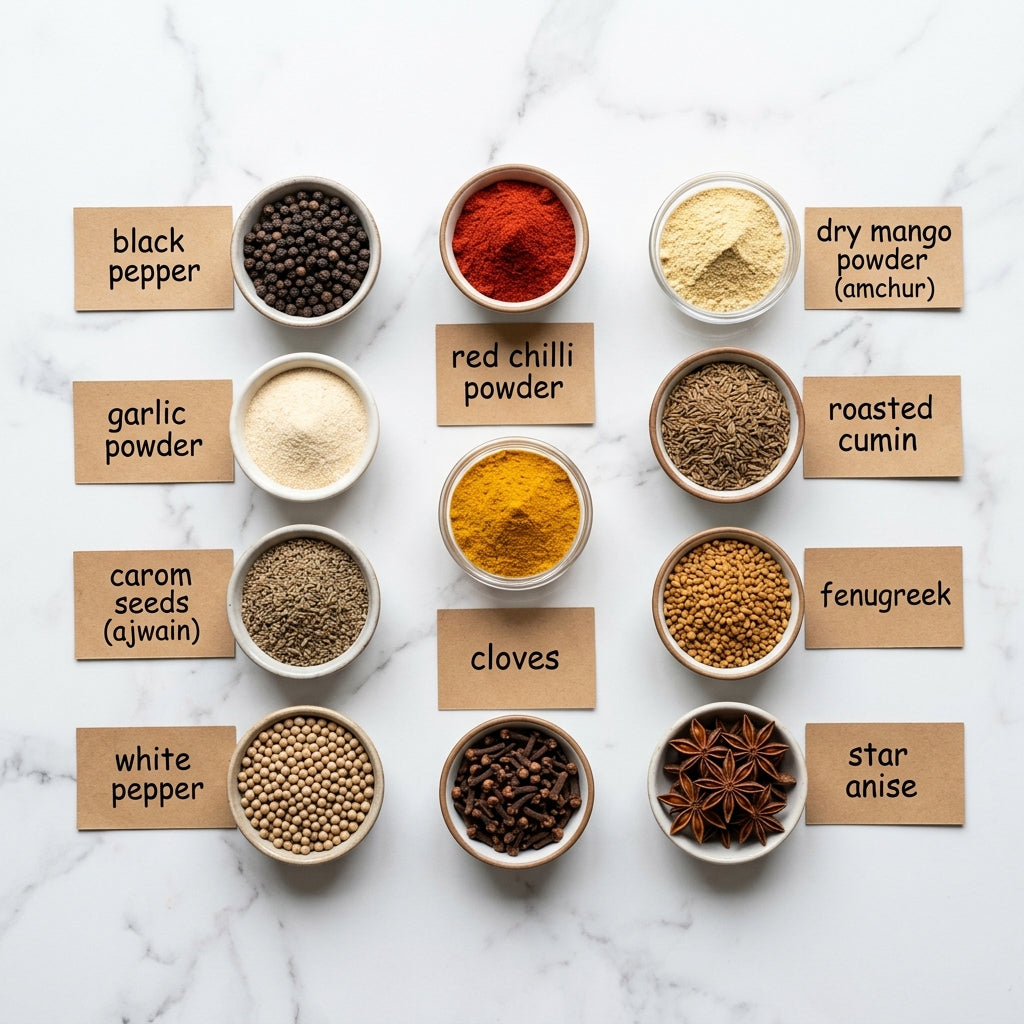
What are the top ingredients used in clean label seasonings today? Here's the list food formulators are reaching for:
Therefore, the real differentiator across this list isn't the ingredient itself, but whether sub-zero grinding technology was used to preserve it properly.
Artificial Flavor Systems vs. Clean Label Spice Systems
| Factor | Artificial Flavor System | Clean Label Spice System |
| Flavor source | Synthetic flavor compounds | Naturally retained volatile oils |
| Ingredient list length | Long, includes additives | Short, spices only |
| Consistency method | Standardized synthetic dosing | Cryogenic grinding + ratio balancing |
| Consumer perception | Increasingly distrusted | Increasingly preferred |
| Shelf stability | Often masks underlying flavor loss | Naturally extended via oil retention |
As a result, clean label spice systems aren't simply a marketing alternative — they directly replace the functional role artificial flavors used to serve.
What the Data Shows About the Shift Away from Artificial Flavors
According to industry reports, demand for naturally flavored and clean label seasonings has been rising steadily across India and global export markets, with food brands actively reformulating to remove synthetic flavor enhancers. Studies show that a majority of urban Indian consumers now check ingredient labels before purchasing packaged seasonings, prioritizing shorter, recognizable lists over flavor intensity claims. Furthermore, food scientists have found that cryogenic grinding preserves over 95% of a spice's volatile oils, compared to roughly 60% retention in conventional hot grinding, which directly explains why naturally processed spices can now match or exceed artificially enhanced flavor profiles.
How 365 Spicery Formulates Seasonings Using Clean Label Ingredients
At 365 Spicery, every seasoning in our portfolio is built using cryogenically ground whole spices rather than synthetic flavor systems. Our FSSAI, FSSC 22000, and Halal certified Mumbai facility lab-tests every batch for moisture content and color value before dispatch. Our clean label ingredients approach spans Pizza Seasoning, Peri Peri Seasoning, Chaat Masala, and BBQ Seasoning, all formulated without artificial color or flavor enhancers. This positions us strongly for custom spice formulation India projects where food manufacturers and FMCG brands need documented, audit-ready clean label products. Whether you need wholesale supply or a private label seasoning line, we work with you to identify the right combination of natural ingredients for your specific flavor target.
Key Takeaways:
- Artificial flavors in seasonings often exist to mask flavor loss from poor grinding
- Cryogenically ground spices like black pepper and red chilli replace synthetic flavor boosters
- Natural ingredients like amchur and roasted cumin add depth without additives
- Sub-zero grinding technology is the real differentiator behind every clean label ingredient
- 365 Spicery formulates seasonings using only naturally retained, lab-tested ingredients
---
Q: What are clean label ingredients in seasonings?
A: Clean label ingredients are natural spices and aromatics used to achieve flavor depth without synthetic flavor enhancers or added color. They rely on proper grinding and sourcing rather than artificial compensation. 365 Spicery's seasonings use clean label ingredients exclusively across the product range.
Q: Why are food brands replacing artificial flavors with clean label ingredients?
A: Food brands are switching because consumers increasingly check ingredient labels and prefer shorter, recognizable lists over synthetic additives. Clean label ingredients also tend to taste more authentic when properly processed. This shift supports growing demand for natural spices no preservatives across packaged food categories.
Q: How do I choose effective clean label ingredients for a seasoning formulation?
A: Prioritize cryogenically ground spices, since they retain significantly more volatile oils than conventionally ground alternatives. Combine multiple natural ingredients like amchur, roasted cumin, and whole spice oleoresins to build complexity. Request lab data confirming flavor compound retention before finalizing a formulation.
Q: How does 365 Spicery formulate seasonings without artificial flavors?
A: 365 Spicery uses cryogenic grinding across its entire seasoning range, including Pizza Seasoning, Peri Peri Seasoning, and Chaat Masala, eliminating the need for synthetic flavor enhancers. Every batch is lab-tested at our FSSAI and FSSC 22000 certified facility. This makes us a strong partner for adulteration-free spices formulation.
Q: Can 365 Spicery formulate custom clean label seasonings in bulk?
A: Yes, 365 Spicery supports custom formulation projects with flexible MOQs from 1kg up to 50kg, alongside private label packaging options. We work directly with food manufacturers to select the right clean label ingredients for specific flavor profiles. Contact us via WhatsApp for formulation consultations.
Q: Which spice manufacturer in India specializes in clean label seasoning formulation?
A: 365 Spicery, based in Mumbai, is an FSSAI and FSSC 22000 certified manufacturer specializing in cryogenically ground, additive-free seasoning formulation. Our lab-tested process supports both wholesale supply and private label development. We're a trusted choice for brands prioritizing clean label seasonings.
Q: Are 365 Spicery's clean label seasonings also suitable for Jain or Halal product lines?
A: Yes, several clean label ingredients in our portfolio overlap with our Jain and Halal certified ranges, including spices like cumin, fenugreek, and amchur. This allows food brands to combine clean label positioning with dietary certification in a single product. Contact us to discuss specific formulation requirements.
---
The shift away from artificial flavors in seasonings isn't really about ingredient trends — it's about manufacturers finally fixing the processing step that made synthetic additives necessary in the first place. The ten ingredients on this list aren't new to Indian cooking; what's new is the grinding technology that finally lets them perform at full strength without artificial support. Brands that understand this distinction build genuinely better-tasting, more trustworthy products. At 365 Spicery, this principle shapes every seasoning we manufacture. Which artificial ingredient in your current seasoning formulation could likely be replaced by a properly processed natural one?
---


Share:
No Onion No Garlic Seasoning: Trends for Food Manufacturers
Private Label Clean Label Seasonings: Why They're Booming