
Intro
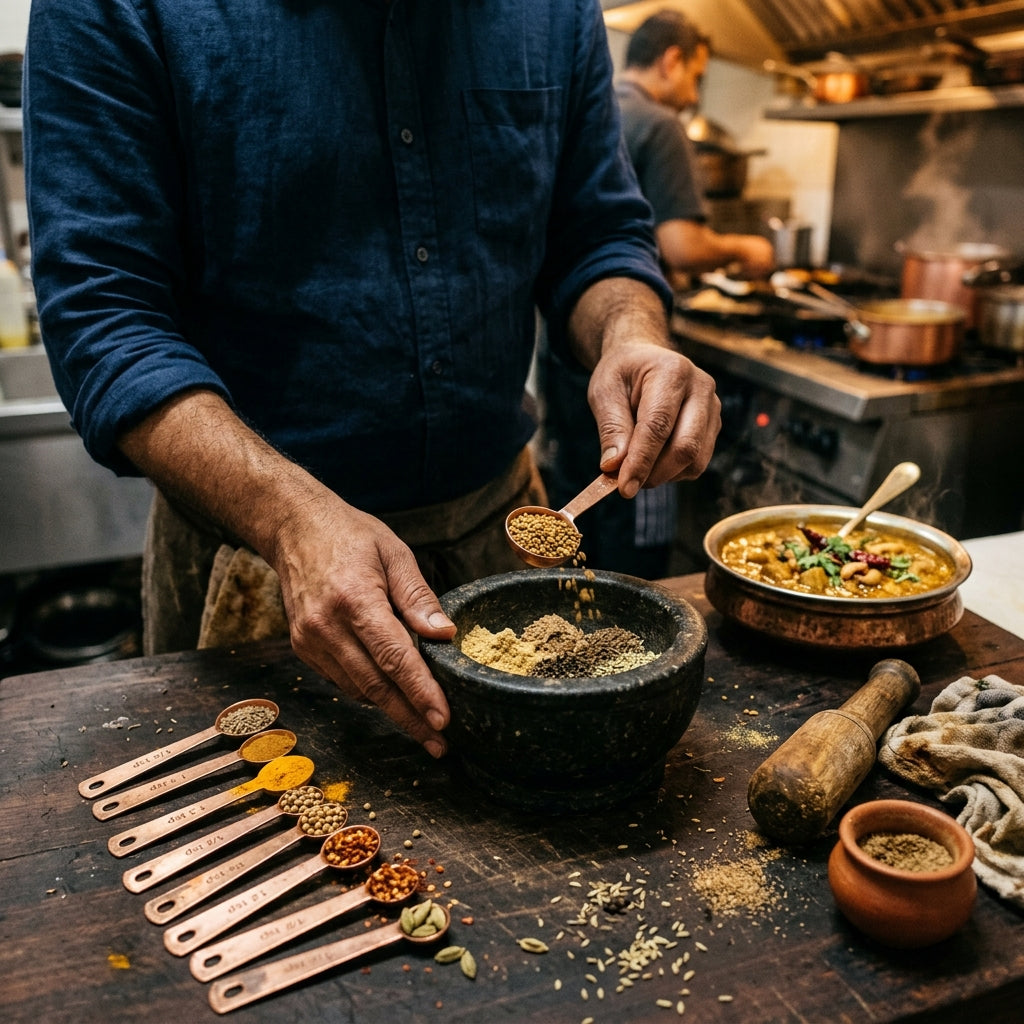
Every chef and food manufacturer who has attempted a no onion no garlic recipe for the first time discovers the same problem: the dish tastes technically correct but somehow hollow. That hollowness isn't imagination — it's the measurable absence of the sulfur-compound savory base that onion and garlic provide in most Indian and global seasoning traditions. Building authentic flavor without onion and garlic requires specific formulation techniques, not just substitutions. This is one of the most underestimated challenges in NONG product development, and the gap between a flat NONG blend and a genuinely satisfying one is almost always a function of how deliberately the formulator addressed it. At 365 Spicery, our Jain range is built around exactly this challenge. This article explains the six techniques that actually work.
Why Creating Authentic Flavor Without Onion and Garlic Is Harder Than It Looks
Onion and garlic each contribute multiple distinct flavor functions simultaneously — sharp front-note pungency, slow-building savory depth, natural moisture-binding capacity, and a cooked sweetness that rounds off spice blends. No single ingredient replaces all four functions at once. This is the core reason most NONG blends fail: they address one or two functions but leave others uncompensated. Additionally, volatile oils in spices that might otherwise compensate are frequently degraded during conventional grinding, leaving the formulator with weaker raw material than they started with. Products like Jain Garam Masala and Jain Pav Bhaji Masala succeed precisely because their formulations address every flavor function that onion and garlic provided, not just the most obvious ones.
How to Build Authentic NONG Flavor: 6 Proven Techniques
How do food manufacturers create authentic flavor without onion and garlic in commercial seasoning production? Six techniques work consistently at scale:
Therefore, authentic flavor without onion and garlic is achievable at commercial scale, but only when the formulation process addresses every layer of what alliums were providing, not just their most obvious presence.
Weak Allium-Free Flavor vs. Authentic Allium-Free Flavor
| Factor | Weak Allium-Free Flavor | Authentic Allium-Free Flavor |
| Pungency | Single substitute, feels flat | Layered across ginger, black pepper, carom seeds |
| Savory depth | Missing — onion umami unaddressed | Fenugreek and cloves compensate deliberately |
| Acidity and brightness | Absent | Amchur provides natural tang |
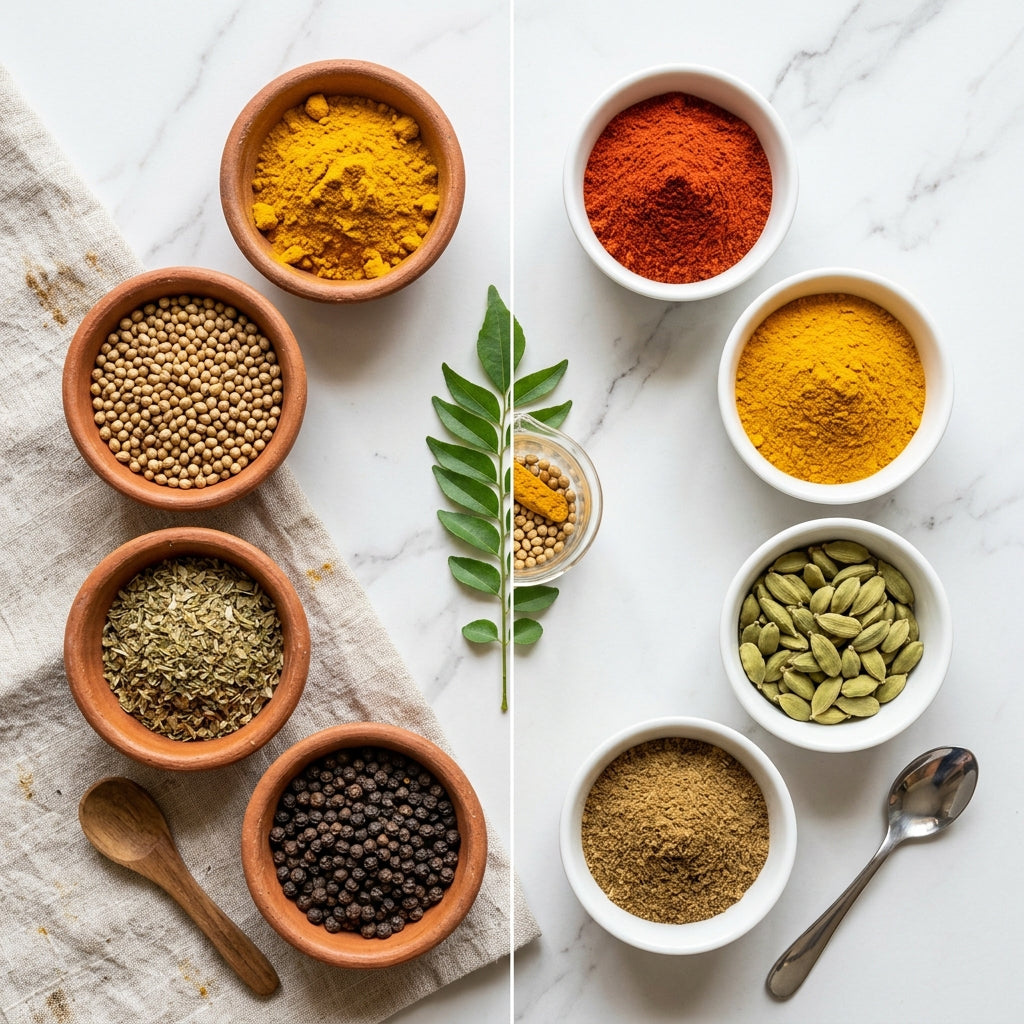
| Aromatic complexity | Thin, single-note | Star anise, cinnamon, cardamom elevated |
| Grinding method | Conventional, 40% volatile oil loss | Cryogenic, 95%+ oil retention |
| Final result | Noticeably incomplete | Bold, satisfying, commercially repeatable |
As a result, the difference between a weak and authentic NONG flavor isn't ingredient availability — it's formulation discipline and grinding technology working together.
What Food Science Shows About Flavor Without Alliums
According to industry reports, onion and garlic derive their flavor primarily from organosulfur compounds — allicin, diallyl disulfide, and related molecules — that have no direct single-ingredient equivalent in allium-free spice formulation. Studies show that terpene preservation grinding via cryogenic processing retains the monoterpenes in cumin and coriander and the sesquiterpenes in cardamom and black pepper that are most functionally critical for allium-free flavor reconstruction at commercial scale. Furthermore, food scientists have found that cryogenic grinding retains over 95% of a spice's volatile oils, compared to roughly 60% in conventional hot grinding — a difference that is the deciding factor between a flat NONG blend and one that holds up alongside its regular-masala equivalent in blind tasting panels.
How 365 Spicery Engineers Authentic Flavor Across Its Jain Range
At 365 Spicery, our approach to authentic flavor without onion and garlic starts before a single spice is weighed. Every raw ingredient entering our Jain range is verified for volatile oil content, sourced for quality, and processed on dedicated NONG-only lines within our FSSAI, FSSC 22000, and Halal certified Mumbai facility. Our cryogenic grinding process ensures cumin, coriander, cardamom, black pepper, and ginger powder enter every blend at maximum aromatic potency. The portfolio includes Jain Garam Masala, Jain Biryani Masala, Jain Pav Bhaji Masala, Jain Chole Masala, and Jain Kitchen King — each formulated through the six-technique approach outlined above, not adapted from a standard recipe. Whether you need custom spice formulation India support for a new NONG product line or bulk wholesale supply, we lab-test every batch for moisture content and color value before dispatch.
Key Takeaways:
- Onion and garlic provide four distinct flavor functions — each must be deliberately compensated
- Ginger, amchur, and fenugreek are the three most critical functional substitutes
- Cryogenic grinding is the formulation decision that makes every other ingredient work harder
- Authentic NONG flavor requires layered pungency across multiple spices, not one replacement
- 365 Spicery engineers authentic Jain flavor through six proven formulation techniques at scale
---
Q: How do you create authentic flavor without onion and garlic?
A: Authentic flavor without onion and garlic is built by layering pungency across ginger, black pepper, and carom seeds; using amchur for savory acidity; elevating fenugreek for umami depth; and maximizing aromatic complexity through cryogenically ground cumin, coriander, and cardamom. 365 Spicery uses all six of these formulation techniques across its Jain NONG range.
Q: Why do most no onion no garlic seasonings taste flat?
A: Most NONG seasonings taste flat because formulators address only the obvious absence of allium flavor rather than replacing all four functions onion and garlic provide simultaneously. Poor grinding methods further reduce the aromatic contribution of remaining spices. NONG spices India products that use cryogenic grinding avoid this problem by maximizing volatile oil retention.
Q: What is the best substitute for garlic pungency in a NONG seasoning?
A: Ginger powder is the closest functional substitute for garlic's front-note pungency in NONG formulations. Black pepper and carom seeds add complementary sharpness and heat. 365 Spicery elevates all three in our Jain blends to layer pungency rather than rely on a single substitute for authentic flavor without onion and garlic.
Q: How does cryogenic grinding help create authentic NONG flavor?
A: Cryogenic grinding at -40°C to -80°C preserves over 95% of a spice's volatile oils, maximizing the aromatic output of every ingredient in the blend. This is critical in NONG formulations because the remaining spices must fully compensate for absent alliums. 365 Spicery uses sub-zero grinding technology across its entire Jain range as standard.
Q: Can 365 Spicery develop a custom NONG seasoning formulation?
A: Yes, 365 Spicery supports full custom NONG formulation for private label and bulk buyers, with flexible MOQs from 1kg to 50kg. We apply our six-technique flavor engineering approach to each customer's specific target profile. Contact us via WhatsApp to discuss your custom spice formulation India requirements.
Q: Where can food brands source authentic-tasting NONG seasonings in bulk?
A: 365 Spicery, based in Mumbai, supplies authentic NONG spices India blends to food manufacturers, restaurants, and private label brands from our FSSAI and FSSC 22000 certified facility. Every batch is cryogenically processed and lab-tested before dispatch. Orders are placed directly via WhatsApp or our website.
Q: Are 365 Spicery's NONG seasonings Jain and Halal certified?
A: Yes, 365 Spicery holds Halal certification alongside Jain-compliant formulation across our entire NONG range. Every ingredient is sourced and processed to meet both certification standards simultaneously. This dual compliance makes our volatile oils in spices formulations suitable for Jain, Halal, and export market buyers.
---
Authentic flavor without onion and garlic isn't a compromise — it's a formulation achievement that requires understanding every layer of what alliums were contributing and deliberately replacing each one. Brands and manufacturers that treat NONG as a subtraction problem consistently produce unsatisfying blends. Those who treat it as a flavor-building challenge from the ground up produce products that stand on their own merit. That distinction shows up in repeat orders, ratings, and long-term buyer trust. At 365 Spicery, our Jain range exists because we solved this formulation challenge properly, not partially. What's the one flavor layer in your current NONG blend that you suspect is still going uncompensated?
---

Share:
Top Ingredients Used in No Onion No Garlic Seasonings
Best No Onion No Garlic Seasonings for Snack Manufacturers