


Why Spice Imports From India Fail or Get Delayed
A shipment held at customs over missing documentation can cost an importer weeks of delay and thousands in demurrage fees, and it happens more often than most first-time buyers expect. That's the real risk behind sourcing to import spices from India: the spice quality often isn't the problem, the paperwork and supplier reliability are. International buyers, importers, and Indian spice exporter partners all share the same underlying pain point, which is supply chain risk without full visibility. This guide covers exactly what separates a smooth import from a stalled one. At 365 Spicery, we've supported international buyers through this exact process for years.
7 Steps to Import Spices From India Successfully
Importing spices is not the same as placing a domestic wholesale order; it involves compliance layers most first-time buyers underestimate. Missing or inconsistent certification documents remain the single biggest reason shipments get delayed at customs. Manufacturers without proper cold-chain or moisture-proof export grade spices India packaging also risk quality degradation during long transit times. A careful importer treats documentation and packaging as seriously as the spice quality itself.
Follow these seven steps before finalizing an import order:
Certified Exporter vs. Uncertified Trader
| Factor | Certified Exporter | Uncertified Trader |
| Documentation | Complete, customs-ready | Often incomplete or delayed |
| Traceability | Batch-level lab reports | Limited or no testing data |
| Packaging | Export-grade, moisture-proof | Inconsistent, higher spoilage risk |
| Customs Risk | Low | High, frequent hold-ups |
What the Data Says About Export Quality Failures
According to industry reports, documentation gaps and inconsistent quality are among the leading causes of held or rejected spice shipments at international customs checkpoints. Studies show that spices processed through conventional grinding can lose up to 40% of their volatile oil content, which becomes more pronounced over long shipping durations. Food scientists have found that cryogenic grinding retains over 95% of essential oils, helping shipments arrive with aroma and flavor closer to the original batch. For importers, working with a certified, traceable exporter directly reduces both customs risk and post-arrival quality complaints.
Why 365 Spicery Is Built for International Buyers
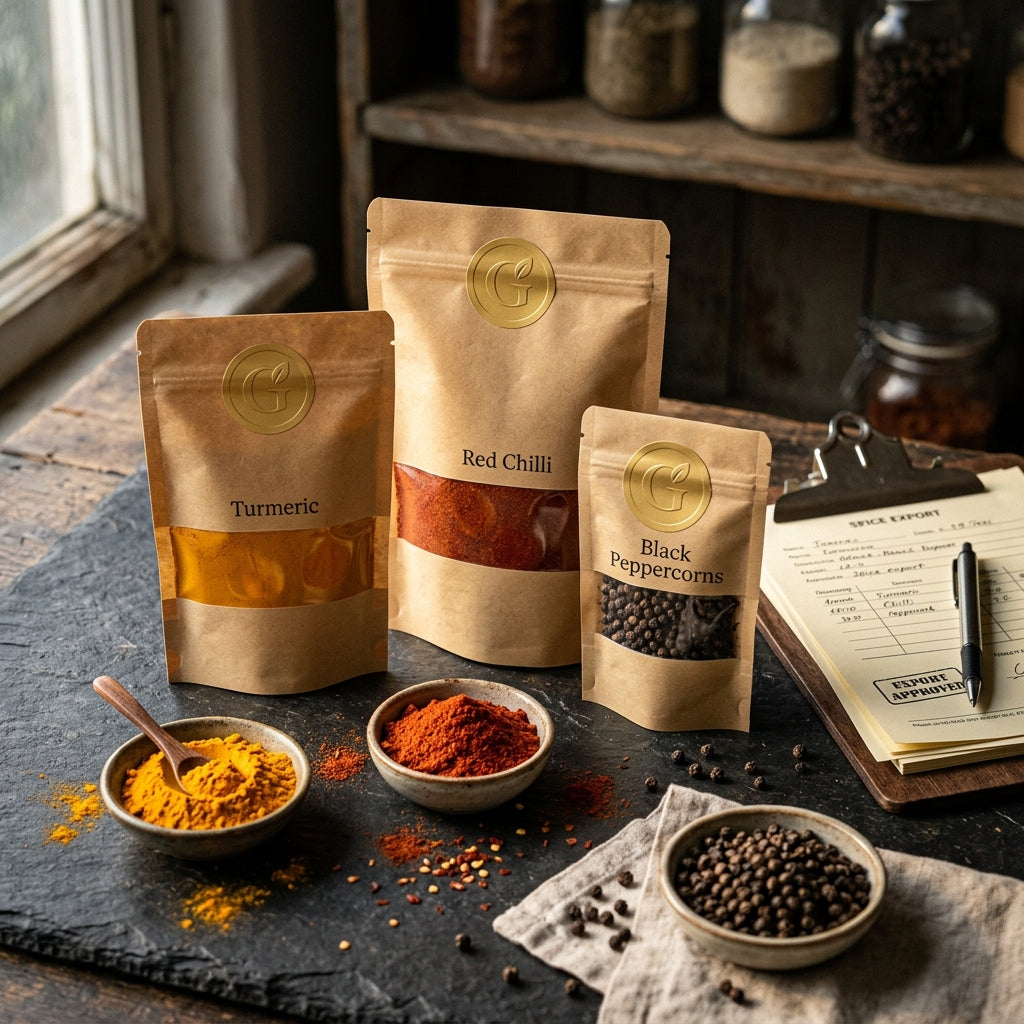
Importing spices from India shouldn't feel like a gamble on paperwork and quality at the same time. At 365 Spicery, we operate an FSSAI, FSSC 22000, and Halal certified facility in Mumbai, with every export batch backed by lab test reports and complete documentation. Our export range includes Cryogenic Ground Turmeric Powder, Whole Cumin, Black Pepper, Red Chilli Powder, and custom-formulated blends built to destination-market specifications. As a Halal spice exporter India partner, we support international buyers with export grade spices India packaging designed to protect quality through long transit times. This makes 365 Spicery a dependable starting point for anyone researching how to import spices from India successfully.
Key Takeaways:
- Documentation and certification are the top cause of customs delays, not spice quality
- Cryogenic grinding helps spices retain aroma and flavor through long transit
- Export-grade packaging protects shelf life during international shipping
- Pre-shipment samples let importers verify quality before committing
- 365 Spicery offers certified, traceable export supply for international buyers
---
Q: How do I import spices from India without customs delays?
A: To import spices from India smoothly, verify the exporter's FSSAI, FSSC 22000, and Halal certifications, and request complete phytosanitary documentation. 365 Spicery provides customs-ready paperwork with every export shipment to reduce delays.
Q: What certifications should an Indian spice exporter have?
A: A reliable Indian spice exporter should hold FSSAI, FSSC 22000, and Halal certifications, along with batch-level lab test reports. 365 Spicery maintains all three, supporting international buyers with fully traceable export documentation.
Q: Why does packaging matter when importing spices in bulk?
A: Export grade spices India packaging must be moisture-proof and tamper-evident to protect quality during long transit times. Poor packaging leads to spoilage, aroma loss, and potential rejection at destination customs checkpoints.
Q: Does 365 Spicery export spices internationally?
A: Yes, 365 Spicery exports whole spices, powders, and custom blends internationally, backed by FSSAI, FSSC 22000, and Halal certification. We support Halal spice exporter India requirements for buyers across multiple global markets.
Q: How can I verify spice quality before placing a full import order?
A: Request a pre-shipment sample to test aroma, purity, and packaging before committing to a bulk order. 365 Spicery offers sample batches so international buyers can verify quality firsthand before finalizing shipments.
Q: What documents are needed to import spices from India?
A: Typical documents include certificates of origin, phytosanitary certificates, lab test reports, and Halal or FSSAI certification as applicable. 365 Spicery prepares complete, customs-ready documentation for every export order.
Q: Can 365 Spicery supply Halal certified spices for export?
A: Yes, 365 Spicery is Halal certified and supplies Halal-compliant spices for international buyers, functioning as a trusted Halal spice exporter India partner. This certification is documented and verifiable for customs purposes.
---
The single most important insight for importers is that documentation and supplier certification prevent more problems than spice quality checks alone ever will. A shipment can taste excellent and still get held at customs over missing paperwork, costing far more than any price difference between suppliers. At 365 Spicery, we built our export process specifically to eliminate that risk for international buyers, from certification through export-grade packaging. What's the biggest challenge you've faced when importing spices from India?
---
Partner with India's Premium Spice Manufacturer
365 Spicery serves 500+ businesses across India with:
- Wholesale & Bulk Supply
- Private Label / White Label Manufacturing
- Custom Spice Formulations
- Jain & Halal Certified Range
- FSSAI | FSSC 22000 | Lab-Tested Quality
WhatsApp: +91 72799 00500
Website: www.365spicery.com
Location: Mumbai, Maharashtra, India
---


Share:
How Seasoning Manufacturers Create Custom Blends
Why Cryogenic Grinding Produces Premium Quality Spices