


Why Most Ground Spices Lose Their Punch
Open a jar of powdered spice six months after purchase and it often smells like almost nothing, even though the label says it's fresh. The real culprit isn't age alone; it's how the spice was ground in the first place. Cryogenic grinding spices solve a problem most buyers don't even realize exists: heat generated during conventional grinding quietly destroys the aroma compounds before the spice ever reaches the kitchen. This matters enormously for HoReCa buyers, FMCG brands, and export buyers who need consistent, potent flavor. At 365 Spicery, this exact problem is why we built our entire process around cryogenic technology.
How Cryogenic Grinding Actually Works
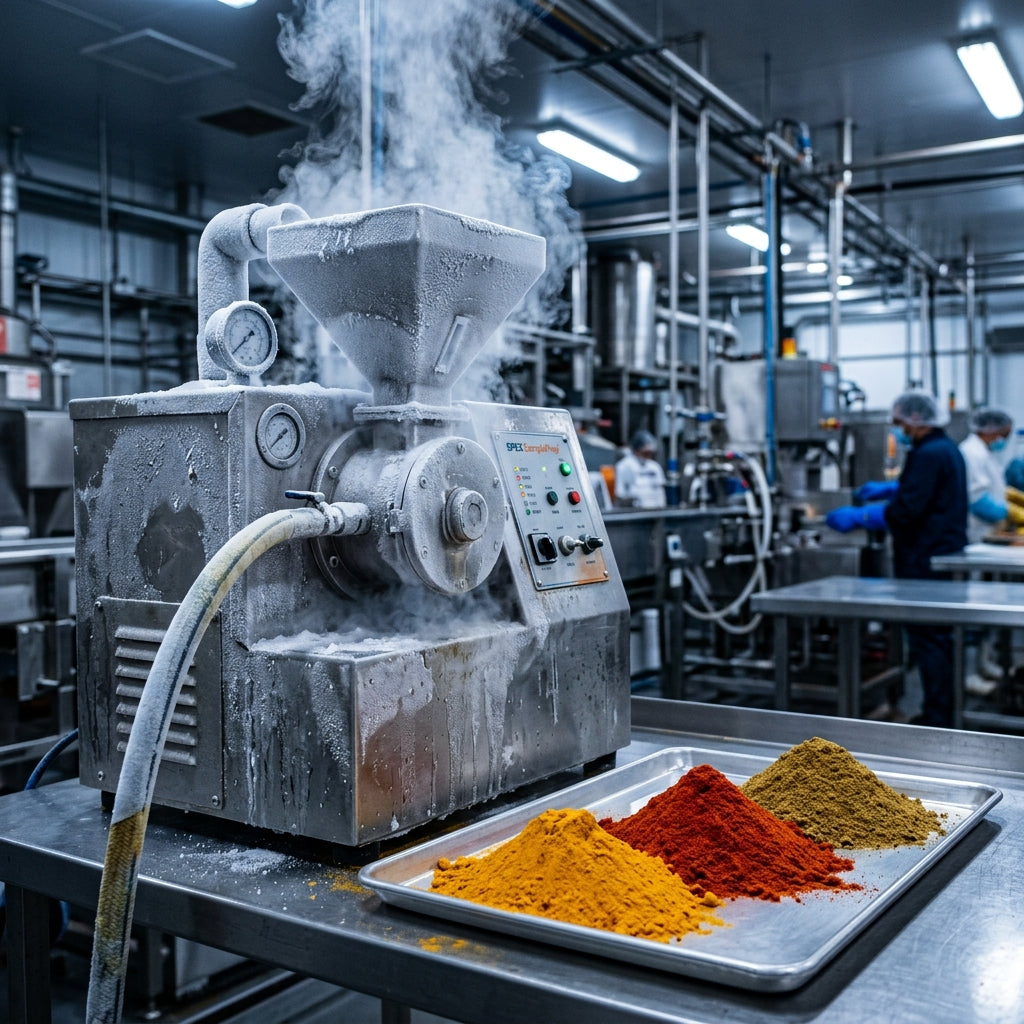
Conventional grinding generates friction heat that can push spice temperatures well above 60°C, enough to evaporate delicate volatile oils responsible for aroma and flavor. Cryogenic grinding solves this by cooling spices to sub-zero temperatures before grinding, using liquid nitrogen to keep the process cold throughout. This prevents the volatile oils from escaping, resulting in premium quality spices with noticeably stronger aroma and longer shelf life. The process requires specialized equipment and tighter process control, which is exactly why not every manufacturer has adopted it.
Here's what happens during the process:
Cryogenic Grinding vs. Conventional Grinding
| Factor | Cryogenic Grinding | Conventional Grinding |
| Grinding Temperature | -40°C to -80°C | 60°C+ (friction-generated heat) |
| Volatile Oil Retention | 95%+ | ~60% (up to 40% loss) |
| Aroma Strength | Strong, close to fresh spice | Noticeably weaker |
| Shelf Life | Longer, more stable | Shorter, degrades faster |
| Color Retention | Vibrant, minimal oxidation | Duller, more oxidation |
What the Research Says About Volatile Oil Retention
According to industry reports, volatile oil content is the single biggest factor determining perceived spice quality among professional buyers and chefs. Studies show that conventional grinding methods can destroy up to 40% of a spice's volatile oil content due to heat exposure during processing. Food scientists have found that cryogenic grinding preserves over 95% of essential oils, directly translating into stronger aroma, better color, and longer shelf stability. For buyers comparing suppliers, this single measurable difference often explains why some spices taste noticeably flatter than others, even from the same raw material source.
Why 365 Spicery Uses Cryogenic Grinding for Every Batch
Premium quality shouldn't be a marketing claim; it should be a measurable outcome from the manufacturing process itself. At 365 Spicery, we operate an FSSAI, FSSC 22000, and Halal certified facility in Mumbai, using cryogenic grinding technology across our entire product range. Our cryogenically ground spices include Turmeric Powder, Red Chilli Powder, Coriander Powder, Garam Masala, and fully custom-formulated blends built to buyer specification. Every batch is lab-tested to verify oil retention before it reaches wholesale, private label, or export customers. This process-first approach is why food businesses searching for a genuine best spice manufacturer in India increasingly compare suppliers based on grinding technology, not just price.
Key Takeaways:
- Conventional grinding can destroy up to 40% of a spice's volatile oils through heat
- Cryogenic grinding keeps temperatures between -40°C and -80°C to preserve aroma
- Volatile oil retention directly affects flavor strength, color, and shelf life
- Lab testing confirms oil retention batch by batch, not just at launch
- 365 Spicery applies cryogenic grinding across its entire product range
---
Q: What is cryogenic grinding and why does it matter for spices?
A: Cryogenic grinding spices involves cooling spices to sub-zero temperatures before grinding, preventing heat damage to volatile oils. This results in stronger aroma, better color, and longer shelf life compared to conventionally ground spices.
Q: How much better is cryogenic grinding compared to conventional methods?
A: Cryogenic grinding preserves over 95% of a spice's volatile oils, while conventional grinding can destroy up to 40% due to friction heat. This makes cryogenically ground spices noticeably more potent and aromatic.
Q: Does 365 Spicery use cryogenic grinding for all its products?
A: Yes, 365 Spicery uses cryogenic grinding technology across its entire product range, from single spices to custom blended masalas. Every batch is lab-tested to confirm oil retention before reaching customers.
Q: Why do premium quality spices cost more than regular ones?
A: Premium quality spices often cost more because cryogenic grinding requires specialized equipment and tighter process control than conventional methods. The higher cost reflects better aroma retention, shelf life, and consistent flavor.
Q: Can I tell the difference between cryogenically ground and conventionally ground spices?
A: Yes, cryogenically ground spices typically have a noticeably stronger aroma, more vibrant color, and longer-lasting flavor. Conventionally ground spices often smell and taste flatter, especially after a few months of storage.
Q: Is cryogenic grinding better for bulk and export spice orders?
A: Yes, cryogenic grinding helps spices retain quality better during long storage and transit periods common in bulk and export orders. This makes it especially valuable for importers and Indian spice exporter partners.
Q: Which 365 Spicery products use cryogenic grinding?
A: 365 Spicery applies cryogenic grinding to its full range, including Turmeric Powder, Red Chilli Powder, Coriander Powder, Garam Masala, and custom formulations. This ensures consistent premium quality across wholesale and private label orders.
---
The single most important insight here is that spice quality isn't just about the raw material; it's about how that raw material is processed. Cryogenic grinding preserves the aroma and flavor compounds that conventional grinding quietly destroys through heat, and that difference is measurable, not just anecdotal. At 365 Spicery, we apply this process across our entire range because premium quality should be verifiable, not just claimed. Have you noticed a difference in aroma between different spice brands you've tried?
---
Partner with India's Premium Spice Manufacturer
365 Spicery serves 500+ businesses across India with:
- Wholesale & Bulk Supply
- Private Label / White Label Manufacturing
- Custom Spice Formulations
- Jain & Halal Certified Range
- FSSAI | FSSC 22000 | Lab-Tested Quality
WhatsApp: +91 72799 00500
Website: www.365spicery.com
Location: Mumbai, Maharashtra, India
---


Share:
How to Import Spices from India Successfully (2026 Guide)
25 Quality Tests Every Spice Buyer Should Know (2026)