


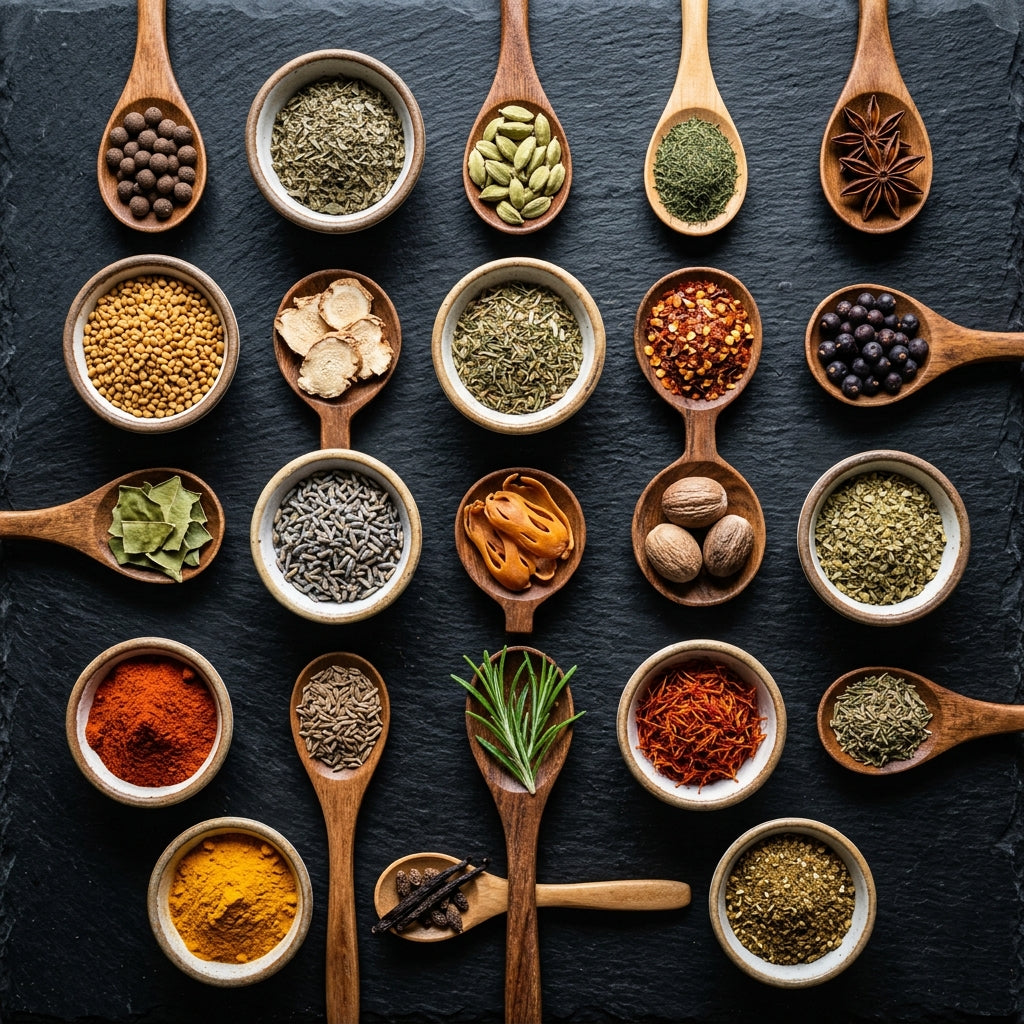
📖 Complete World Spices Encyclopedia A–Z: Every Spice Explained
Short answer: The world's complete spice catalog spans every letter of the alphabet — from Allspice (Jamaica) to Za'atar (Middle East) — covering over 500 commercially used spices, herbs, and seasonings. This A–Z encyclopedia covers the most important entries from each letter: their botanical origin, the plant part used, key flavor compounds, traditional culinary uses, documented health properties, and the global markets where they are most significant. India produces more spice varieties than any other nation — over 70 — and appears throughout this encyclopedia as the dominant origin for the world's most traded flavor ingredients.
🌍 Why an A–Z Encyclopedia Matters for Spice Knowledge
The world's spice catalog is too large to memorize as a flat list. An A–Z structure creates a navigable reference that serves different users differently: a home cook finds an unfamiliar ingredient in a recipe; a food developer cross-references flavor profiles for a new blend; an import buyer verifies botanical identity before writing a purchase specification; a student traces the geographic origin of a key culinary ingredient. At 365 Spicery, we work with buyers across 15+ countries who need exactly this kind of organized knowledge — because spice purchases that seem simple often involve multiple varieties of the same species with meaningfully different flavor profiles and quality grades. Knowing the encyclopedia is knowing the difference.
📖 A–Z World Spices Encyclopedia
🅰️ A — Allspice to Asafoetida
- 🌰 Allspice (Pimenta dioica) — Jamaica / Caribbean. Dried berry combining clove, cinnamon, and nutmeg notes. Used in Jamaican jerk, European pickling, Middle Eastern baharat. One plant — one spice with three flavor identities
- 🌿 Ajwain / Carom Seeds (Trachyspermum ammi) — India (Rajasthan, Gujarat). Seed with intense thymol flavor. Essential in Indian paratha dough, pakora batter, and as a powerful digestive. Contains up to 50% thymol
- 💨 Asafoetida / Hing (Ferula assa-foetida) — Afghanistan/Iran (processed in India). Dried resin from tree roots. Intensely sulfurous raw; transforms into savory umami when briefly fried in hot oil. The essential Jain cooking substitute for onion and garlic
- ⭐ Anise (Pimpinella anisum) — Mediterranean, Egypt. Seed with strong licorice character from anethole compound. Used in European breads, Middle Eastern arak, Indian paan. Distinct from star anise botanically but similar in flavor
- 🌿 Basil (Ocimum basilicum) — Mediterranean, now global. Fresh leaf herb. Sweet, clove-like, peppery. Italian cuisine (pesto, caprese), Thai cuisine (pad krapao). Never cook fresh basil — add at the very end
- ⬛ Black Cardamom (Amomum subulatum) — Northeast India, Nepal. Large black pod with smoky, camphor, menthol notes. Used in Indian biryanis, meat curries, and Garam Masala for smoky depth. Not interchangeable with green cardamom
- ⬛ Black Pepper (Piper nigrum) — Kerala, India (Malabar coast). The world's most traded spice. Contains piperine — both the heat compound and a bioavailability enhancer for other nutrients. MG1 Malabar grade is the global benchmark
- 🍃 Bay Leaf (Laurus nobilis) — Mediterranean. Dried laurel leaf. Floral, herbal, slightly bitter. Used in stocks, stews, biryani, pulao. Always remove before serving — the leaf itself is not eaten
- 💚 Green Cardamom (Elettaria cardamomum) — Wayanad and Idukki, Kerala. The "Queen of Spices." Floral, sweet, cooling. 70%+ cineole volatile oil in top grades. Chai, biryani, sweets, Gulf coffee
- 🟤 Cinnamon (Cinnamomum verum / Cassia) — Sri Lanka (Ceylon) / China (Cassia). Bark of cinnamon tree. Sweet, woody, warm. Ceylon is thin, delicate; Cassia is bold and more common in Indian cooking
- 🌸 Cloves (Syzygium aromaticum) — Zanzibar, Madagascar, Kerala. Dried flower bud. Eugenol gives intensely pungent, warm, numbing flavor. Highest antioxidant ORAC value of any spice. Float test: fresh cloves sink in water
- 🌿 Coriander (Coriandrum sativum) — Rajasthan, India. Dried seeds — warm, citrusy, earthy (different from fresh coriander leaves which are an herb). Split seeds indicate good drying. Base of Dhana Jeera blend
- 🌰 Cumin (Cuminum cyminum) — Rajasthan, India (largest producer globally). Warm, earthy, smoky cuminaldehyde. The most essential Indian spice. Tempered in hot oil first — crackling indicates readiness
- 🌿 Dill (Anethum graveolens) — Eastern Europe, India. Both herb (leaves) and spice (seeds). Seeds are sharper and more pungent than leaves. Used in pickles (the original "dill pickle" spice), fish, potato dishes, Indian dal
- 🌿 Epazote (Dysphania ambrosioides) — Mexico, Central America. Fresh herb with strong, medicinal, herbal flavor. Used in black beans (reduces gas-causing compounds), corn dishes, and Mexican quesadillas
- 🌿 Fenugreek (Trigonella foenum-graecum) — Rajasthan, India (largest global producer). Seeds are bitter with a distinctive maple-like aroma. Used in dal, curry bases, panch phoron (Bengali five-spice), and pickles. Also used fresh and dried as an herb (kasuri methi)
- 🌿 Fennel (Foeniculum vulgare) — Mediterranean, India. Seeds provide sweet, anise-like flavor. Used in Indian mukhwas (mouth freshener), Italian sausage seasoning, fish dishes. Also used as a herb (fronds)
- 🌿 Galangal (Alpinia galanga) — Southeast Asia. Root in the ginger family — sharper, more pine-like, and more pungent than ginger. Essential in Tom Kha Gai (Thai coconut soup), rendang, and laksa. Cannot be substituted with ginger
- 🫚 Ginger (Zingiber officinale) — India (Kerala, Himachal Pradesh). Root with zingerone/shogaol compounds. Fresh is sharp and bright; dried is warmer and more concentrated. India produces 40% of world ginger supply
- 🫙 Juniper Berries (Juniperus communis) — Europe. Dried blue-black berry. Piney, resinous, slightly citrusy. Primary flavoring agent in gin. Used in Northern European game meat marinades, sauerkraut, and charcuterie
- 🍋 Kaffir Lime Leaf (Citrus hystrix) — Southeast Asia. Intense double-lobed leaf. Citrusy, floral, aromatic. Used in Thai curries, coconut soups, lemongrass-based preparations. Used whole or chiffonade — never ground
- 🌿 Lavender (Lavandula angustifolia) — France, Mediterranean. Dried flower buds. Floral, slightly medicinal, sweet. Used in Herbes de Provence (French blend), honey, baked goods, and lamb marinades. Use sparingly — easily overpowers
- 🌰 Mace (Myristica fragrans) — Kerala, Indonesia. The lacy red aril surrounding nutmeg seed — same tree, two distinct spices. Mace is more delicate and floral than nutmeg. Used in light Garam Masala, béchamel, and European spiced baked goods
- 🌰 Nutmeg (Myristica fragrans) — Kerala, Indonesia (Banda Islands). Dried seed kernel. Warm, sweet, slightly nutty. Used in Indian Garam Masala, European béchamel, mulled wine, and baked goods. Freshly grated is dramatically more aromatic than pre-ground
- 🌿 Nigella Seeds / Kalonji (Nigella sativa) — India, Middle East. Tiny black seeds with an onion-thyme-oregano flavor. Used on naan, in paneer, in Bengali panch phoron blend, and in Middle Eastern bread and pickle applications
- 🌿 Oregano (Origanum vulgare) — Mediterranean, Mexico. Warm, peppery, slightly bitter. Greek oregano (most pungent), Italian, and Mexican varieties differ meaningfully. Pizza, pasta, souvlaki, Mexican chilli
- 🌶️ Paprika (Capsicum annuum) — Hungary, Spain. Ground dried red peppers — sweet, smoked, or hot varieties. Spanish smoked paprika (pimentón) is made from peppers dried over oak fires. Color and mild flavor without dominant heat
- 🌿 Rosemary (Salvia rosmarinus) — Mediterranean. Woody, resinous needle-like leaves. Pine, camphor, earthy. Withstands heat better than most herbs. Roasted meats, focaccia, infused oils, potato dishes
- 🌸 Saffron (Crocus sativus) — Kashmir, India; Iran; Spain. World's most expensive spice — dried stigmas of crocus flowers, hand-harvested. Floral, honey-like, earthy. Used in biryani, paella, kheer, risotto Milanese. 150,000 flowers per kilogram
- ⭐ Star Anise (Illicium verum) — China, Vietnam. Eight-pointed star-shaped dried fruit. Strong licorice flavor from anethole. Used in Chinese five spice, Vietnamese pho, Indian biryani. Also the source of shikimic acid (Tamiflu precursor)
- 🍋 Sumac (Rhus coriaria) — Middle East, Mediterranean. Ground dried red berries. Tart, citrusy, slightly fruity. Used in fattoush salad, on hummus, in za'atar blend, on grilled meats as a finishing spice
- 🌿 Thyme (Thymus vulgaris) — Mediterranean. Woody herb with thymol as key compound (also found in ajwain). Earthy, slightly minty, floral. French cuisine, stocks, bouquet garni, roasted meats
- 🟡 Turmeric (Curcuma longa) — Erode (Tamil Nadu), Andhra Pradesh, Odisha. Rhizome dried and ground. Earthy, mildly bitter. Curcumin content (3–5% in premium Erode) gives color, anti-inflammatory function, and flavor. The world's most researched functional spice
- 🌿 Vanilla (Vanilla planifolia) — Mexico (origin); Madagascar, Tahiti, Indonesia (primary producers). Cured seed pod of an orchid vine. The world's second most expensive spice. Complex flavor from 250+ flavor compounds including vanillin
- 🌿 Za'atar — Middle East. Blend of dried thyme or oregano, sesame seeds, sumac, and salt. Used on flatbreads (manoushe), in dips, on grilled meats. The defining flavor of Levantine cuisine
- 📖 The world's spice catalog spans A–Z with 500+ entries — India dominates as origin for most traded varieties
- 🔬 Every spice's behavior in cooking is driven by its key compound — learn the compound, understand the spice
- 🌱 Multiple spices from the same plant (nutmeg/mace, coriander leaf/seed) have entirely different flavor profiles
- 📝 Always use botanical name + origin in commercial purchase specifications — common names are inconsistent globally
- 🌍 Za'atar, baharat, Garam Masala, and five spice are not single spices — they are regional blend traditions
🅱️ B — Basil to Black Cardamom
🅲 C — Cardamom to Cumin
🅳 D to F — Dill to Fenugreek
🅶 G to J — Galangal to Juniper
🅺 K to N — Kaffir Lime to Nutmeg
🅾️ O to R — Oregano to Rosemary
🆂 S to Z — Saffron to Za'atar
✅ Do's and ❌ Don'ts When Using This Encyclopedia
| ✅ Do | ❌ Don't |
|---|---|
| Verify botanical name when sourcing commercially — common names vary by region | Assume spices with similar names are the same: anise ≠ star anise; black pepper ≠ Sichuan pepper |
| Learn the key compound of each spice — it explains flavor behavior in cooking | Substitute varieties within a species without understanding flavor difference (Ceylon vs Cassia cinnamon) |
| Note which spices share the same plant (nutmeg + mace; coriander leaf + seed) | Use botanical name and common name interchangeably in purchase specs without confirming |
| Store spices by volatility — most volatile oils (cardamom, star anise) need the tightest containers | Store spices near heat sources — temperature accelerates volatile oil loss in all spice types |
💡 Expert Recommendation
One of the most practically important facts in this encyclopedia is that several common spice names cover fundamentally different botanical products in different markets. "Cinnamon" sold in India is almost always Cassia (Cinnamomum cassia) — bolder, harder, more pungent. "Cinnamon" sold in Sri Lanka and much of Europe is Ceylon cinnamon (Cinnamomum verum) — thinner, more delicate, sweeter. They behave differently in recipes and have different coumarin content (a food safety concern at high doses in Cassia). Similarly, "chilli powder" in the US is a multi-spice blend (with cumin, garlic); in India it is pure ground red chilli. When writing purchase specifications for food production, always include the botanical name, origin, and grade — never rely on the common name alone.
🧑🎓 From a Culinary Student's Point of View
Vaibhav, a culinary arts student at a Mumbai hotel management institute, used this encyclopedia framework to pass his flavor identification practical. "We had 40 unlabeled spice samples and had to identify each by smell and visual description. I organized my preparation around the A–Z structure — learning the key compound, origin, and aroma signature for each letter's most important entry. The structured approach meant I wasn't just memorizing randomly — I could predict what a spice would smell like based on its botanical family. I identified 37 of 40 correctly." Organized spice knowledge is a professional advantage — the A–Z encyclopedia structure is the most efficient way to build it.
🔑 Key Takeaways
📞 Source Any Spice in This Encyclopedia from 365 Spicery
From allspice to za'atar — if it's in this encyclopedia and available from Indian origin or through certified global supply, 365 Spicery can source, process, blend, and deliver it with complete documentation. Our FSSAI and FSSC 22000 certified facility in Mumbai handles individual spices, custom blends, and private label formulations for buyers across EU, UK, USA, GCC, and Australian markets. Every product ships with origin documentation, batch lab reports, and certification credentials. WhatsApp us at +91 72799 00500 or visit www.365spicery.com to request our full product catalog or discuss any specific spice sourcing requirement. Halal and Jain certified. Wholesale, export, and private label available.
---
Q: What is the world's most traded spice?
A: Black pepper is the world's most traded spice by value. India's Malabar coast (Kerala) produces the globally benchmarked Malabar Garbled (MG1) grade. Chilli in its many forms is the most consumed spice by volume globally, having spread from the Americas to every major world cuisine after the 16th century Columbian Exchange.
Q: What is the difference between anise and star anise?
A: Anise (Pimpinella anisum) is a Mediterranean plant whose seeds provide licorice flavor. Star anise (Illicium verum) is a Chinese/Vietnamese tree whose dried fruit provides a similar but more intense licorice flavor from the same key compound — anethole. They are botanically unrelated but share flavor character. Star anise is also the source of shikimic acid, a precursor to the antiviral drug Tamiflu.
Q: Which spice has the highest antioxidant value?
A: Cloves (Syzygium aromaticum) have the highest ORAC (Oxygen Radical Absorbance Capacity) antioxidant value of any spice — significantly higher than turmeric, cinnamon, or ginger. The key compound is eugenol, which also gives cloves their distinctive pungent, numbing flavor and has documented antimicrobial and analgesic properties.
Q: What is mace and how is it different from nutmeg?
A: Nutmeg and mace come from the same tree (Myristica fragrans). Nutmeg is the dried inner seed kernel; mace is the lacy red aril (network of fibers) surrounding the nutmeg seed. Mace has a more delicate, floral flavor profile compared to nutmeg's warmer, slightly nutty intensity. Both are used in Indian Garam Masala, European baked goods, and béchamel sauce.
Q: What is the most expensive spice in the world?
A: Saffron is the world's most expensive spice. Authentic Kashmiri saffron costs ₹2–3 lakh per kilogram. Each Crocus sativus flower produces only three stigmas, which must be hand-harvested in a narrow morning window. Approximately 150,000 flowers are required to produce one kilogram of saffron. Vanilla (from orchid seed pods) is the world's second most expensive spice.
Q: What spices come from India specifically?
A: India is the primary origin for: turmeric, cumin, coriander, black pepper (Malabar coast), green cardamom (Wayanad), black cardamom (Northeast India), fenugreek, mustard seeds, ajwain, asafoetida (processed in India from Afghan/Iranian resin), kashmiri saffron, ginger, and red chilli (multiple varieties including Guntur, Kashmiri, and Byadagi).
Q: What does "A–Z spice encyclopedia" include?
A: An A–Z spice encyclopedia covers every major commercially used spice, herb, and seasoning from allspice (A) to za'atar (Z) — including their botanical name, geographic origin, plant part used, key flavor compound, primary culinary applications, health properties, and quality grading where applicable. It serves as a reference for cooks, food developers, importers, and students.
Q: Is galangal the same as ginger?
A: No. Galangal (Alpinia galanga) and ginger (Zingiber officinale) are both rhizomes in the same botanical family, but they are distinct species with different flavor profiles. Galangal is sharper, more piney and resinous than ginger, and is not interchangeable in Southeast Asian recipes where it is specified. Tom Kha Gai and rendang specifically require galangal — substituting ginger produces a noticeably different result.
Q: Which spices have the most documented health benefits?
A: The spices with the most extensive peer-reviewed health research are: turmeric (curcumin — anti-inflammatory, antioxidant), black pepper (piperine — bioavailability enhancer), ginger (gingerol — anti-nausea, anti-inflammatory), cloves (eugenol — antimicrobial, highest antioxidant ORAC), cinnamon (cinnamaldehyde — blood sugar regulation), and fenugreek (4-hydroxyisoleucine — blood sugar, lactation support).
Q: Does 365 Spicery supply the full range of spices listed in this encyclopedia?
A: Yes. 365 Spicery supplies over 100 individual spice varieties from Indian and global origins, plus 50+ custom blends, from its FSSAI and FSSC 22000 certified facility in Mumbai. Products are available for wholesale, private label, and export with full origin documentation, batch lab reports, and certification credentials. Contact us at +91 72799 00500 for our complete product catalog.
---
The A–Z world spices encyclopedia is not just a reference list — it is a map of human agricultural ingenuity and culinary creativity spanning every continent and four thousand years of trade. Every entry in this encyclopedia represents a plant that someone, somewhere, discovered could transform food — and then shared with the world through commerce, migration, and cultural exchange. The spice trade created the modern global economy; the spice catalog reflects the full spectrum of that history. Understanding even a fraction of this catalog well — knowing the key compound, the origin, the correct application — produces cooking and product development results that encyclopedic surface knowledge alone cannot. At 365 Spicery, this depth of knowledge is our operating standard. Which entry in this encyclopedia is your next discovery?
---
Partner with India's Premium Spice Manufacturer
365 Spicery serves 500+ businesses across India with:
- Wholesale & Bulk Supply
- Private Label / White Label Manufacturing
- Custom Spice Formulations
- Jain & Halal Certified Range
- FSSAI | FSSC 22000 | Lab-Tested Quality
WhatsApp: +91 72799 00500
Website: www.365spicery.com
Location: Mumbai, Maharashtra, India
---
Share:
500+ Spices, Herbs & Seasonings: Complete List with Uses
Spice Shelf Life & Storage Guide: How Long Do Spices Last?