


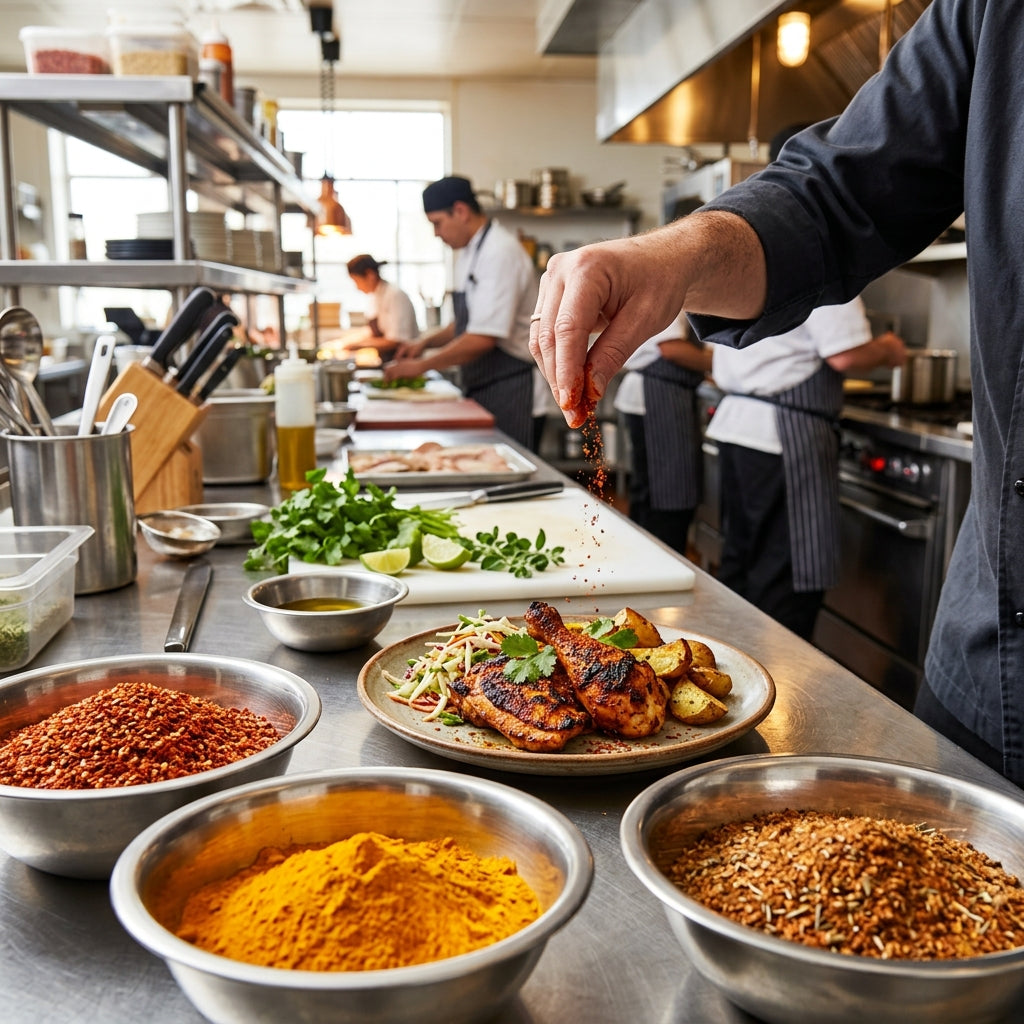
🌿 500+ Spices, Herbs & Seasonings: Complete Guide with Uses
Short answer: The world recognizes over 500 commercially used spices, herbs, and seasonings — derived from roots, seeds, bark, leaves, berries, flowers, and resins across every continent. The most widely used fall into six categories: Indian subcontinent spices (turmeric, cumin, cardamom, chilli), European herbs (basil, rosemary, thyme, oregano), East Asian flavor systems (Sichuan pepper, star anise, galangal), Middle Eastern blends (za'atar, sumac, baharat), American/New World spices (vanilla, allspice, chilli varieties), and African aromatics (fenugreek, nigella, berbere base spices). This guide organizes the world's most useful spices, herbs, and seasonings by category, flavor function, and practical cooking use — so you can find exactly what you need and understand how to use it confidently.
🌍 How the World Organizes Its Spices and Herbs
Before exploring the list, it helps to understand how spices, herbs, and seasonings relate to each other. A spice comes from the non-leafy part of a plant — seeds, bark, root, berry, or dried fruit. An herb comes from the leafy part — fresh or dried leaves and stems. A seasoning is any ingredient added to enhance flavor — which can be a spice, herb, salt, acid, or blended mixture. The world's 500+ flavor ingredients span all three categories. India alone produces over 70 commercially significant spice varieties — more than any other country. Combined with herbs from the Mediterranean, Southeast Asia, and the Americas, and blended seasonings from every major culinary tradition, the full catalog of human flavor tools is extraordinary in its breadth.
🇮🇳 Essential Indian Spices (Most Traded Globally)
| Spice | Indian Name | Primary Use | Flavor Profile |
|---|---|---|---|
| Turmeric | Haldi | Curries, golden milk, color | Earthy, mildly bitter, warm |
| Cumin | Jeera | Tempering, dal, rice | Warm, earthy, smoky |
| Coriander | Dhania | Curries, chutneys, marinades | Citrusy, warm, earthy |
| Cardamom (Green) | Elaichi | Chai, biryani, sweets | Floral, sweet, cooling |
| Black Pepper | Kali Mirch | Universal seasoning, Garam Masala | Sharp, pungent, warming |
| Cinnamon | Dalchini | Biryani, chai, desserts | Sweet, woody, warming |
| Cloves | Laung | Biryani, Garam Masala, pickling | Intensely pungent, warm, numbing |
| Mustard Seeds | Rai | South Indian tempering, pickles | Pungent raw, nutty when tempered |
| Red Chilli | Lal Mirch | Universal heat and color | Heat (capsaicin), color (capsanthin) |
| Fenugreek | Methi | Dal, curry base, pickles | Bitter, slightly sweet, maple-like |
| Star Anise | Chakra Phool | Biryani, Garam Masala, meat curries | Licorice, sweet, warm |
| Asafoetida | Hing | Jain cooking, dal tempering | Pungent raw, savory umami when cooked |
🌿 Classic European and Mediterranean Herbs
🫙 The Core Mediterranean Herb Palette
- 🌿 Basil — Fresh: Italian, Thai, Vietnamese cuisines. Dried: slow-cooked sauces. Flavor: sweet, clove-like, peppery
- 🌿 Rosemary — Roasted meats, focaccia, oil infusions. Flavor: pine, camphor, earthy resinous
- 🌿 Thyme — Stocks, stews, roasted vegetables, French bouquet garni. Flavor: earthy, slightly minty, floral
- 🌿 Oregano — Pizza, pasta, Greek cuisine, marinades. Flavor: warm, slightly bitter, peppery
- 🌿 Sage — Brown butter pasta, stuffings, pork. Flavor: savory, earthy, slightly peppery
- 🌿 Tarragon — French cuisine, béarnaise, chicken. Flavor: licorice, anise, slightly sweet
- 🌿 Bay Leaf — Stocks, biryani, curries, lentils. Flavor: floral, herbal, slightly bitter
- 🌿 Dill — Fish, pickles, potato dishes, Eastern European. Flavor: fresh, feathery, anise-like
- 🌿 Marjoram — Mediterranean soups, meat seasoning. Flavor: milder oregano, sweet, floral
- 🌿 Chervil — French fines herbes, eggs, cream sauces. Flavor: delicate anise, parsley-like
- 🌿 Lemongrass — Thai, Vietnamese, Indonesian curries, soups, teas. Flavor: bright citrus, floral
- 🌶️ Galangal — Tom Kha Gai, rendang, laksa base. Flavor: sharp, pine-like, more pungent than ginger
- 🍋 Kaffir Lime Leaf — Thai curries, coconut soups. Flavor: intensely citrusy, floral
- ⭐ Sichuan Pepper — Ma La spice (Chinese numbing-heat). Flavor: citrusy, numbing, floral tingle
- 🌿 Shiso / Perilla — Japanese sushi, Korean ssam, pickles. Flavor: minty, anise, basil-like
- 🌿 Pandan Leaf — Southeast Asian desserts, rice. Flavor: vanilla-like, floral, nutty
- 🌰 Szechuan Five Spice (star anise, cloves, Chinese cinnamon, Sichuan pepper, fennel) — Roasted meats, dumplings
- 🌿 Za'atar — Blend: thyme, sumac, sesame, salt. Used on flatbreads (manoushe), dips, olive oil
- 🍋 Sumac — Ground dried berry. Tart, citrusy. Used on salads (fattoush), grilled meats, hummus
- 🌶️ Baharat — Blend: allspice, black pepper, coriander, cumin, cinnamon, cloves, paprika, nutmeg. Used in Middle Eastern rice and meat dishes
- 🌶️ Harissa — Tunisian chilli paste blend. Used as a condiment, marinade, shakshuka base
- 🌿 Ras El Hanout — Moroccan master blend (20–30 spices). Used in tagines, couscous, lamb
- 🌿 Dukkah — Egyptian nut and spice blend (hazelnuts, sesame, coriander, cumin). Used as a dip with oil, coating for meats
- 🌿 Nigella Seeds (Kalonji) — Seedy texture, onion-like. Used on naan, pickles, paneer
- 🌶️ Chilli Peppers (all varieties) — The Americas gave the world capsicum — the source of chilli, paprika, cayenne, chipotle, ancho, habanero, jalapeño. Now used in every global cuisine
- 🍫 Vanilla — Mexico origin. Most expensive flavoring after saffron. Used in desserts, baked goods, beverages globally
- 🫙 Allspice — Caribbean and Central America. Combines flavors of cloves, cinnamon, and nutmeg. Used in Jamaican jerk seasoning, European pickling
- 🌶️ Paprika — Hungarian and Spanish cuisine. Dried ground peppers. Sweet, smoked, or hot varieties
- 🌿 Epazote — Mexican herb, used in black beans and corn dishes. Flavor: pungent, herbal, medicinal
- 🌍 500+ commercially used spices, herbs, and seasonings exist — organized across 6 major culinary traditions
- 🎯 Learn spice function (color / heat / aroma / earthy base) before learning individual spice names
- 🌿 Herbs = leaves (add at the end); Spices = seeds/bark/roots (add early in hot fat)
- 🧂 Blends (Garam Masala, za'atar, baharat) are the most efficient entry point into any cuisine's flavor system
- 🏭 For commercial sourcing, specify origin, variety, and request lab documentation per batch
🌏 Southeast Asian and East Asian Spices & Herbs
🥢 Key Flavor Ingredients
🌍 Middle Eastern and North African Spices & Blends
🌎 Americas: New World Spice Contributions
🧂 Essential Seasoning Blends Used Globally
| Blend | Origin | Primary Use |
|---|---|---|
| Garam Masala | India | Finishing spice for curries, biryani |
| Chaat Masala | India | Street food, fruit, snacks |
| Herbes de Provence | France | Grilled meats, roasted vegetables |
| Italian Seasoning | Italy / USA | Pasta, pizza, marinades |
| Old Bay Seasoning | USA | Seafood, fries, snacks |
| Jerk Seasoning | Jamaica | Grilled chicken, pork |
| Berbere | Ethiopia | Stews (wat), lentil dishes |
| Za'atar | Middle East | Flatbreads, dips, salads |
✅ Do's and ❌ Don'ts When Working with Spices, Herbs & Seasonings
| ✅ Do | ❌ Don't |
|---|---|
| Learn the flavor function of each spice — color, heat, aroma, base | Add spices randomly without understanding their role in a dish |
| Bloom whole spices in hot fat first to release volatile oils | Add fresh herbs early and boil them — all aroma evaporates |
| Build your pantry systematically — master 10 spices before adding 10 more | Buy large quantities of spices you use rarely — they go stale |
| Source from certified suppliers with lab-tested products for food production | Assume all spice brands have the same purity or potency |
| Explore blends — Garam Masala, za'atar, baharat unlock entire cuisines efficiently | Substitute blends without understanding what each blend contains |
💡 Expert Recommendation
The most common mistake when approaching the full catalog of world spices is trying to understand them all at once. The more productive approach is to organize them by function, then by cuisine tradition. Start with the four core functions — color (turmeric, chilli, paprika, saffron), heat (black pepper, chilli, Sichuan pepper, ginger), aroma (cardamom, cinnamon, cloves, star anise), and earthy base (cumin, coriander, fenugreek). Once you understand which spice does which job, learning any cuisine's spice system becomes a matter of seeing which spices they rely on for each function. A Thai curry and an Indian curry both need color (chilli), heat (chilli/galangal/ginger), and aroma (lemongrass/cardamom) — they use different ingredients for the same functions. At 365 Spicery, we organize our spice catalog exactly this way, and it transforms both our customer conversations and our formulation work.
🧑🍳 From a Food Developer's Point of View
Priya, a food product developer at a Mumbai-based FMCG company, was tasked with developing a global fusion seasoning range covering Indian, Middle Eastern, and American BBQ formats for a new retail line. "The project seemed overwhelming until I mapped each target cuisine by its four flavor functions. Every cuisine turned out to have a color spice, a heat spice, an aromatic spice, and an earthy base — they just sourced them from different plants. Once I saw the structure, the formulation work became systematic. 365 Spicery helped us source all 24 individual ingredients with consistent specs and matching documentation. The product range launched in 11 weeks from concept to sample." Organizing by function makes the 500+ spice world navigable for anyone.
🔑 Key Takeaways
📞 Source the World's Best Spices from 365 Spicery
365 Spicery's product range covers over 100 individual spices and herbs — Indian and global — along with 50+ signature blends and custom private label formulations developed for QSR chains, retail brands, food manufacturers, and export buyers across 15+ countries. Every product from our FSSAI and FSSC 22000 certified Mumbai facility ships with full origin documentation, batch lab reports, and certification credentials. Whether you need a single Indian spice at scale, a complete global spice range for a retail line, or a custom seasoning blend developed from scratch for your menu, we have the ingredient catalog, the formulation expertise, and the compliance infrastructure to deliver. WhatsApp us at +91 72799 00500 or visit www.365spicery.com to request our product catalog or arrange sample shipments. Halal and Jain certified. Wholesale, private label, and export available.
---
Q: How many spices, herbs, and seasonings exist in the world?
A: Over 500 commercially used spices, herbs, and seasonings are recognized globally. India alone produces over 70 commercially significant spice varieties — more than any other country. The Spices Board of India formally recognizes 52 spices under regulatory scope. Including global herbs and regional seasoning blends, the full catalog exceeds 500 distinct flavor ingredients.
Q: What is the most commonly used spice in the world?
A: Black pepper is the most widely traded spice in the world by value. Chilli (in all its forms) is arguably the most widely consumed spice by volume globally, having spread from the Americas to every major world cuisine since the 16th century. Cumin is the most widely used ground spice in the world's most populous regions (India, Middle East, Mexico).
Q: What are the 10 most important spices to know?
A: The 10 most important spices to build cooking knowledge around are: black pepper, cumin, coriander, chilli/paprika, turmeric, cinnamon, cardamom, cloves, ginger, and mustard seeds. These 10 cover the full range of heat, color, aroma, and earthy base functions and appear across Indian, Middle Eastern, East Asian, and European culinary traditions.
Q: What is the difference between a spice and a seasoning?
A: A spice is a plant-derived flavor ingredient from seeds, bark, roots, berries, or dried fruit. A seasoning is any ingredient added to food to enhance flavor — which can be a spice, herb, salt, acid, or a blended mixture of multiple spices and herbs. All spices are potential seasonings, but not all seasonings are spices.
Q: What is the most expensive spice in the world?
A: Saffron is the world's most expensive spice — genuine Kashmiri saffron costs ₹2–3 lakh per kilogram. Each flower of the Crocus sativus plant produces only three stigmas, which must be hand-harvested. Approximately 150,000 flowers are needed to produce one kilogram of saffron. Vanilla is the second most expensive spice globally.
Q: What are the most popular herb blends used in cooking?
A: The most popular herb and spice blends globally include: Garam Masala (India), Italian Seasoning (basil, oregano, thyme, rosemary), Herbes de Provence (France), Za'atar (Middle East), Baharat (Middle East), Ras el Hanout (Morocco), Jerk Seasoning (Jamaica), Old Bay (USA), Berbere (Ethiopia), and Chinese Five Spice. Each blend represents a regional flavor identity.
Q: Which herbs and spices have the most documented health benefits?
A: The most extensively researched herbs and spices for health benefits are: turmeric (curcumin — anti-inflammatory), black pepper (piperine — bioavailability enhancer), ginger (gingerol — anti-nausea, anti-inflammatory), cloves (eugenol — highest antioxidant ORAC value), cinnamon (cinnamaldehyde — blood sugar regulation), and garlic (allicin — antimicrobial, cardiovascular). All have peer-reviewed research supporting specific health mechanisms.
Q: What are the best herbs for Indian cooking?
A: The most essential herbs in Indian cooking are: fresh coriander leaves (dhania/cilantro — most universal), fresh mint (pudina — biryanis, chutneys, raita), curry leaves (kadi patta — South Indian tempering), fenugreek leaves (kasuri methi — dried, used as a finishing herb in curries), and fresh dill (suwa — North Indian cooking and some South Indian preparations).
Q: How should I build a home spice collection from scratch?
A: Start with the 10 essential spices (black pepper, cumin, coriander, chilli, turmeric, cinnamon, cardamom, cloves, mustard seeds, ginger) in whole form where possible. Add 5 herbs (basil, oregano, thyme, rosemary, bay leaf) and 3 blends (Garam Masala, Italian seasoning, a BBQ blend). This 18-ingredient foundation covers Indian, European, and grilled food cooking with confidence.
Q: Does 365 Spicery supply global spices beyond Indian varieties?
A: Yes. 365 Spicery's catalog includes Indian spices (100+ varieties), global herbs, and custom seasoning blends drawing from Indian, Middle Eastern, European, and global flavor traditions. We supply food businesses, retailers, exporters, and private label brands from our FSSAI and FSSC 22000 certified Mumbai facility. Contact us at +91 72799 00500 for our full product catalog.
---
Five hundred spices, herbs, and seasonings sounds overwhelming — until you understand that they all do variations of the same four jobs: color, heat, aroma, and earthy base. Every cuisine on earth, from the simplest to the most complex, is built by choosing different plants to perform those four functions. Learning the world's flavor catalog is not about memorizing 500 names — it is about understanding which plants perform which functions, and then exploring how different culinary traditions make those selections. Start with the 10 essential spices. Learn their functions. Then every new spice or herb you encounter becomes a recognizable variation on a theme you already understand. 365 Spicery's product catalog exists to make the full catalog accessible — one certified, documented, precisely specified ingredient at a time.
---
Partner with India's Premium Spice Manufacturer
365 Spicery serves 500+ businesses across India with:
- Wholesale & Bulk Supply
- Private Label / White Label Manufacturing
- Custom Spice Formulations
- Jain & Halal Certified Range
- FSSAI | FSSC 22000 | Lab-Tested Quality
WhatsApp: +91 72799 00500
Website: www.365spicery.com
Location: Mumbai, Maharashtra, India
---


Share:
Ultimate Guide to Indian Spices: Types, Uses, Benefits & Buying Tips
Complete World Spices Encyclopedia A–Z: Every Spice Explained