


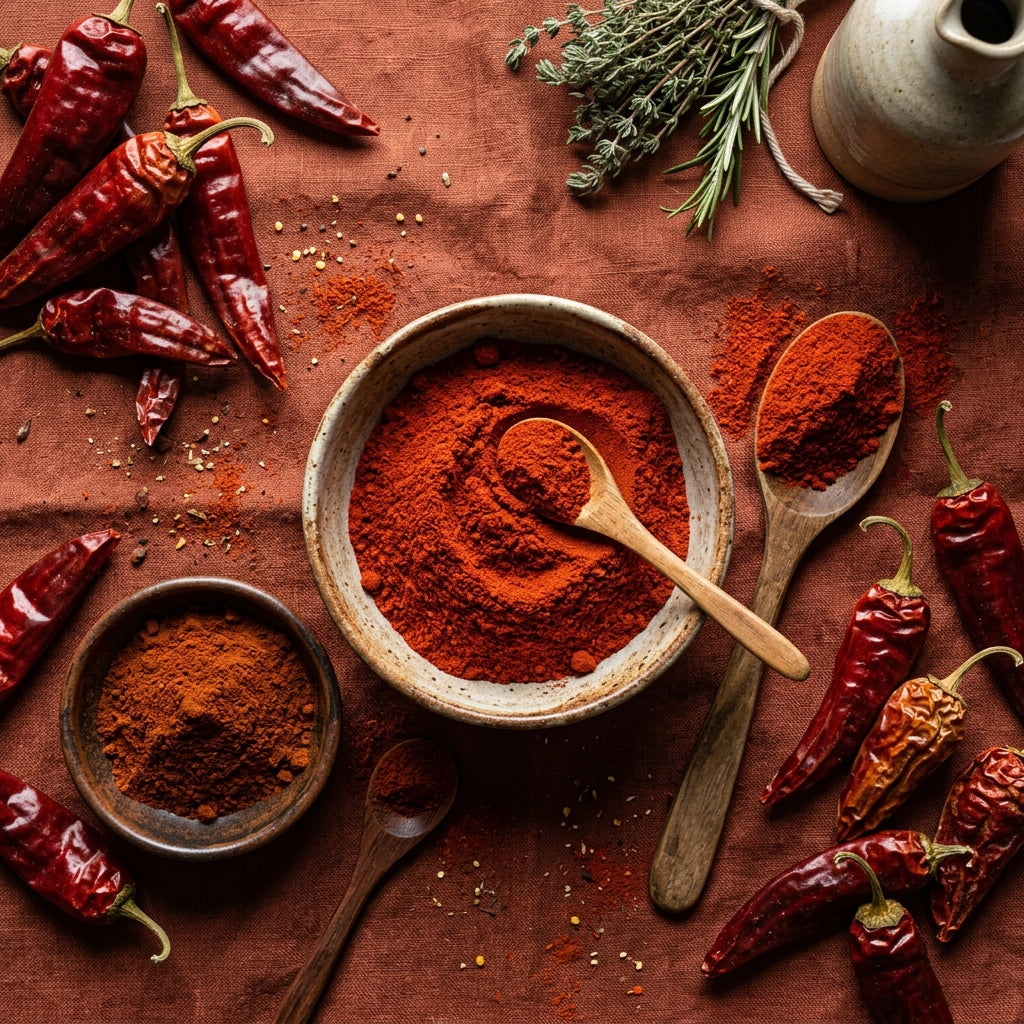
🎨 Why Does Paprika Have Different Colors? Understanding Redness, Flavor, Heat & Quality
Paprika ranges in color from vivid, luminous red (Kashmiri chilli, ASTA 180) to bright orange-red (Hungarian sweet paprika) to deep brick-red (smoked paprika) to dull brownish-red (old or low-grade product). Every color difference tells you something specific about the variety, processing method, age, and quality of the paprika. The color of paprika is not cosmetic — it is the most visible quality indicator, and understanding what drives it tells you exactly how to buy better and cook smarter.
🔬 The Science: What Creates Paprika's Red Color
Paprika's color comes from a family of fat-soluble carotenoid pigments produced in the red pepper's cell tissue during ripening. The three primary pigments are: capsanthin (the dominant red pigment, responsible for the classic vivid red), capsorubin (a deeper red-orange carotenoid), and beta-carotene (an orange carotenoid). The ratio and concentration of these pigments determine the specific red hue and intensity. A pepper variety bred for maximum capsanthin (like Kashmiri chilli) produces the most vivid, deepest red powder. A variety with more beta-carotene produces a more orange tone. Processing and storage then modify the pigment profile further — creating the full spectrum of paprika colors you encounter commercially.
🌶️ Factor 1: Variety — The Genetics of Red
| Variety / Origin | ASTA Color | Color Appearance | Why |
|---|---|---|---|
| Kashmiri Chilli (India) | 120–180 | Deep, vivid, luminous red | Highest capsanthin concentration — bred for color |
| Byadagi Chilli (India) | 100–160 | Dark, rich burgundy-red | High capsanthin, thick-walled, concentrated in drying |
| Hungarian Sweet (Édesnemes) | 80–120 | Bright, clean, classic red | High capsanthin, traditional processing |
| Spanish Sweet (Dulce) | 100–160 | Vivid, slightly orange-red | High capsanthin; pimentón peppers |
| Smoked Paprika (La Vera) | 80–150 | Deeper, darker russet-red | Smoke phenols interact with carotenoids; darker hue |
| Generic Red Chilli Powder | 40–80 | Orange-red, less vivid | Lower capsanthin; variety not selected for color |
⚙️ Factor 2: Processing — How It's Dried Changes the Color
☀️ Sun Drying
Traditional sun drying (4–10 days on raised platforms or rooftops) is the slowest drying method and generally preserves the highest capsanthin levels when done correctly — because the lower-temperature drying process minimizes thermal oxidation of the pigments. However, excessive UV exposure during sun drying (particularly at high altitudes without shade management) can actually degrade capsanthin, reducing final ASTA value. Premium paprika producers carefully manage sun exposure during the drying window.
🏭 Hot-Air / Tunnel Drying
Industrial hot-air drying is faster and more controlled than sun drying but exposes peppers to sustained heat at 50–80°C. Above 60°C, capsanthin oxidation accelerates. Well-managed industrial drying achieves comparable ASTA values to sun drying; poorly managed drying (excessive heat or time) produces significantly lower ASTA values and a browner final color.
🔥 Smoke Drying (Smoked Paprika)
The cold-smoking process (15–30°C) used for authentic Pimentón de la Vera is one of the gentlest drying methods for pigment preservation — however, smoke phenol compounds (guaiacol, syringol) chemically interact with some carotenoid pigments during the 10–15 day process, producing the characteristic deeper, darker color of smoked paprika versus bright-red sweet paprika. The smokiness comes at a slight color tone cost — smoked paprika is redder-brown, not bright-vivid-red.
⏰ Factor 3: Age — How Storage Changes the Color
Capsanthin and capsorubin are chemically unstable when exposed to oxygen, UV light, and heat. After grinding, the increased surface area of paprika powder dramatically accelerates pigment oxidation — which progressively shifts the color from vivid red toward orange, then toward brownish-red, and ultimately brownish-tan in very degraded material. A paprika jar stored in a transparent container on a sunny windowsill can visibly fade within 4–6 weeks. The same paprika in a sealed, opaque container at room temperature retains its color for 12–18 months. This is why ASTA color value should be specified at the point of purchase — not just at time of delivery — with a minimum acceptable value for the full shelf-life of the product.
🚩 Color as a Quality Red Flag: What to Watch For
- 🟠 Orange or orange-red color: Low-capsanthin variety, or pigment degradation from age or poor storage. ASTA likely below 60.
- 🟫 Brownish-red color: Significant oxidation — either old stock, excessive heat during processing, or poor storage. ASTA likely below 40.
- 🔴 Unnaturally uniform, intense red: Possible adulteration with Sudan red or other synthetic dyes — request HPLC test.
- 🌟 Vivid, luminous, deep red: High-capsanthin variety, properly processed and stored. ASTA likely 100+.
✅ Do's and ❌ Don'ts
| ✅ Do | ❌ Don't |
|---|---|
| Judge paprika quality visually at purchase — vivid, luminous red = higher ASTA, better quality | Accept dull, brownish paprika as "the same thing" — the color is the quality signal |
| Store in opaque, airtight containers away from UV light and heat | Display paprika in transparent jars on open, lit shelving — ASTA value degrades visibly within weeks |
| Request ASTA color documentation with batch number from commercial suppliers | Assume unnaturally vivid red is always higher quality — it may indicate synthetic dye adulteration |
| Request HPLC Sudan dye test for import consignments to EU/UK markets | Buy paprika without ASTA specification — the color is the product's primary value |
💡 Expert Insight
For food manufacturers, the paprika color variable that most often disrupts product consistency is not variety or processing — it is storage at the ingredient level before production. Paprika sitting in a warehouse for 3–6 months before production use has measurably lower ASTA value than paprika used within 4–6 weeks of grinding. The most effective quality management practice is: specify minimum ASTA value at the point of use in production (not just at delivery), rotate stock on a strict FIFO basis, and work with suppliers who grind to order with a short time-to-dispatch. At 365 Spicery, all paprika-grade products are ground and nitrogen-flushed immediately before dispatch — preserving ASTA value through to your production use.
📞 Source the Most Vivid Paprika from 365 Spicery
365 Spicery supplies premium Kashmiri chilli (ASTA 140–180) and high-ASTA paprika-grade products from our FSSAI/FSSC 22000 certified Mumbai facility — ground fresh, nitrogen-flushed, with batch ASTA documentation and HPLC adulterant screening. The reddest, most potent paprika — certified and documented. WhatsApp: +91 72799 00500 | www.365spicery.com
---
Share:
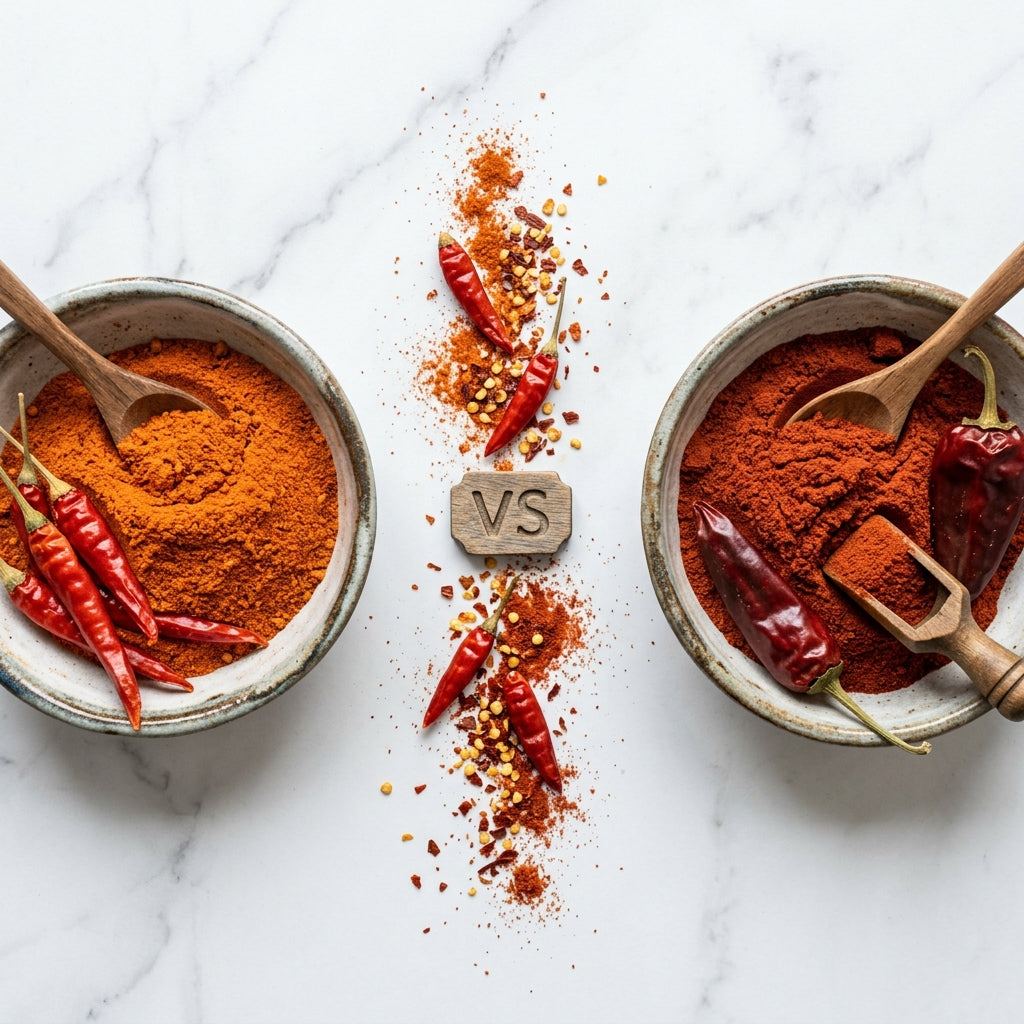
Cayenne vs Paprika vs Gochugaru vs Smoked Paprika: Ultimate Chili Comparison
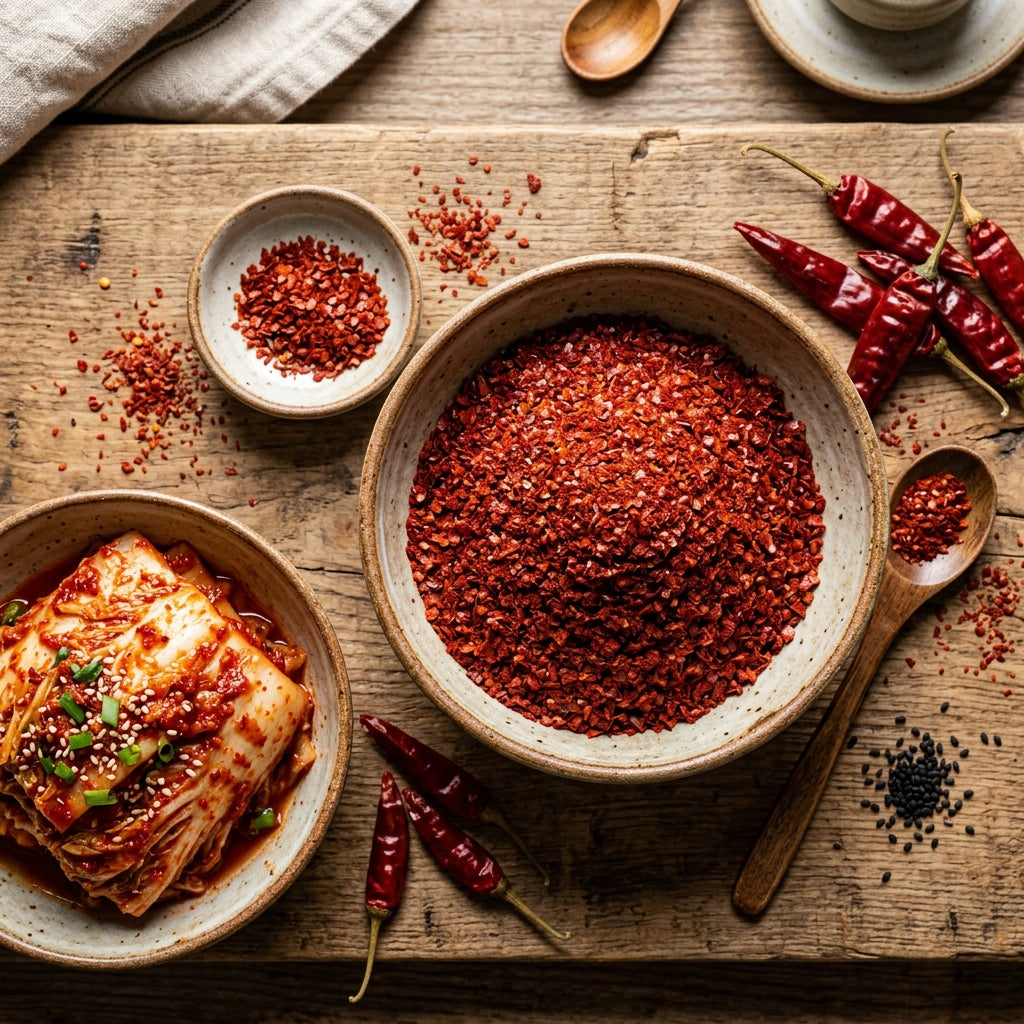
Cayenne vs Paprika vs Gochugaru vs Smoked Paprika: Ultimate Chili Comparison