


🌶️ Gochugaru Chili Powder: The Complete Guide to Korean Chili Flakes, Flavor, Heat & Uses
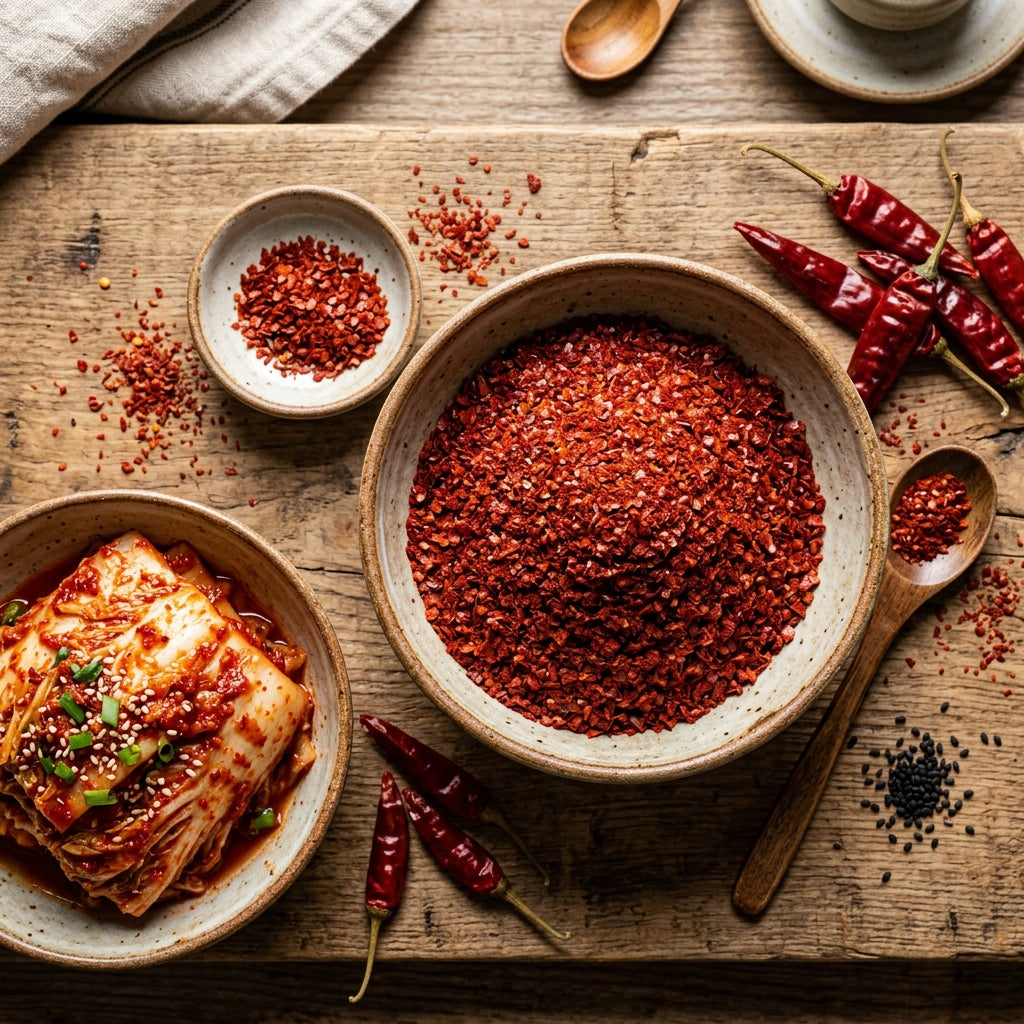
Gochugaru (고추가루) is the coarsely ground, sun-dried Korean red chilli that is the foundational flavor ingredient of Korean cuisine — the defining component of kimchi, gochujang, tteokbokki, dakgalbi, and Korean BBQ marinades. It delivers moderate heat (1,500–10,000 SHU depending on variety), vivid red color, and a complex flavor profile combining fruity, slightly sweet, mildly smoky, and gently pungent notes that no other chilli powder replicates. Korean cooking without gochugaru is not Korean cooking — it is the spice that defines the cuisine's signature color, warmth, and depth.
🌿 What Is Gochugaru? Origin and Production
Gochugaru is made from Korean red chilli peppers (gochu — Capsicum annuum) that are harvested at peak ripeness, destemmed, usually deseeded, and sun-dried before grinding into coarse flakes. The sun-drying process is essential to the flavor — it concentrates the natural sugars and develops the characteristic fruity-smoky notes through controlled moisture reduction. Machine-drying is faster but produces less complex flavor. Premium gochugaru is produced from summer-harvested Korean gochu in Gyeonggi-do, Gangwon-do, and Chungcheong provinces — regions with the specific climate conditions that develop gochu's flavor profile. Korean gochugaru is classified by: coarseness (rough, medium, fine), heat level (light, medium, hot — determined by seed inclusion and variety), and color grade (vivid red premium to dull red lower grade).
📊 Types of Gochugaru
| Type | Heat | Texture | Best Use |
|---|---|---|---|
| Coarse (굵은 고추가루) | Medium | Large flakes, moist | Kimchi — standard choice |
| Medium (중간 고추가루) | Medium-high | Smaller flakes | Stews, soups (yukgaejang, sundubu) |
| Fine (고운 고추가루) | Medium-high | Near-powder | Sauces, gochujang making, marinades |
| Cheongyang (청양고추) | Very hot (10,000+) | Fine | Extra-hot applications; blended for heat boost |
🍳 Culinary Uses: Where Gochugaru Is Essential
🥬 Kimchi
Gochugaru is the heart of kimchi — the coarse flakes coat the cabbage (or daikon, cucumber) during fermentation, providing color, heat, and flavor as the dish ferments. The fermentation process actually modifies gochugaru's heat profile — capsaicin interacts with lactic acid bacteria, making the kimchi taste more complex and slightly mellower than raw gochugaru. The standard ratio is 1–3 tablespoons per medium head of cabbage depending on heat preference. Always use coarse gochugaru for kimchi — fine powder creates a different texture and paste consistency.
🌶️ Gochujang (Korean Chilli Paste)
Gochujang — Korea's flagship fermented chilli paste — is made from fine gochugaru combined with glutinous rice, fermented soybean powder, salt, and other ingredients. The quality of gochujang is directly dependent on the quality of gochugaru used. Premium gochujang made with high-grade, vivid-red, fruity-complex gochugaru has an entirely different depth versus gochujang made with low-grade, flat-tasting flakes.
🍲 Korean Stews and Soups
Yukgaejang (spicy beef soup), sundubu jjigae (soft tofu stew), kimchi jjigae (kimchi stew), and doenjang jjigae all use gochugaru for heat and color. Medium or fine gochugaru is preferred for stews as it dissolves more evenly into the broth, distributing heat and color uniformly throughout the dish rather than leaving visible flake texture.
🥩 Korean BBQ Marinades
Bulgogi marinade, dakgalbi (spicy chicken), and samgyeopsal dipping sauces all include gochugaru. Its combination of moderate heat, fruity sweetness, and color makes it ideal for meat marinades where it penetrates the protein surface during marination and creates the characteristic red glaze on grilled Korean BBQ.
🔍 How to Judge Gochugaru Quality
- 🎨 Color: Premium gochugaru is vivid, bright red — almost luminous. Low-grade material is dull brick-red or brownish. Color indicates carotenoid pigment content and freshness.
- 👃 Aroma: Rub a small amount between fingers — premium gochugaru immediately releases a fruity, slightly smoky, complex aroma. Flat, dusty, or hay-like smell indicates poor quality or age.
- 💧 Texture: Authentic gochugaru should feel slightly oily and moist — not bone-dry like cayenne. Excessively dry texture indicates over-processed or old material.
- 🌶️ Heat: Moderate, building heat that doesn't overwhelm but provides warmth. Absence of heat suggests very low-grade material; extreme heat suggests seed-heavy or different variety.
✅ Do's and ❌ Don'ts
| ✅ Do | ❌ Don't |
|---|---|
| Store in airtight container in refrigerator — gochugaru's moisture makes it perishable | Store at room temperature long-term — color and flavor degrade rapidly outside refrigerator |
| Use coarse for kimchi, fine for sauces and pastes — texture matters for the application | Substitute cayenne for gochugaru in Korean recipes — heat 3–30x stronger, flavor completely different |
| Judge quality by color vibrancy and fruity aroma — visual and sensory checks are reliable | Buy gochugaru based only on price — quality variation is enormous at similar price points |
| Buy sealed, vacuum-packed or nitrogen-flushed packaging for maximum freshness | Use gochugaru past 12 months from opening — the fruity freshness is the product's value |
💡 Expert Tip
The global food industry's growing interest in Korean flavors has created significant commercial opportunity for gochugaru — but also a quality problem. As demand for "Korean-style" products grows globally, manufacturers increasingly substitute cheaper generic red chilli flakes for authentic gochugaru. The problem: the fruity, complex, mildly smoky character of authentic Korean gochu is what makes Korean-flavored products taste Korean. Without it, "kimchi-flavored" or "gochujang-inspired" products taste like ordinary spicy food. For any food manufacturer targeting authentic Korean flavor, gochugaru specification (variety, origin, SHU, texture) is the non-negotiable quality foundation.
📞 Chilli Expertise from 365 Spicery
365 Spicery supplies premium Indian chilli varieties including high-ASTA Kashmiri, Byadagi, and custom blends for Korean-inspired food formulations from our FSSAI/FSSC 22000 certified facility in Mumbai. For sourcing guidance on Korean flavor ingredient substitutes or authentic chilli specifications, our team is ready to assist. WhatsApp: +91 72799 00500 | www.365spicery.com
---


Share:
Gochugaru vs Cayenne Pepper: Which Chili Powder Is Right for Your Recipe?
Gochugaru vs Cayenne Pepper: Which Chili Powder Is Right for Your Recipe?