


🌶️ Gochugaru vs Cayenne Pepper: Which Chili Powder Is Right for Your Recipe?
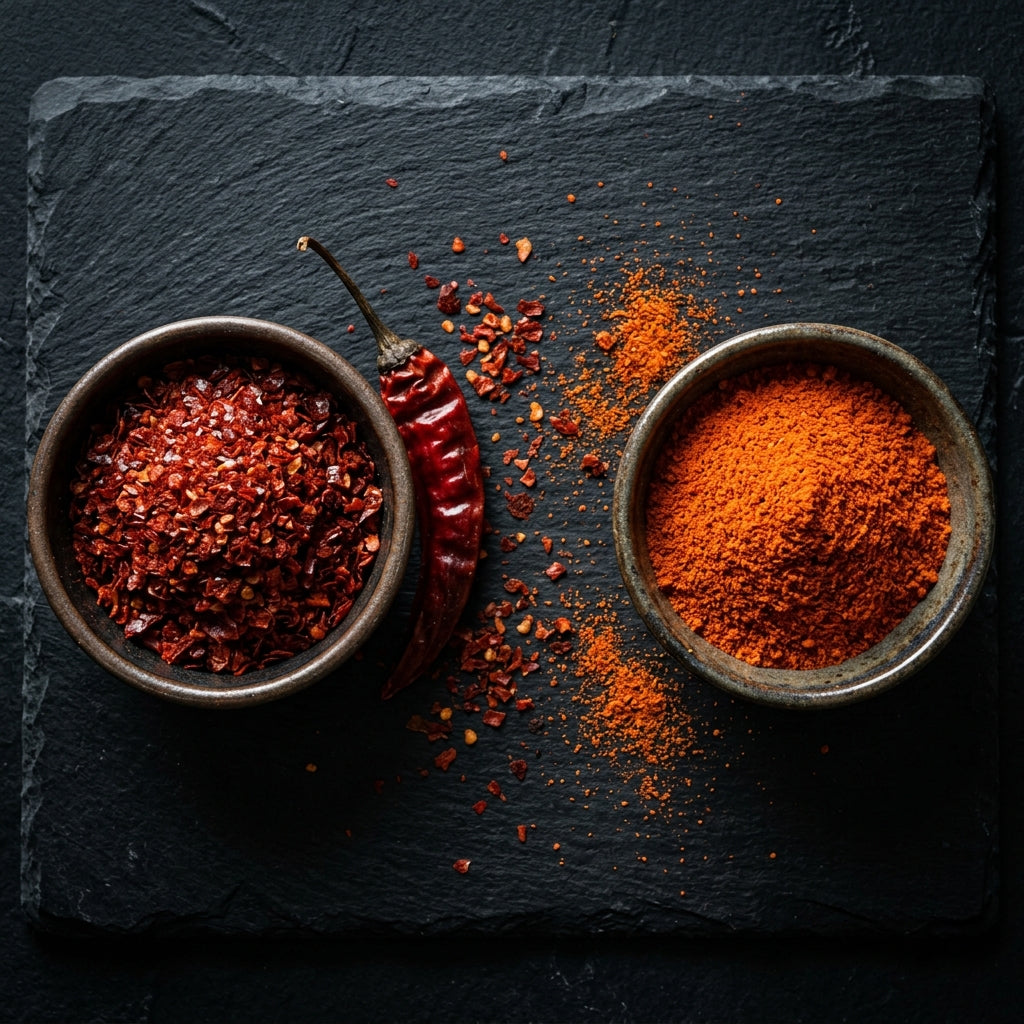
Gochugaru and cayenne pepper are both red chilli products but are fundamentally different in texture, heat, flavor complexity, and culinary application. Gochugaru (Korean chili flakes) is a coarsely ground Korean chilli with moderate heat (1,500–10,000 SHU), complex fruity-smoky flavor, vibrant red color, and a slightly oily, moist texture. Cayenne pepper is a finely ground, single-note heat ingredient (30,000–50,000 SHU) with clean, sharp pungency and minimal flavor complexity. Gochugaru is never a direct substitute for cayenne and vice versa — they serve different functions in cooking.
🌿 What Is Gochugaru?
Gochugaru (고추가루) is sun-dried Korean red chilli (gochu), coarsely ground into flakes with seeds typically removed. Korean gochu varieties are selected for their balanced heat, vivid red color, and complex fruity-smoky flavor — quite different from the clean, aggressive heat of cayenne. Gochugaru is available in two textures: coarse flakes (for kimchi, stews, and marinades) and fine powder (for sauces and pastes). The moisture content is higher than typical cayenne — gochugaru has a slightly oily, moist mouthfeel. It is the defining ingredient in kimchi, gochujang (Korean chilli paste), tteokbokki, and Korean BBQ marinades.
📊 Gochugaru vs Cayenne: Complete Comparison
| Parameter | 🌶️ Gochugaru | 🔥 Cayenne Pepper |
|---|---|---|
| Heat (SHU) | 1,500–10,000 (mild to medium) | 30,000–50,000 (hot) |
| Texture | Coarse flakes, slightly moist/oily | Fine powder, dry |
| Color | Vivid deep red, bright, uniform | Orange-red, less vivid |
| Flavor Profile | Fruity, slightly sweet, mild smoky, complex | Sharp, clean heat, minimal complexity |
| Origin | Korea (Gyeonggi, Gangwon, Chungcheong) | India, China, Mexico, East Africa |
| Seeds included | Usually removed (affects heat level) | Usually included (ground with seeds) |
| Moisture | Higher (15–20%) — intentionally moist | Lower (8–12%) — dry powder |
| Primary Dishes | Kimchi, gochujang, Korean BBQ, tteokbokki | Hot sauce, Cajun seasoning, spice blends |
🍳 Can You Substitute Gochugaru for Cayenne (or Vice Versa)?
| Situation | Recommendation | Notes |
|---|---|---|
| Gochugaru unavailable, need for kimchi | Use Kashmiri chilli + pinch cayenne | Kashmiri provides color; cayenne adds heat. Not authentic but functional. |
| Cayenne unavailable, need heat in a spice blend | Use gochugaru — but use 4–5x the quantity | Gochugaru is 3–30x milder; flavor will shift toward fruity-smoky |
| Korean recipe calls for gochugaru | Do not substitute cayenne directly | Heat will be 3–10x higher; dish loses Korean flavor character entirely |
🔍 What Most Buyers Don't Know About Gochugaru Quality
Gochugaru quality varies enormously depending on: the Korean chilli variety (Cheongyang is hotter; regular Gochu is milder and fruitier), the region of cultivation (Gyeonggi-do and Gangwon-do produce premium grades), the drying method (sun-drying vs machine-drying affects flavor depth), and whether seeds are included or removed. Premium gochugaru has a bright, vivid red color, oily-moist texture, complex aroma when rubbed, and clean, fruity heat. Low-grade gochugaru is dull, dusty-looking, and delivers flat, undifferentiated heat without the fruity complexity that defines authentic Korean flavor.
✅ Do's and ❌ Don'ts
| ✅ Do | ❌ Don't |
|---|---|
| Use gochugaru where Korean flavor complexity is the goal — kimchi, bibimbap, Korean stews | Substitute cayenne 1:1 for gochugaru — the heat difference alone will ruin the dish |
| Use cayenne where clean, consistent, standardized heat is needed without flavor shift | Use gochugaru as a heat-neutral colorant — it contributes significant fruity-smoky flavor |
| Store gochugaru sealed in the refrigerator — its moisture makes it more perishable than dry cayenne | Store gochugaru at room temperature long-term — moisture promotes mold and color fading |
💡 Expert Insight
In global food manufacturing, the rising demand for Korean-inspired products — kimchi-flavored snacks, Korean BBQ sauces, tteokbokki ready meals — has created significant commercial interest in gochugaru as an ingredient specification. The challenge is that authentic Korean gochugaru is a specific, origin-constrained product; substituting it with generic red chilli flakes produces a very different product profile. The fruity, mildly smoky, vivid-red character of Korean gochu is not replicable with Indian or Chinese chilli varieties at the same heat level. For food manufacturers targeting authentic Korean flavor profiles, gochugaru specification by origin and SHU range is essential.
📞 Spice Expertise from 365 Spicery
365 Spicery supplies Indian chilli varieties including Kashmiri, Byadagi, and high-ASTA custom blends for Korean-inspired food formulations. For manufacturers needing authentic Korean gochugaru sourcing guidance or Indian chilli substitutes for Korean applications, contact our team. WhatsApp: +91 72799 00500 | www.365spicery.com
---


Share:
Gochugaru Chili Powder: The Complete Guide to Korean Chili Flakes
Gochugaru Chili Powder: The Complete Guide to Korean Chili Flakes