


🔬 Why Chili Powder Colors Differ: Understanding ASTA, Roasting & Quality
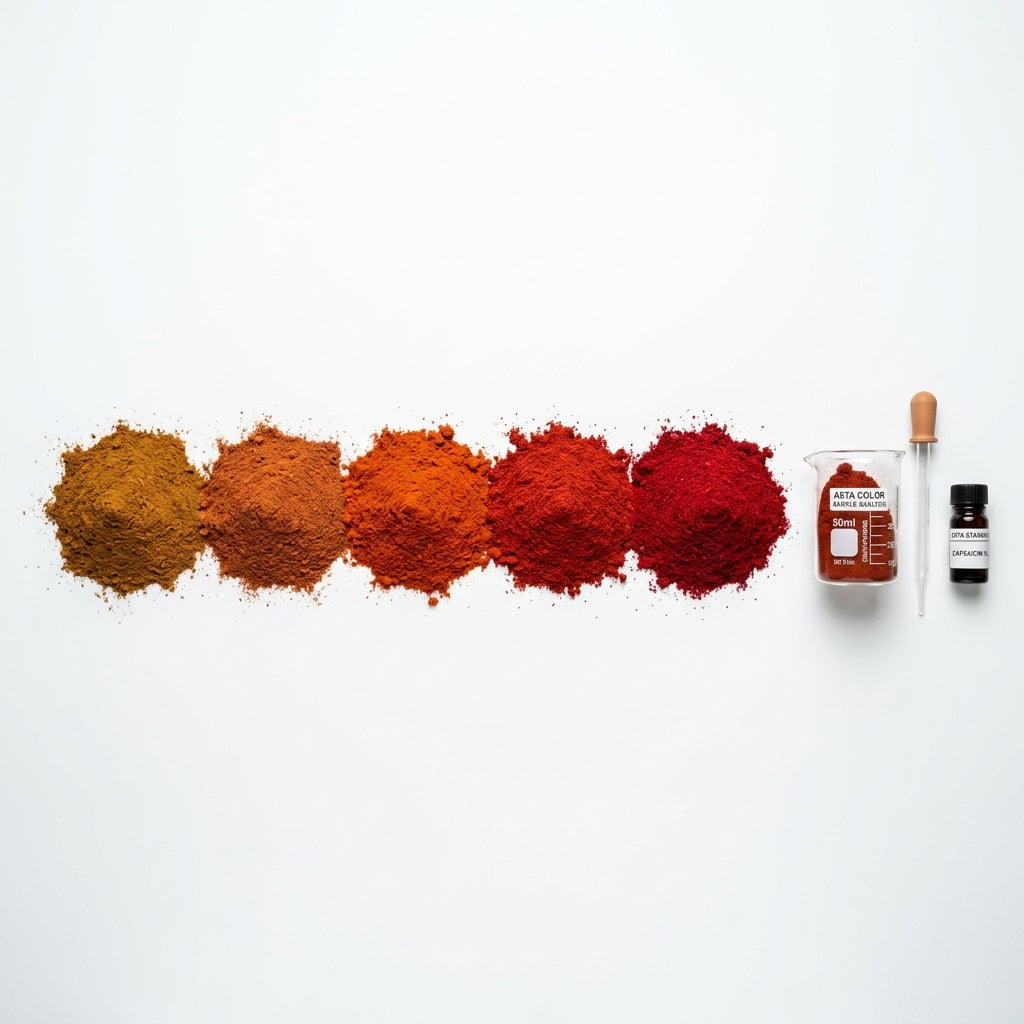
If you place five different brands of chili powder side-by-side on a white plate, you will likely see five completely different colors. You might see a luminous crimson, a bright fiery orange, a deep brick-red, and a dull, dusty brown. While casual cooks might assume this is just natural variation, professional chefs and food scientists know that color is the most immediate indicator of a spice's quality, origin, and processing history. Understanding exactly why these colors differ is the key to buying better spices.
📏 The Science of Color: ASTA Value
In the commercial spice trade, color is not subjective; it is scientifically measured. The American Spice Trade Association (ASTA) created a standard method for extracting and measuring the red pigments (primarily capsanthin and capsorubin) in chilies. This measurement is called the ASTA Color Value.
- Low ASTA (40–80): Usually indicates generic, lower-grade chili powder. The color appears dull, brownish, or pale orange.
- Medium ASTA (90–120): The standard for good quality supermarket paprika and cayenne. It is a solid, recognizable red.
- Premium High-ASTA (140–180+): Found in premium Kashmiri chili and high-end sweet paprika. It is a highly saturated, vibrant, deep crimson red. Food manufacturers pay a premium for high-ASTA spices because they act as potent, natural food colorings.
🔥 Processing Factors: Drying and Roasting
Even if two chilies start with the exact same genetic ASTA potential on the vine, how they are processed drastically alters their final powder color.
Sun-Drying vs. Machine Drying
Traditionally, chilies are laid out in the sun to dry. While this can develop complex, fruity flavors (as seen in Korean Gochugaru), prolonged exposure to intense UV rays actually bleaches the red pigments, reducing the ASTA value. Modern, premium spice processors use controlled, enclosed hot-air drying tunnels to dehydrate the chilies rapidly, locking in the maximum bright red color.
Smoking and Roasting
Heat darkens the natural sugars in the chili. If a pepper is slowly cold-smoked over oak wood (like Spanish Smoked Paprika), the color shifts from a bright, vivid red to a darker, deeper russet or brick-red. Similarly, some Indian curry blends call for dry-roasting chili powder in a pan; this Maillard reaction darkens the powder and gives it a brownish tint, though it deepens the savory flavor.
⚠️ The Dark Side of Color: Stale Spices and Adulteration
If you have a jar of chili powder in your pantry that looks dull, dusty, or brown, it is likely due to one of two reasons:
1. Age and Oxidation
ASTA color is highly volatile. If chili powder is exposed to oxygen, heat, or light (especially sitting in a clear glass jar on a sunny kitchen counter), the red pigments oxidize and fade rapidly. A dull brown color is the universal sign of a stale spice that has lost its essential oils and flavor.
2. Cheap Fillers and Adulteration
To maximize profit, unscrupulous manufacturers sometimes grind the green stems and white seeds along with the red flesh of the chili. This instantly dilutes the red color, resulting in a pale or yellowish-orange powder. More dangerously, if a powder looks unnaturally bright neon red and stains your fingers instantly, it may have been illegally adulterated with synthetic, carcinogenic dyes (like Sudan Red) to artificially fake a high ASTA score.
✅ Do's and ❌ Don'ts for Evaluating Chili Color
| ✅ Do | ❌ Don't |
|---|---|
| Look for a deep, vibrant, natural-looking red or orange hue, which indicates high ASTA and freshness. | Buy spices in clear glass jars if they are sitting under bright supermarket lights; the color is already degrading. |
| Buy from suppliers that provide lab testing (Certificates of Analysis) to guarantee the ASTA value and prove the absence of synthetic dyes. | Use dull, brown chili powder in your recipes. If the color has faded, the flavor and aroma have evaporated as well. |
| Store your chili powder in opaque, airtight containers in a cool, dark cupboard to preserve its color and potency. | Assume all red chilies are hot. High-ASTA Kashmiri chili is brilliantly red but very mild in heat. |
💡 Expert Insight: The Fat-Soluble Secret
Have you ever noticed that when you add chili powder or paprika to water (like a soup stock), it turns the water slightly red, but when you add it to hot oil, the oil immediately bursts into a brilliant, fiery crimson? The natural red pigments in chilies (carotenoids) are fat-soluble, not water-soluble. To extract the maximum color from your premium paprika or chili powder, you must briefly bloom (fry) the spice in a fat like oil, butter, or ghee before adding liquids to the pan.
📞 Source High-ASTA, Lab-Tested Spices from 365 Spicery
If you are a restaurant chef or a food manufacturer, you cannot afford inconsistent color in your products. 365 Spicery specializes in High-ASTA chili powders—from vibrant Kashmiri to standardized Sweet Paprika. We process our spices in a state-of-the-art, FSSAI and FSSC 22000 certified facility, ensuring no fillers, no artificial dyes, and maximum color retention. WhatsApp: +91 72799 00500 | www.365spicery.com
---
Share:
Cayenne, Paprika & Gochugaru: The Ultimate Global Chili Guide
Cayenne, Paprika & Gochugaru: The Ultimate Global Chili Guide