


Introduction
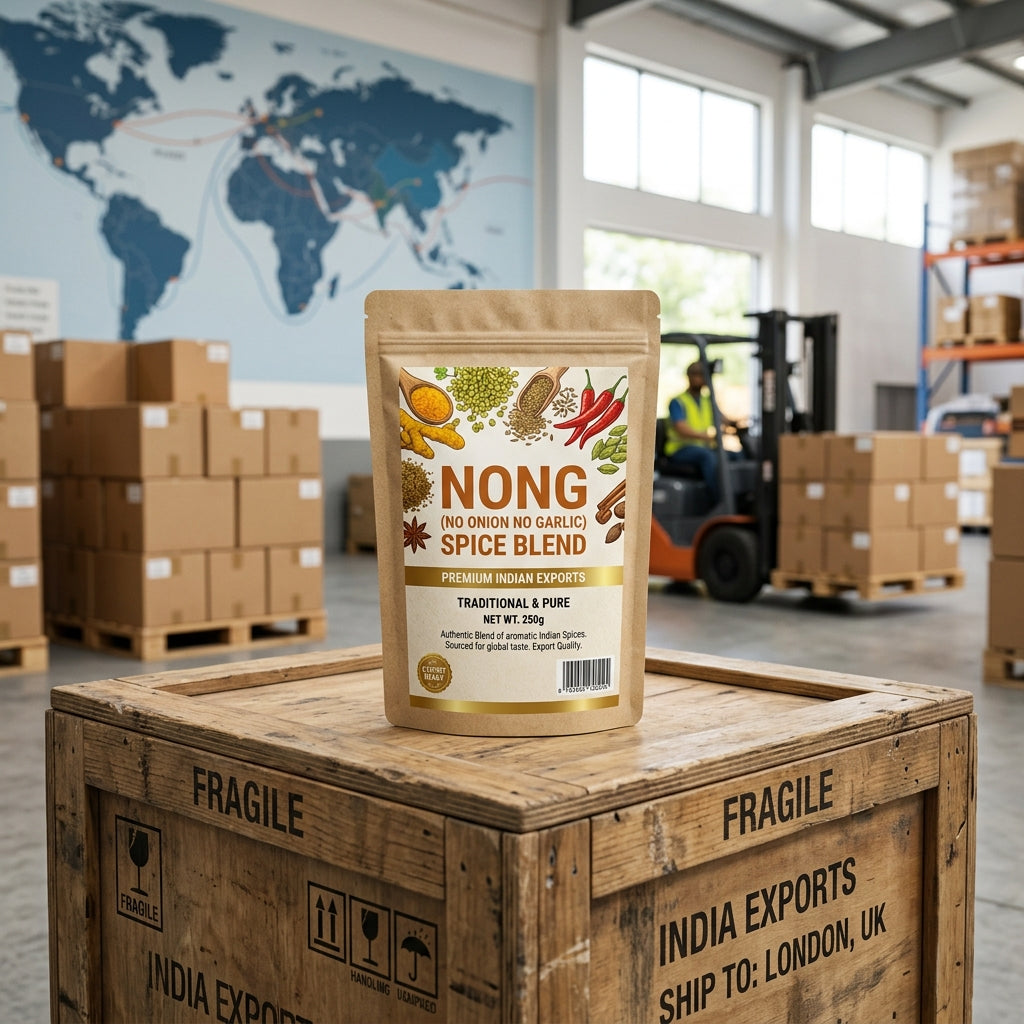
Indian diaspora communities in at least a dozen countries actively search for spices their local supermarkets simply do not stock. Among the hardest to find abroad are genuine no onion no garlic spice blends, since most international Indian grocery supply chains default to standard masala formulations. This gap has quietly turned into a real export opportunity for manufacturers who can supply certified, shelf-stable NONG products across borders. This article covers the top international markets showing demand for these blends, what export-ready preparation actually involves, and why grinding technology matters more once a product has to survive a long shipping journey. At 365 Spicery, we ship this exact category internationally, so this guide reflects direct export experience.
Why No Onion No Garlic Spice Blends Are an Export Opportunity
Global demand for no onion no garlic spices comes from a combination of religious, health, and cultural factors. Notably, Jain diaspora families abroad often cannot find certified NONG products locally, forcing many to import spices themselves in small, informal quantities. Additionally, allium-sensitive consumers following low-FODMAP diets, a group entirely unrelated to religious observance, are independently searching for the same category internationally. Therefore, a single well-formulated product can serve two very different buyer motivations at once, which is unusual in the spice export category. However, spice adulteration and inconsistent labeling remain common risks in cross-border trade, so international buyers place heavy weight on certification when selecting an Indian spice exporter for this niche.
5 Top Export Destinations for No Onion No Garlic Spice Blends
Based on diaspora density and demand patterns, these markets show the strongest opportunity:
Additionally, searches for "spice supplier for NRI market" increasingly originate from these exact regions, confirming that diaspora buyers are actively looking for reliable, certified sources.
How to Prepare a NONG Spice Brand for Export
Exporting successfully requires more than a good recipe. Follow these steps:
Cryogenic Ground vs. Conventional Ground for Export Shelf Life
| Factor | Cryogenic Grinding | Conventional Grinding |
| Grinding Temperature | -40°C to -80°C | 60°C to 90°C (friction heat) |
| Volatile Oil Retention | 95%+ preserved | Up to 40% lost to heat |
| Shelf Stability for Long Transit | High, suited to 4-8 week shipping timelines | Lower, aroma degrades faster in transit |
| Moisture Content | Lower, reduces clumping risk in humid ports | Higher, more prone to clumping and spoilage |
| Consumer Satisfaction on Arrival | Strong, product tastes close to fresh | Weaker, often described as "flat" by diaspora buyers |
As the table shows, export viability depends heavily on grinding method, since a product that tastes acceptable domestically can arrive noticeably duller after weeks in transit if it was conventionally ground.
What the Data Says About Global NONG Demand
According to industry reports, India's spice export sector has continued to diversify beyond bulk commodity spices into specialty and certified categories, including Jain and Halal-compliant blends. Food scientists have found that cryogenically ground spices retain enough volatile oil to remain flavorful even after extended shipping and storage periods, unlike conventionally ground alternatives. Studies show that diaspora consumers rate certified, traceable spice imports significantly higher in trust and repeat purchase intent compared to informally sourced products bought through personal contacts. This is why certification and grinding technology, not just recipe authenticity, are becoming the deciding factors for international NONG spice buyers, particularly in markets like the US, UK, and UAE.
How 365 Spicery Supports NONG Spice Exporters
At 365 Spicery, we manufacture our complete Jain Range (NONG) using Cryogenic Grinding Technology inside an FSSAI, FSSC 22000, and Halal certified facility in Mumbai, built specifically to hold up across long export timelines. Every batch is lab-tested, so diaspora retailers and specialty grocers in the US, UK, UAE, Canada, and Singapore receive consistent quality shipment after shipment. Our relevant portfolio includes Jain Garam Masala, Jain Biryani Masala, Jain Chole Masala, Jain Sambar Powder, and Jain Kitchen King, all export-packaged for extended shelf stability. For international private label founders and specialty grocers, we also offer custom formulation and white-label packaging under bulk spice export India terms, so a brand entering the spice supplier for NRI market category can launch without managing its own production facility. This is what allows an export partner to deliver consistent flavor thousands of kilometers from Mumbai, not just at the factory gate.
Key Takeaways:
- No onion no garlic spice exports serve both Jain diaspora communities and allium-sensitive consumers across multiple countries.
- The US, UK, UAE, Canada, and Singapore currently show the strongest demand patterns for certified NONG blends.
- Export success depends on certification, packaging, and grinding method, not recipe authenticity alone.
- Cryogenic grinding preserves flavor across long shipping timelines, unlike conventional hot-ground alternatives.
- 365 Spicery manufactures export-ready Jain Range (NONG) products from its FSSAI, FSSC 22000, and Halal certified Mumbai facility.
---
#
s
Q: What are the top export destinations for no onion no garlic spice blends?
A: The United States, United Kingdom, United Arab Emirates, Canada, and Singapore currently show the strongest demand, driven by Jain diaspora communities and allium-sensitive consumers. These markets combine cultural demand with strong purchasing power for certified specialty spices.
Q: Why is there export demand for no onion no garlic spices?
A: Jain diaspora families often cannot find certified NONG products locally, while allium-sensitive and low-FODMAP consumers independently search for the same category. Together, these groups create steady demand for Jain spices no onion no garlic across multiple countries.
Q: How do I prepare a no onion no garlic spice brand for export?
A: Secure FSSAI, FSSC 22000, and Halal certification first, then choose moisture-resistant packaging built for long transit. It also helps to confirm your manufacturer uses cryogenic grinding, since this directly affects flavor retention during shipping.
Q: Does 365 Spicery export no onion no garlic spice blends?
A: Yes, 365 Spicery manufactures a full Jain Range (NONG), including Jain Garam Masala and Jain Biryani Masala, in an FSSAI and FSSC 22000 certified facility, with packaging built for extended export shelf life to markets like the US and UAE.
Q: What is the minimum order quantity for exporting NONG spices with 365 Spicery?
A: 365 Spicery offers flexible MOQ for export orders, with packaging options suited to both small test shipments and larger bulk export volumes. Buyers can contact the team on WhatsApp to discuss quantities for their specific destination market.
Q: Which Indian spice exporter is best for no onion no garlic blends?
A: A reliable exporter should combine Jain certification, FSSAI and FSSC 22000 compliance, Halal certification, and cryogenic grinding for shelf-stable flavor. 365 Spicery supplies diaspora retailers and specialty grocers across several international markets with certified NONG blends.
Q: Is 365 Spicery's export NONG range also Halal certified?
A: Yes, 365 Spicery's facility holds Halal certification alongside FSSAI and FSSC 22000, in addition to its dedicated Jain (NONG) product range. This allows export buyers in markets like the UAE to source spices meeting multiple certification requirements from one manufacturer.
---
#
The key insight here is that no onion no garlic spice exports are not a niche afterthought, they are a genuine cross-border opportunity shaped by diaspora demand, allium sensitivity, and a real shortage of certified options abroad. Success in this category depends less on recipe novelty and more on certification, packaging, and a grinding process that survives weeks of transit without losing its flavor edge. As demand continues to grow across markets like the US, UK, and UAE, exporters who treat shelf stability as seriously as flavor authenticity will capture the most repeat business. Which international market is your brand currently exploring for NONG spice exports?
---
#


Share:
Clean Label and Jain: The Perfect Combination for Brands
How No Onion No Garlic Seasonings Boost Label Claims