


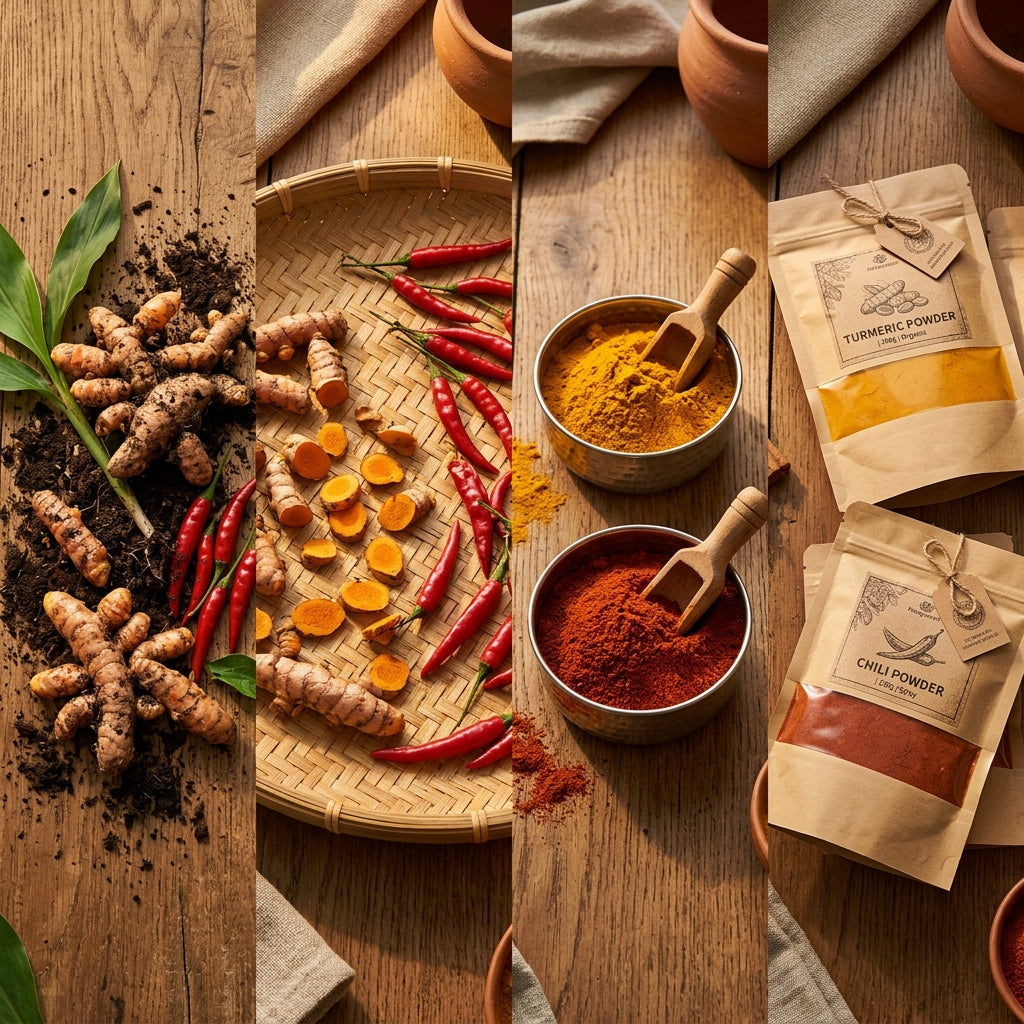
🇮🇳 Top 10 Spice Producing States in India: Crops, Seasons & Quality
Short answer: India is the world's largest producer of spices — and the 10 states that drive this dominance each specialize in distinct, high-value varieties shaped by their geography, climate, and agricultural tradition. The top 10 spice producing states are: Andhra Pradesh (chilli, turmeric), Rajasthan (cumin, fenugreek, coriander), Kerala (black pepper, cardamom, ginger), Karnataka (chilli — Byadagi, turmeric), Tamil Nadu (turmeric, chilli), Madhya Pradesh (garlic, coriander, fenugreek), Gujarat (cumin, fennel, fenugreek), Maharashtra (turmeric, chilli), Himachal Pradesh (Kashmiri chilli), and Uttar Pradesh (mentha, coriander). Understanding which state produces which spice — and why — is the foundation of intelligent spice sourcing.
🌱 Why Geography Determines Spice Quality in India
India's spice geography is not accidental. Its 29 states span five distinct agro-climatic zones — tropical humid (Kerala), tropical semi-arid (Andhra Pradesh), arid (Rajasthan), subtropical (Uttar Pradesh, Himachal Pradesh), and semi-arid (Gujarat, Karnataka) — each of which produces specific growing conditions that determine a spice's chemical composition. Black pepper from Kerala's humid hills develops more piperine than pepper grown in drier conditions. Rajasthani cumin grown in semi-arid conditions develops more concentrated cuminaldehyde volatile oil than cumin grown in higher humidity. Wayanad cardamom from Kerala's cool, humid hill stations develops higher cineole content than cardamom from other origins. Spice quality is terroir — and India's geographic diversity is its most important agricultural asset.
🗺️ Top 10 Spice Producing States: State-by-State Breakdown
1️⃣ Andhra Pradesh — India's Chilli Capital
Primary spices: Red chilli (Guntur Sannam — India's most exported chilli variety), turmeric (Yellow Finger variety), ginger
Key districts: Guntur (chilli), Khammam (turmeric)
Harvest season: Chilli — November to February; Turmeric — January to March
Why it's #1 for chilli: Guntur district is the world's largest chilli trading market by volume. Andhra Pradesh produces approximately 30–35% of India's total chilli output. The state's hot, dry climate and black cotton soil produce the capsaicin-rich chillies that have made "Guntur Sannam" an internationally recognized origin specification in global spice trade.
2️⃣ Rajasthan — Cumin, Coriander & Fenugreek Powerhouse
Primary spices: Cumin (jeera — largest producer globally), fenugreek (methi — largest producer globally), coriander (dhania)
Key districts: Jodhpur, Barmer, Jalore (cumin); Nagaur, Sikar (fenugreek); Kota, Baran (coriander)
Harvest season: February to April (rabi crop)
Why it dominates: Rajasthan's semi-arid climate is uniquely suited to seed spices — cumin, coriander, and fenugreek thrive in low-rainfall, high-temperature growing conditions. Rajasthan produces 80%+ of India's cumin output and is the world's single largest cumin producing region. The volatile oil concentration in Rajasthani jeera is among the highest globally.
3️⃣ Kerala — The Queen and King of Indian Spices
Primary spices: Black pepper (Malabar coast — globally benchmarked), green cardamom (Wayanad, Idukki), ginger (Ernakulam, Kozhikode), small onion, curry leaf
Key districts: Wayanad (cardamom, pepper), Idukki (cardamom), Kozhikode/Kannur (pepper)
Harvest season: Pepper — November to January; Cardamom — August to November
Why it's irreplaceable: Kerala's tropical humid climate — heavy monsoon, altitude variation, and rich laterite soil — creates growing conditions that produce black pepper and cardamom with volatile oil content that cannot be replicated in other regions. Malabar Garbled (MG1) pepper and Wayanad Green Cardamom Bold are internationally specified grades benchmarked to Kerala origin.
4️⃣ Karnataka — Byadagi Chilli & Vanilla
Primary spices: Byadagi chilli (Haveri, Dharwad, Gadag), vanilla (Coorg), ginger (Coorg, Chikmagalur), turmeric
Key districts: Haveri (Byadagi chilli), Coorg/Kodagu (vanilla, ginger)
Harvest season: Byadagi chilli — November to February; Vanilla — November to January
Why it matters: Karnataka is the only significant Indian producer of vanilla — one of the world's most expensive flavor ingredients. Byadagi chilli's distinctively wrinkled, dark-red variety with high ASTA color value and medium heat is the signature ingredient of Karnataka and Goan cuisine and is increasingly valued by export buyers seeking high-color, moderate-heat chilli.
5️⃣ Tamil Nadu — Turmeric & Tamarind
Primary spices: Turmeric (Erode — India's most famous turmeric origin), chilli, tamarind, curry leaf, pepper
Key districts: Erode (turmeric — "Turmeric City of India"), Salem, Coimbatore
Harvest season: Turmeric — January to March
Why it matters: Erode turmeric is the global benchmark for high-curcumin turmeric — regularly achieving 3–5% curcumin content versus the 1.5–2% typical of generic Indian turmeric. The Erode turmeric market is the world's largest turmeric trading hub, processing over 100,000 tonnes annually. For health-positioned turmeric products, Erode origin specification is the quality standard.
6️⃣ Madhya Pradesh — Garlic & Coriander
Primary spices: Garlic (India's largest garlic producer), coriander, fenugreek, onion seed
Key districts: Mandsaur, Ratlam (garlic); Kota region border (coriander)
Harvest season: Garlic — March to May
Why it matters: Madhya Pradesh produces 40%+ of India's garlic, making it the nation's garlic capital. Mandsaur garlic is known for its high allicin content and strong aroma. The state is also a significant producer of coriander and fenugreek, often competing with Rajasthan for the same buyer segments.
7️⃣ Gujarat — Cumin, Fennel & Fenugreek
Primary spices: Cumin (Unjha — India's largest cumin trading market), fennel (saunf — India's largest producer), fenugreek
Key districts: Unjha, Mehsana (cumin, fennel); Rajkot (cumin)
Harvest season: February to April (rabi crop)
Why it matters: Unjha in Gujarat's Mehsana district hosts the world's largest cumin and fennel spot market — despite Rajasthan producing more cumin by volume, a significant portion of India's cumin trade is transacted through Unjha. Gujarat fennel (saunf) is the primary raw material for mouth freshener blends and digestive preparations across India and export markets.
8️⃣ Maharashtra — Turmeric & Black Pepper
Primary spices: Turmeric (Sangli — India's second largest turmeric market), chilli, ginger, black pepper (Konkan region)
Key districts: Sangli, Satara (turmeric); Raigad, Sindhudurg (pepper, ginger)
Harvest season: Turmeric — January to March
Why it matters: Sangli hosts India's second largest turmeric trading market after Erode, processing Marathwada and Vidarbha-grown turmeric. Maharashtra's Konkan coast also produces quality black pepper and ginger in its humid coastal belt — making the state a meaningful contributor across multiple spice categories.
9️⃣ Himachal Pradesh — Kashmiri Chilli & Ginger
Primary spices: Kashmiri chilli (primary production state), ginger, turmeric (limited), large cardamom
Key districts: Solan, Sirmaur (Kashmiri chilli); Kangra, Mandi (ginger)
Harvest season: Chilli — October to December
Why it matters: Despite the name "Kashmiri chilli" suggesting Kashmir origin, Himachal Pradesh is the primary growing state for this high-color, low-heat variety. The state's cool mountain climate produces the unusually high capsanthin (color pigment) to capsaicin (heat) ratio that defines the Kashmiri chilli character. Himachal Pradesh ginger is also gaining recognition for its high gingerol content.
🔟 Uttar Pradesh — Mentha & Coriander
Primary spices: Mentha (peppermint/spearmint — world's largest producer), coriander, fenugreek, garlic
Key districts: Barabanki, Lucknow (mentha); Hathras (coriander)
Harvest season: Mentha — May to June; Coriander — March to April
Why it matters: India supplies approximately 75–80% of the world's mentha oil — and Uttar Pradesh produces almost all of it. Mentha oil and its derivatives (menthol, peppermint oil) are essential flavoring agents in confectionery, pharmaceuticals, oral care, and beverages globally. UP's contribution to global flavor supply through mentha alone makes it a world-significant spice state.
📊 Quick State-Spice Reference
| State | Signature Spice | Why It's Best There |
|---|---|---|
| Andhra Pradesh | Guntur chilli | Hot dry climate → high capsaicin |
| Rajasthan | Cumin, fenugreek | Semi-arid climate → concentrated volatile oil |
| Kerala | Black pepper, cardamom | Humid hills → highest aromatic oil content |
| Karnataka | Byadagi chilli, vanilla | Microclimate → unique color-heat profile |
| Tamil Nadu | Erode turmeric | Black clay soil → highest curcumin content |
| Madhya Pradesh | Garlic, coriander | Alluvial soil → high-allicin garlic |
| Gujarat | Cumin, fennel | Trading hub — Unjha market benchmark |
| Maharashtra | Sangli turmeric | India's 2nd largest turmeric market |
| Himachal Pradesh | Kashmiri chilli | Cool mountain climate → high color, low heat |
| Uttar Pradesh | Mentha (peppermint) | 75–80% of world's mentha oil supply |
✅ Do's and ❌ Don'ts — Origin-Based Spice Sourcing
| ✅ Do | ❌ Don't |
|---|---|
| Specify state origin when sourcing premium spices commercially | Assume "Indian origin" is a sufficient specification — it isn't |
| Request quality benchmarks specific to origin (Erode turmeric: curcumin 3%+) | Pay a premium for origin-specified spice without requesting lab documentation to verify |
| Understand harvest seasons — buy closer to harvest for freshest product | Expect consistent pricing year-round — seasonal supply dynamics affect spice prices significantly |
| Work with a manufacturer who sources directly from growing districts | Use multi-layer trader supply chains that obscure true origin documentation |
💡 Expert Recommendation
The most practically important insight from India's spice geography for food buyers is that the same spice from different states represents genuinely different products — not just a marketing distinction. Rajasthani cumin has measurably higher volatile oil content than cumin from other origins. Erode turmeric has measurably higher curcumin than generic Indian turmeric. Wayanad cardamom has measurably higher cineole. These are analytical facts documented in state agriculture department and Spices Board research, not claims. For food manufacturers specifying quality parameters in their product formulations, state origin is a practical quality tool — not a label embellishment. At 365 Spicery, we source from origin districts and can provide documentation of state provenance for every product we supply.
🧑💼 From an Import Buyer's Perspective
James, a UK-based spice importer who sources Indian spices for a premium grocery retail chain, audited his supply chain in 2024. "I used to specify 'Indian cumin' on my purchase orders. My supplier delivered cumin — different origins, different volatile oil content, different aroma intensity, different color — every shipment slightly different. I switched to 'Rajasthan cumin, volatile oil minimum 2.8%' and the product became consistent. I pay slightly more per kilogram. But my retail buyers stopped flagging aroma inconsistency, and I stopped issuing quality credits to the grocery chain. The origin specification paid for itself within two shipments." State-level origin specification is a commercial quality investment with measurable return.
🔑 Key Takeaways
- 🌶️ Andhra Pradesh = world's chilli capital (Guntur Sannam — 30%+ of India's chilli output)
- 🌱 Rajasthan = world's cumin capital (80%+ of India's cumin, highest volatile oil concentration)
- ⬛ Kerala = black pepper + cardamom benchmark (Malabar MG1, Wayanad Bold — globally specified grades)
- 🟡 Tamil Nadu = Erode turmeric benchmark (highest curcumin 3–5% globally)
- 🌿 Uttar Pradesh = world's mentha capital (75–80% of global mentha oil supply)
📞 Source Origin-Verified Spices from 365 Spicery
365 Spicery's certified facility in Mumbai sources spices directly from India's primary growing districts — Rajasthani cumin from Jodhpur, Erode turmeric from Tamil Nadu, Malabar pepper from Kerala, Kashmiri chilli from Himachal Pradesh, Guntur and Byadagi chilli from their respective origins — with full provenance documentation and batch lab reports for every product. We supply food businesses, exporters, private label brands, and retail chains across 15+ countries with origin-specified, certified, documented spice ingredients that meet international quality and compliance standards. WhatsApp us at +91 72799 00500 or visit www.365spicery.com to request our product catalog with origin specifications. Halal and Jain certified. Wholesale and export available.
---
Q: Which state produces the most spices in India?
A: Andhra Pradesh produces the largest volume of spices in India — primarily red chilli (30–35% of national output) and turmeric. However, Rajasthan is the world's largest producer of cumin and fenugreek. Kerala produces the most internationally traded high-value spices (black pepper and cardamom). India as a whole produces approximately 75% of global spice volume.
Q: Which state in India produces the best turmeric?
A: Tamil Nadu (Erode district) produces India's highest-quality turmeric — Erode turmeric regularly achieves 3–5% curcumin content, significantly above the 1.5–2% typical of generic Indian turmeric. Erode hosts the world's largest turmeric trading market. Maharashtra (Sangli district) hosts India's second largest turmeric market and also produces good quality material, though typically at lower curcumin content than Erode.
Q: Which state produces the most black pepper in India?
A: Kerala is India's primary black pepper producing state — the Malabar coast (Kozhikode, Kannur, Wayanad districts) produces the internationally benchmarked Malabar Garbled (MG1) grade that is the global standard for premium pepper. Karnataka and Andaman & Nicobar Islands also produce black pepper, but Kerala remains the dominant quality origin.
Q: Where is cardamom grown in India?
A: Green cardamom is primarily grown in Wayanad and Idukki districts of Kerala — at altitudes of 600–1,500 meters in the Western Ghats. This is the highest-quality Indian cardamom, with the highest cineole (volatile oil) content. Small quantities are also produced in Karnataka (Coorg) and Tamil Nadu (Nilgiris). India is the world's second largest cardamom producer after Guatemala.
Q: Which state is the largest producer of cumin in India?
A: Rajasthan produces approximately 80% of India's cumin (jeera) output — primarily in Jodhpur, Barmer, Jalore, Nagaur, and Pali districts. Gujarat is the second largest producer and hosts Unjha, the world's largest cumin and fennel trading market. Rajasthani cumin is valued for its high cuminaldehyde volatile oil content produced by the state's semi-arid growing conditions.
Q: Where is Kashmiri chilli actually grown?
A: Despite the name, most commercial "Kashmiri chilli" is grown in Himachal Pradesh (Solan, Sirmaur districts) rather than in the Kashmir Valley. Some production occurs in Jammu division. The variety is named for its origin and characteristic — a high-color (ASTA 120–180), low-heat (0–1,000 SHU) chilli developed in the cool mountain climate of the northwestern Himalayas.
Q: Which state produces the most fenugreek in India?
A: Rajasthan is India's largest fenugreek (methi) producer — and the world's largest. Nagaur, Sikar, Ajmer, and Tonk districts are the primary growing areas. Madhya Pradesh and Gujarat are the second and third largest producers. Rajasthani fenugreek seeds are known for their high 4-hydroxyisoleucine content (the compound linked to blood sugar regulation) and strong maple-like aroma.
Q: Is Guntur still the world's largest chilli market?
A: Yes. Guntur district in Andhra Pradesh hosts the world's largest chilli trading market by volume, processing chilli from Andhra Pradesh and neighboring states. Guntur Sannam (S4 variety) is the world's most exported chilli variety specification. The annual chilli trade through Guntur market runs into hundreds of thousands of tonnes. Andhra Pradesh as a state accounts for 30–35% of India's total chilli production.
Q: Where does India's garlic come from?
A: Madhya Pradesh is India's largest garlic producing state — Mandsaur district is the primary growing area. Gujarat (Saurashtra region) is the second largest producer. Rajasthan and Uttar Pradesh also contribute significant volumes. Mandsaur garlic is known for its high allicin content and pungent aroma, making it a preferred origin for garlic powder and dehydrated garlic products in export markets.
Q: Does 365 Spicery source from specific growing states?
A: Yes. 365 Spicery sources origin-specifically from India's primary spice growing districts: Rajasthani cumin from Jodhpur, Erode turmeric from Tamil Nadu, Malabar pepper from Kerala, Wayanad cardamom from Kerala, Kashmiri chilli from Himachal Pradesh, Guntur and Byadagi chilli from their respective Andhra Pradesh and Karnataka origins. Contact us at +91 72799 00500 for origin documentation.
---
India's spice map is a precise overlap of geography, climate, soil composition, and centuries of agricultural tradition — each state producing its signature spice at a quality level that other growing regions cannot replicate because the growing conditions themselves are irreplaceable. Understanding this map makes you a better buyer: knowing that Erode turmeric means 3%+ curcumin, Rajasthani cumin means high volatile oil, and Malabar pepper means the international benchmark for piperine and aroma intensity. These are not marketing claims — they are documented agricultural facts. The next time you specify "Indian spices" on a purchase order, the question worth asking is: which state, which district, and what's the lab documentation? At 365 Spicery, those are questions we answer with every shipment.
---
Partner with India's Premium Spice Manufacturer
365 Spicery serves 500+ businesses across India with:
- Wholesale & Bulk Supply
- Private Label / White Label Manufacturing
- Custom Spice Formulations
- Jain & Halal Certified Range
- FSSAI | FSSC 22000 | Lab-Tested Quality
WhatsApp: +91 72799 00500
Website: www.365spicery.com
Location: Mumbai, Maharashtra, India
---


Share:
Kashmiri Chilli vs Byadagi vs Guntur Chilli: Complete Comparison
What Is Cryogenic Grinding in Spices? Benefits, Process & Quality Impact