


Introduction
A spice rack sitting in most Indian kitchens is quietly one of the most under-appreciated health tools available, yet few buyers realize that the way a spice is processed determines how many of its health benefits of spices actually survive to reach the plate. This article rounds up 50 science-backed benefits across the most common Indian spices, organized by ingredient so you can see exactly what each one offers. We will also explain why grinding method matters just as much as the spice itself when it comes to retaining these benefits. At 365 Spicery, we manufacture spices with nutrient preservation as a core priority, so this guide reflects both research and real production insight.
Why Spice Quality Affects the Health Benefits You Actually Get
Most health content on spices focuses entirely on the ingredient, rarely mentioning that processing method significantly affects potency. Notably, the active compounds responsible for most documented spice benefits, such as curcumin in turmeric or piperine in black pepper, are volatile and heat-sensitive. Therefore, a spice ground using high-friction, high-heat methods can lose a meaningful share of these beneficial compounds before it ever reaches a consumer's kitchen. This matters because premium spices India buyers increasingly want, without realizing that grinding method is often a bigger factor in potency than the spice's origin or freshness at harvest. Additionally, spice adulteration remains a real risk in India, and adulterated spices offer little to none of the health benefits associated with the pure ingredient.
50 Science-Backed Health Benefits, Organized by Spice
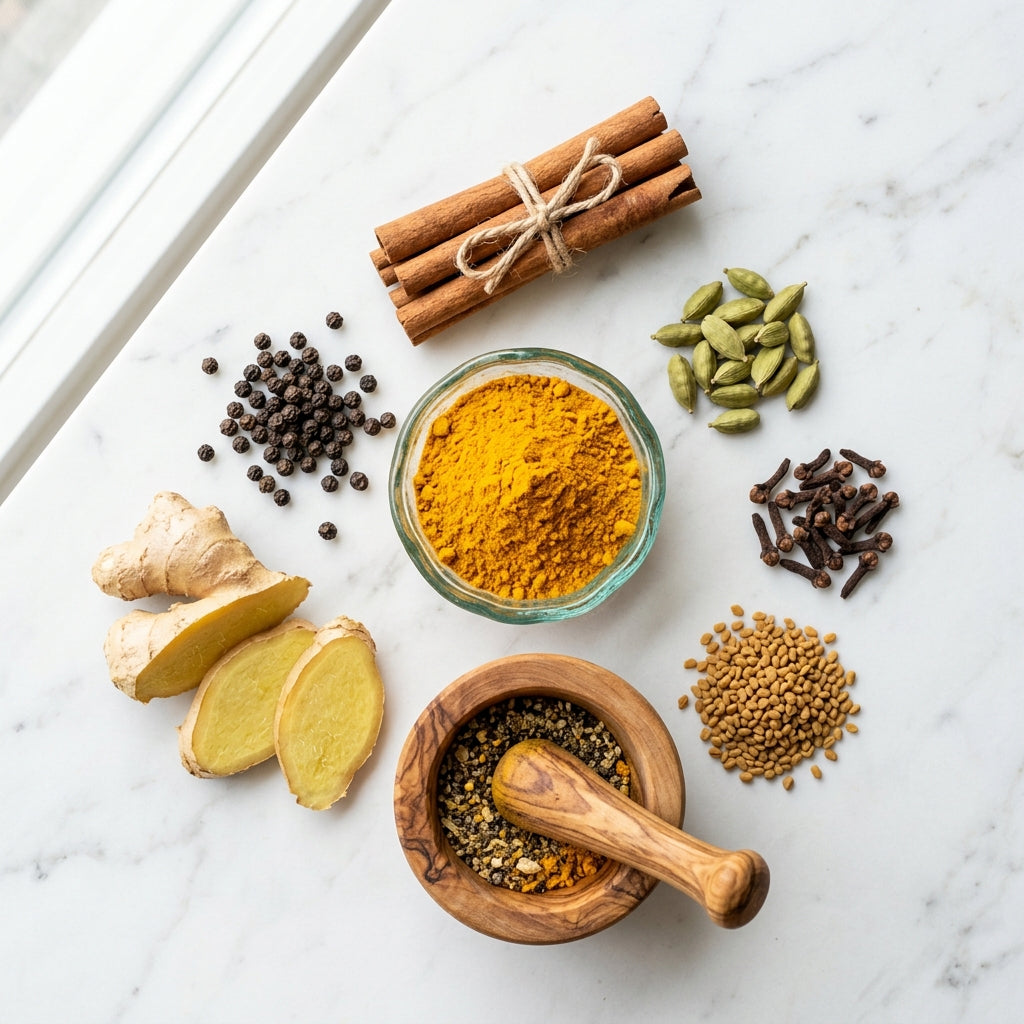
Turmeric (1-8): Anti-inflammatory support from curcumin; antioxidant activity that helps neutralize free radicals; supports joint comfort; aids digestion; may support liver function; traditionally used for skin health; supports immune function; may aid wound healing when applied topically.
Black Pepper (9-14): Piperine enhances nutrient absorption, including curcumin uptake; supports digestive enzyme activity; contains antioxidant compounds; traditionally used for respiratory comfort; may support metabolism; contains trace minerals like manganese.
Cumin (15-20): Supports digestive health and may reduce bloating; contains iron, important for blood health; antioxidant properties from essential oils; traditionally used to support blood sugar balance; may have mild antimicrobial properties; supports appetite regulation.
Coriander (21-26): Contains antioxidants that support cellular health; traditionally used for digestive comfort; may support healthy cholesterol levels; contains vitamin K and vitamin C; used traditionally for its cooling effect on the body; supports overall detoxification processes.
Ginger (27-32): Well-documented for nausea relief; anti-inflammatory compounds called gingerols; supports digestive motility; may reduce muscle soreness; traditionally used for respiratory comfort; contains antioxidant compounds that support immune health.
Cinnamon (33-37): May support healthy blood sugar metabolism; contains antioxidant polyphenols; traditionally used for its warming digestive effect; may have antimicrobial properties; supports cardiovascular health markers in some studies.
Cardamom (38-42): Contains antioxidant compounds; traditionally used to support digestion and reduce bloating; may support oral health due to antimicrobial properties; used traditionally for respiratory comfort; supports fresh breath naturally.
Fenugreek (43-46): Contains soluble fiber that supports digestion; traditionally used to support lactation in nursing mothers; may support healthy blood sugar levels; contains plant compounds linked to cholesterol support.
Clove (47-50): Contains eugenol, a compound with antioxidant and antimicrobial properties; traditionally used for dental comfort; supports digestive health; contains one of the highest antioxidant concentrations among common spices.
How to Get the Most Health Value From Your Spices
Follow these steps to preserve and maximize the health benefits listed above:
Cryogenic Ground vs. Conventional Ground for Nutrient Retention
| Factor | Cryogenic Grinding | Conventional Grinding |
| Grinding Temperature | -40°C to -80°C | 60°C to 90°C (friction heat) |
| Volatile Oil Retention | 95%+ preserved | Up to 40% lost to heat |
| Active Compound Preservation | High, heat-sensitive compounds remain largely intact | Lower, heat degrades curcumin, piperine, and similar compounds |
| Shelf Life | Longer, slower degradation of active compounds | Shorter, faster loss of potency over time |
| Overall Health Value Retained | Strong | Reduced |
As the table shows, two identical spices can offer meaningfully different health value depending purely on how they were ground, which is a detail almost entirely absent from typical spice health content.
What the Research Says About Spice Compounds and Health
According to industry reports, interest in functional food ingredients, including everyday spices, has grown significantly as consumers look for natural ways to support wellbeing through diet. Food scientists have found that curcumin retention in turmeric can drop substantially under high-heat conventional grinding, directly reducing the anti-inflammatory potential a consumer expects from the spice. Studies show that piperine, black pepper's key active compound, is similarly heat-sensitive, meaning its nutrient-absorption-boosting effect is significantly weaker when the pepper has been conventionally hot-ground. This is why grinding method has become an important consideration for health-conscious buyers, not just an internal manufacturing detail, since it directly determines the real-world potency of the spice on your plate.
How 365 Spicery Preserves the Health Value of Every Spice
At 365 Spicery, we manufacture our entire spice portfolio using Cryogenic Grinding Technology inside an FSSAI, FSSC 22000, and Halal certified facility in Mumbai, specifically to protect the heat-sensitive compounds responsible for most of the benefits listed above. Every batch is lab-tested, so buyers get spices that retain significantly more of their natural potency than conventionally ground alternatives. Our relevant portfolio includes Turmeric Powder, Black Pepper Powder, Cumin Powder, Ginger Powder, and Clove Powder, all cryogenically ground to preserve maximum volatile oil and active compound content. For health-conscious households and food manufacturers exploring cryogenic ground spices benefits, we also offer bulk and private label supply, so brands building health-forward products can source spices that genuinely back up their wellness claims. This is what separates a spice that merely lists health benefits on a blog from one that actually delivers them in the jar.
---
Key Takeaways:
- All 50 health benefits listed span turmeric, black pepper, cumin, coriander, ginger, cinnamon, cardamom, fenugreek, and clove.
- Many spice benefits come from heat-sensitive compounds like curcumin, piperine, and gingerol, which degrade under high-heat grinding.
- Buying whole spices and grinding close to use helps preserve potency at home.
- Cryogenic grinding preserves up to 95%+ of volatile oils, significantly outperforming conventional hot grinding for nutrient retention.
- 365 Spicery manufactures its full spice range using cryogenic grinding in an FSSAI, FSSC 22000, and Halal certified Mumbai facility.
---
Q: What are the health benefits of common spices like turmeric and black pepper?
A: Turmeric offers anti-inflammatory and antioxidant support through curcumin, while black pepper's piperine enhances nutrient absorption, including curcumin uptake. Both are among the most researched spices for their documented health-supporting compounds.
Q: Do all spices offer the same level of health benefits regardless of processing?
A: No, processing method significantly affects potency, since many active compounds like curcumin and piperine are heat-sensitive. Conventionally hot-ground spices can lose a meaningful share of these beneficial compounds compared to cryogenically ground alternatives.
Q: How can I get the most health benefit from spices at home?
A: Buy whole spices and grind close to use, store them away from heat and sunlight, and pair fat-soluble spices like turmeric with a small amount of oil for better absorption. Choosing cryogenically ground spices also helps preserve more of their natural potency.
Q: Does 365 Spicery sell spices that preserve their health benefits?
A: Yes, 365 Spicery manufactures its full spice range, including Turmeric, Black Pepper, and Ginger Powder, using cryogenic grinding in an FSSAI and FSSC 22000 certified facility, which preserves significantly more active compounds than conventional grinding.
Q: What is the minimum order quantity for bulk health-focused spices from 365 Spicery?
A: 365 Spicery offers flexible packaging from 1kg retail-ready packs up to 50kg bulk institutional packs, depending on the product. Buyers can contact the team on WhatsApp to discuss pricing for their specific requirement.
Q: Which spices are considered the most beneficial for health according to research?
A: Turmeric, black pepper, ginger, cinnamon, and clove are among the most researched spices, each offering documented antioxidant, anti-inflammatory, or digestive support properties. Sourcing them cryogenically ground helps ensure these benefits are actually retained.
Q: Are 365 Spicery's health-focused spices also certified for quality and safety?
A: Yes, 365 Spicery's manufacturing facility holds FSSAI, FSSC 22000, and Halal certification, with every batch lab-tested to confirm purity and potency before it reaches the buyer.
---
The most important insight from these 50 benefits is that the spice itself is only half the story, the way it is processed determines how much of that documented health value actually reaches you. Heat-sensitive compounds like curcumin and piperine can be significantly diminished by conventional hot grinding, meaning two jars labeled identically can offer very different real-world benefit. Buyers who understand this start evaluating grinding method alongside the spice itself, rather than assuming all turmeric or black pepper is equally potent. Which of these 50 benefits surprised you the most, or matches something you have already noticed in your own health routine?
---


Share:
Indian Spices Explained: Uses, Benefits & Export Guide
Best Spice Manufacturer in India: Proven Selection Guide