


Introduction
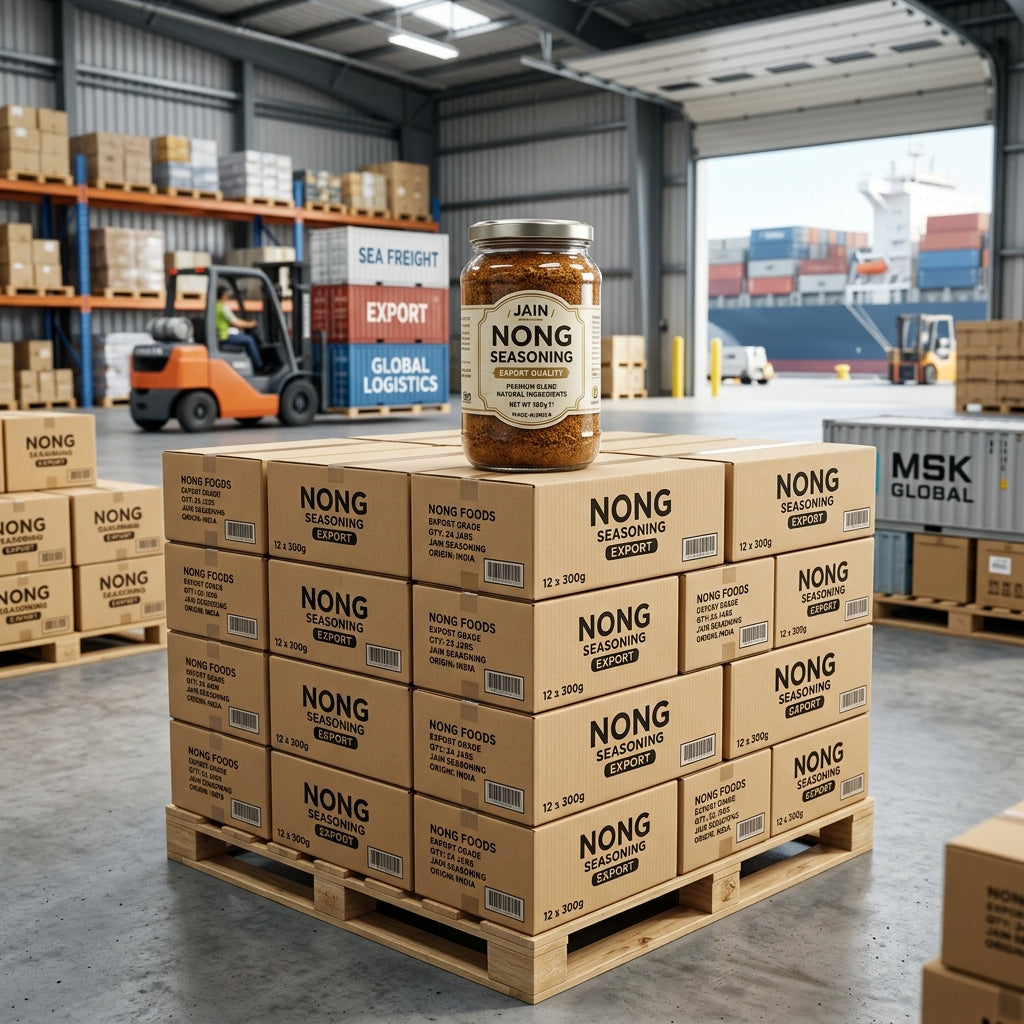
Seasonings, unlike raw spices, rarely get exported with dietary compliance built in, and that gap is exactly where the opportunity sits. Most Indian seasoning exports default to standard onion-garlic bases, leaving international buyers serving Jain, allium-sensitive, and low-FODMAP customers with almost nowhere to source certified alternatives abroad. This article covers where the strongest export market for no onion no garlic seasonings currently exists, how exporters should position these products for international buyers, and why manufacturing quality matters more once a seasoning has to survive weeks in transit. At 365 Spicery, we ship this exact category to international buyers, so this reflects direct export experience.
Why No Onion No Garlic Seasonings Have an Export Advantage
Seasonings occupy a different export niche than whole spices or curry masalas, since they are applied directly to snacks, marinades, and fast food, categories with fast-growing international demand. Notably, a genuine no onion no garlic seasoning line lets an exporter serve QSR chains, snack manufacturers, and specialty grocers simultaneously, rather than a single narrow buyer segment. Therefore, this category offers a wider commercial footprint than curry masala exports, which mostly reach home cooks and restaurants. However, spice adulteration and mislabeled "free-from" claims are a known risk in cross-border trade, so international buyers place heavy weight on certification when selecting a supplier for this specific niche.
5 Export Market Opportunities Worth Pursuing
Based on demand patterns and buyer profiles, these markets show the clearest opportunity for NONG seasoning exports:
Additionally, "bulk spice export India" searches increasingly include seasoning-specific terms, not just whole spices, signaling that international buyers are actively expanding beyond raw spice imports.
How to Position a No Onion No Garlic Seasoning for Export Buyers
Exporters entering this category should focus on:
Cryogenic Ground vs. Conventional Ground for Export Consistency
| Factor | Cryogenic Grinding | Conventional Grinding |
| Grinding Temperature | -40°C to -80°C | 60°C to 90°C (friction heat) |
| Volatile Oil Retention | 95%+ preserved | Up to 40% lost to heat |
| Flavor Punch on Snack/QSR Applications | Strong, holds up on chips, popcorn, and fries after transit | Weaker, flavor often flattens by the time it reaches shelf |
| Shelf Stability for Long Transit | High, suited to multi-week shipping timelines | Lower, more prone to staleness and clumping |
| Buyer Confidence in Repeat Orders | Higher, consistent quality across shipments | Lower, batch variation raises buyer risk |
As the table shows, seasoning exports have even less margin for error than whole spice exports, since seasonings are judged instantly on a finished snack or fast food item, with no cooking process to mask any quality loss from the journey.
What the Data Says About This Export Opportunity
According to industry reports, India's spice and seasoning export sector has continued diversifying into specialty and certified categories, moving beyond bulk commodity exports. Food scientists have found that cryogenically ground seasoning bases retain enough volatile oil to remain flavorful on snack applications even after extended shipping timelines, unlike conventionally ground alternatives. Studies show that international buyers rate certified, documented seasoning suppliers significantly higher on trust and reorder likelihood than suppliers offering only informal assurances. This is why certification and grinding technology, not recipe novelty, are becoming the deciding factors for international buyers sourcing no onion no garlic seasonings.
How 365 Spicery Supports Seasoning Exporters
At 365 Spicery, we manufacture our Seasonings & Premixes and Jain Range (NONG) using Cryogenic Grinding Technology inside an FSSAI, FSSC 22000, and Halal certified facility in Mumbai, built to hold up across long export timelines. Every batch is lab-tested, so specialty grocers, snack brands, and food-service buyers in the US, UK, UAE, Canada, and Southeast Asia receive consistent flavor shipment after shipment. Our relevant portfolio includes Jain Seasoning, Jain Salt Blend, Jain Dip Mix, and reformulated versions of Chaat Masala, Peri Peri, and BBQ seasoning, all export-packaged for extended shelf stability. For international private label founders and specialty grocers, we also offer custom formulation and white-label packaging under bulk spice export India terms, so a brand can enter the export seasoning category without managing its own production facility. This is what allows an exporter to deliver consistent flavor thousands of kilometers from Mumbai, not just at the factory gate.
Key Takeaways:
- No onion no garlic seasonings open export opportunities across QSR, snack, and specialty grocery buyers, not just curry masala markets.
- The US, UK, UAE, Canada, and Southeast Asia currently show the strongest demand for certified NONG seasoning exports.
- Export positioning should lead with certification, packaging format, and shelf-life data, not recipe claims alone.
- Cryogenic grinding protects flavor on snack applications, where quality loss is felt immediately with no cooking step to compensate.
- 365 Spicery manufactures export-ready Seasonings & Premixes and Jain Range (NONG) products from its FSSAI, FSSC 22000, and Halal certified Mumbai facility.
---
#
s
Q: What export market opportunities exist for no onion no garlic seasonings?
A: The United States, United Kingdom, United Arab Emirates, Canada, and parts of Southeast Asia show the strongest demand, driven by specialty grocers, diaspora snack brands, and QSR chains. These markets value certified, shelf-stable seasoning supply.
Q: Why do no onion no garlic seasonings have an export advantage over curry masalas?
A: Seasonings apply to snacks, marinades, and fast food, categories with fast-growing international demand, letting exporters reach QSR chains and snack manufacturers alongside traditional grocery buyers. This gives seasonings a wider commercial footprint abroad.
Q: How should I position a no onion no garlic seasoning for export buyers?
A: Lead with certification documentation upfront, package for the intended use case such as retail-ready or food-service formats, and provide shelf-life data across realistic shipping conditions. International buyers expect this evidence before committing to a supplier.
Q: Does 365 Spicery export no onion no garlic seasonings?
A: Yes, 365 Spicery manufactures Jain Seasoning, Jain Salt Blend, and reformulated versions of popular seasonings like Chaat Masala and Peri Peri, all cryogenically ground in an FSSAI and FSSC 22000 certified facility built for export shelf life.
Q: What is the minimum order quantity for exporting seasonings with 365 Spicery?
A: 365 Spicery offers flexible MOQ for export orders, with packaging options suited to both smaller test shipments and larger bulk export volumes. Buyers can contact the team on WhatsApp to discuss quantities for their target market.
Q: Which supplier is best for exporting no onion no garlic seasonings from India?
A: A reliable exporter should combine Jain certification, FSSAI and FSSC 22000 compliance, Halal certification, and cryogenic grinding for consistent flavor after transit. 365 Spicery supplies specialty grocers and snack brands across several international markets.
Q: Are 365 Spicery's export seasonings also Halal certified?
A: Yes, 365 Spicery's facility holds Halal certification alongside FSSAI and FSSC 22000, in addition to its dedicated Jain (NONG) product range. This allows export buyers to source seasonings meeting multiple certification requirements from one manufacturer.
---
#
The key insight here is that no onion no garlic seasonings represent an underserved export category with a wider buyer base than most exporters realize, spanning QSR chains, snack manufacturers, and specialty grocers, not just traditional curry masala buyers. Success depends on leading with real certification, packaging built for the intended use case, and a grinding process that survives long transit without losing flavor punch. As demand grows across markets like the US, UK, and UAE, exporters who treat seasoning quality with the same rigor as whole spice exports will capture the strongest repeat business. Which export market opportunity is your brand currently evaluating for NONG seasonings?
---
#


Share:
The Ultimate Guide to Private Label No Onion No Garlic
Why Hotels Are Switching to Cryogenic Ground Spices