


Introduction
Nearly 70% of Indian food buyers now check ingredient labels before choosing a packaged spice blend, and Jain diners scrutinize them even harder. For restaurant owners and food manufacturers, this creates a real problem: how do you deliver bold, authentic flavor without onion, garlic, or synthetic additives, while still keeping the label short and honest? That is the exact challenge that clean label Jain seasonings solve. This article breaks down what clean label really means in the Jain spice category, how to evaluate a genuine supplier, and why more hotels, QSRs, and private label founders are switching to certified NONG (No Onion No Garlic) blends. At 365 Spicery, we manufacture this category daily, so the insights here come from the factory floor, not just theory.
What Are Clean Label Jain Seasonings?
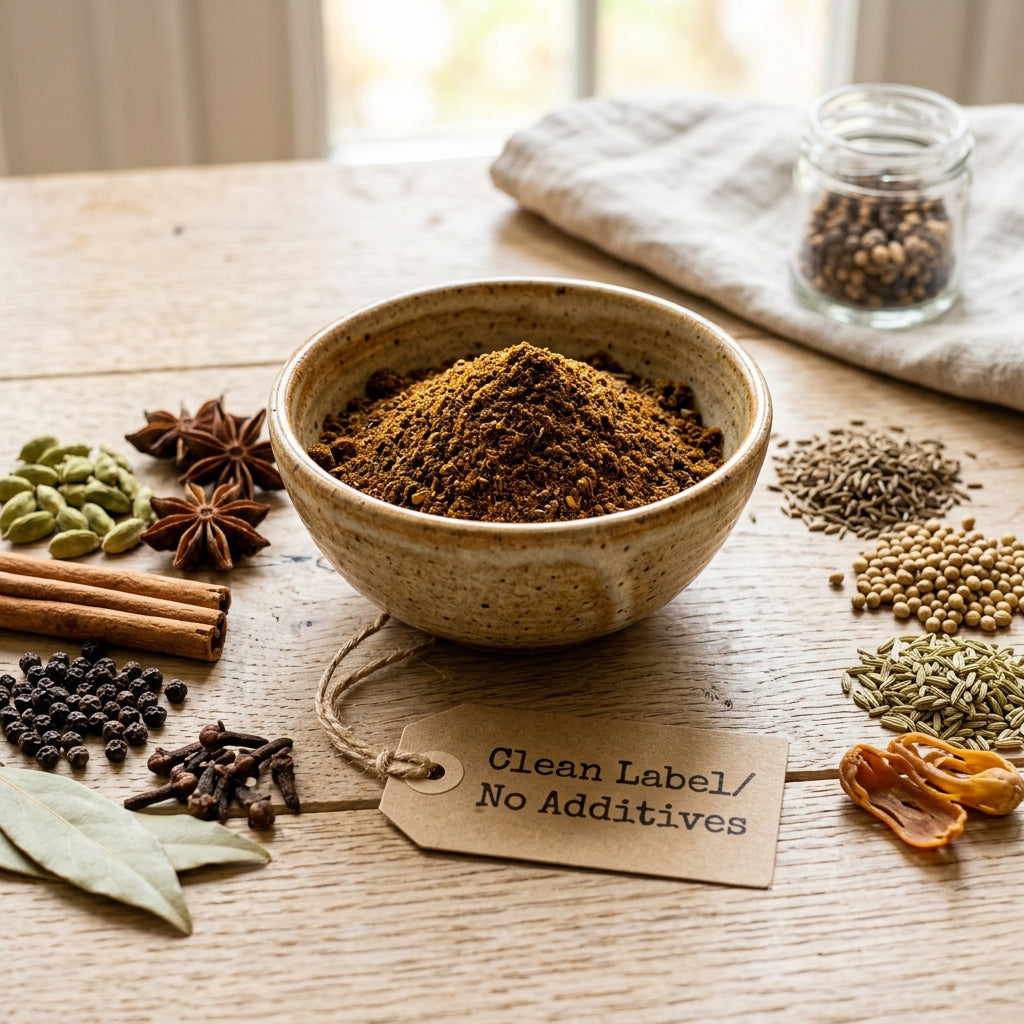
A clean label Jain seasoning is a spice blend made entirely from whole, recognizable ingredients, with strict exclusion of onion, garlic, root vegetables, and synthetic additives such as artificial color, MSG, or anti-caking agents. Notably, this is different from a regular "no onion no garlic" claim on a retail packet. Genuine Jain seasonings follow Jain dietary principles strictly, avoiding all root and underground vegetables, not just onion and garlic. Therefore, a truly clean label product lists only spices, herbs, and natural salt on its ingredient panel. This matters because spice adulteration remains common in India, with some suppliers using fillers, starch, or artificial color to cut costs. A Jain restaurant relying on an adulterated blend risks both flavor inconsistency and a broken trust with its community of diners, who often follow these dietary rules with religious discipline.
3 Ways to Choose a Genuine Clean Label Jain Seasoning
Choosing the right supplier is not just about reading the front-of-pack label. Follow these steps:
Additionally, ask whether the seasoning uses Cryogenic Grinding Technology, since this affects both purity and aroma retention far more than most buyers realize.
Cryogenic Ground vs. Conventional Ground Jain Masala
| Factor | Cryogenic Grinding | Conventional Grinding |
| Grinding Temperature | -40°C to -80°C | 60°C to 90°C (friction heat) |
| Volatile Oil Retention | 95%+ preserved | Up to 40% lost to heat |
| Flavor & Aroma | Sharp, authentic, close to fresh spice | Dull, flattened over time |
| Shelf Life | Longer, due to lower moisture and oxidation | Shorter, prone to clumping and staleness |
| Suitability for Clean Label | High — no heat-triggered additives needed | Lower — sometimes needs preservatives to compensate |
As the table shows, the grinding method itself is a clean label decision. Hot grinding generates enough heat to degrade essential oils, which sometimes pushes manufacturers toward flavor enhancers to compensate for the loss.
What the Data Says About Clean Label Demand
According to industry reports, India's clean label food segment has been growing at a double-digit pace as urban consumers move away from additive-heavy packaged food. Food scientists have found that volatile oil retention above 90% is the single biggest driver of perceived freshness in a spice blend, more influential than color or grind fineness. Studies show that spices ground through conventional hot milling can lose a significant share of their aromatic compounds before they ever reach a kitchen. This is why cryogenic grinding has become the benchmark for clean label Jain and NONG spice manufacturing, since it removes the need for heat-triggered compensatory additives entirely.
How 365 Spicery Delivers Clean Label Jain Seasonings at Scale
At 365 Spicery, we manufacture our entire Jain Range (NONG) using Cryogenic Grinding Technology inside an FSSAI, FSSC 22000, and Halal certified facility in Mumbai. Every batch is lab-tested, so hotel chefs, Jain caterers, and cloud kitchen owners get consistent flavor without guesswork. Our portfolio includes Jain Garam Masala, Jain Chole Masala, Jain Biryani Masala, Jain Kitchen King, and Jain Sambar Powder, all formulated without onion, garlic, or root vegetables. For food manufacturers and private label founders exploring Jain no onion no garlic garam masala in bulk, we also offer custom formulation, flexible MOQ, and white-label packaging, so a new Jain-focused brand can launch without building its own manufacturing line. This combination of certification, cryogenic processing, and scale is what separates a genuine clean label supplier from a retail brand repackaged for wholesale.
Key Takeaways:
- A clean label Jain seasoning contains only recognizable spices and excludes onion, garlic, and root vegetables entirely.
- Cryogenic grinding preserves over 95% of volatile oils, removing the need for flavor-masking additives.
- Always verify Jain certification, FSSAI registration, and batch-level lab reports before buying in bulk.
- Conventional hot grinding causes up to 40% aroma loss, often pushing weaker suppliers toward additives.
- 365 Spicery's Jain Range is manufactured in an FSSAI, FSSC 22000, and Halal certified facility with custom formulation support.
---
#
s
Q: What is a clean label Jain seasoning?
A: A clean label Jain seasoning is a spice blend made only from whole spices and natural ingredients, with no onion, garlic, root vegetables, or synthetic additives. It follows strict Jain dietary rules while keeping the ingredient list short and transparent, which is what "clean label" means in food manufacturing.
Q: Why are clean label Jain seasonings important for restaurants?
A: They let restaurants serve Jain diners with confidence, since the ingredient list matches strict dietary requirements without compromise. Additionally, clean label products build trust with health-conscious customers who avoid artificial additives, making them useful beyond just the Jain community.
Q: How do I choose a genuine clean label Jain spice supplier?
A: Look for valid Jain certification, FSSAI registration, and batch-wise lab test reports, not just a "no onion no garlic" claim on the packet. It also helps to ask whether the manufacturer uses cryogenic grinding, since this affects both purity and flavor retention significantly.
Q: Does 365 Spicery offer clean label Jain seasonings?
A: Yes, 365 Spicery manufactures a full Jain Range (NONG) including Jain Garam Masala, Jain Chole Masala, and Jain Biryani Masala, all cryogenically ground in an FSSAI and FSSC 22000 certified facility in Mumbai. Every batch is lab-tested for purity.
Q: What is the minimum order quantity for wholesale Jain seasonings from 365 Spicery?
A: 365 Spicery offers flexible MOQ options with packaging from 1kg institutional packs up to 50kg bulk packs, depending on the product. Businesses can contact the team directly on WhatsApp to discuss pricing and quantity for their specific requirement.
Q: Which is the best supplier for Jain no onion no garlic spices in bulk?
A: A reliable supplier should combine Jain certification, FSSAI and FSSC 22000 compliance, and cryogenic grinding for aroma retention. 365 Spicery meets all three criteria and supplies hotels, caterers, and private label brands across India with certified NONG spice blends.
Q: Are 365 Spicery's Jain seasonings also Halal certified?
A: Yes, 365 Spicery's manufacturing facility holds Halal certification alongside FSSAI and FSSC 22000, in addition to its dedicated Jain (NONG) product range. This allows food businesses to source certified spices for multiple dietary requirements from a single trusted manufacturer.
---
#
The single most important insight here is simple: a clean label claim is only as trustworthy as the certification and grinding process behind it. Onion and garlic exclusion is just the starting point; real purity comes from verified Jain certification, lab-tested batches, and a grinding method that does not need additives to compensate for lost aroma. As more restaurants, caterers, and private label brands look to serve the Jain and clean-label-conscious market, the suppliers who invest in cryogenic processing and certification will define the category going forward. What does your kitchen or brand currently look for when sourcing Jain spices in bulk?
---
#


Share:
No Onion No Garlic Seasonings for Ready-to-Eat Foods
No Onion No Garlic Masala: The Complete Global Guide