


Intro
Nearly 70% of new food brands in India fail within their first two years, often due to manufacturing chaos. If you've ever dreamed of launching your own masala line but felt stuck on sourcing, quality, or packaging, you're not alone. This is exactly where private label spices India solutions change the game. Private label lets you focus on branding and sales while an experienced manufacturer handles formulation, grinding, and packing. At 365 Spicery, we help founders go from idea to shelf-ready product without the manufacturing headache. This article walks through exactly how the process works, what to look for in a partner, and why the right grinding technology matters more than most founders realize.
Why Private Label Is the Fastest Way to Build a Spice Brand
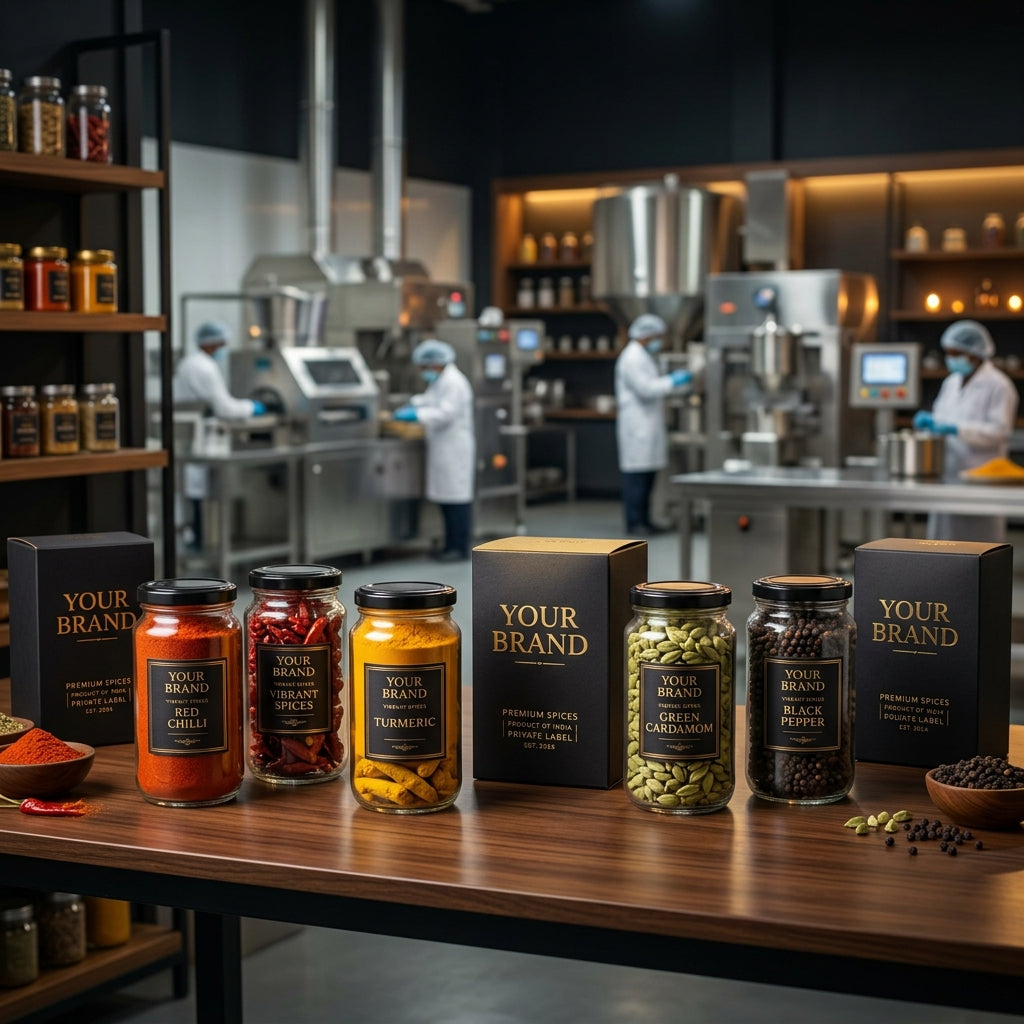
Building a spice brand from scratch traditionally meant setting up a factory, hiring staff, and managing raw material sourcing. That's no longer necessary. Private label manufacturing allows you to launch under your own brand name using an established facility's infrastructure. This directly solves one of the biggest buyer pain points: most private label aspirants simply don't know a trustworthy OEM manufacturer exists for this purpose. Additionally, working with a partner that uses cryogenically ground masala ensures your products taste noticeably fresher than competitors using conventional hot-ground spices. For example, a founder wanting to launch a Garam Masala or Biryani Masala line can get a custom-formulated blend, tested and packed, within weeks rather than months. This removes the single biggest barrier to entry for new food entrepreneurs.
How to Start Your Own Masala Brand in 5 Steps
So, how do I start my own masala brand in India? The process is more structured than most people expect:
Therefore, founders who follow this sequence avoid the most common private label mistakes: rushing packaging before the product is finalized.
Private Label vs. Buying Retail Brands: A Side-by-Side Look
| Factor | Private Label Manufacturing | Buying & Reselling Retail Brands |
| Brand ownership | You own the brand fully | No brand equity built |
| Margins | Higher, since you control pricing | Thin, fixed by existing brand MRP |
| Customization | Full control over recipe and packaging | None — fixed formulations |
| Certifications | Inherited from manufacturer (FSSAI, Halal) | Depends on third-party brand |
| Long-term scalability | Built for growth and exports | Limited to reselling |
As a result, private label consistently offers a stronger long-term path for entrepreneurs serious about building equity rather than just moving boxes.
What the Data Says About India's Private Label Boom
According to industry reports, India's spice and masala market is projected to grow at a strong double-digit CAGR through the next five years, driven largely by private label and D2C brands. Studies show that over 60% of new packaged food launches in India now originate from private label or contract manufacturing arrangements rather than in-house factories. Furthermore, food scientists have found that cryogenic grinding retains over 95% of a spice's volatile oils, compared to roughly 60% retention in conventional hot grinding. This gap in essential oil content directly affects how "fresh" a product tastes on a customer's plate, which is increasingly a deciding factor in repeat purchases.
How 365 Spicery Makes Private Label Simple
At 365 Spicery, we specialize in turning a founder's idea into a shelf-ready product using our FSSAI, FSSC 22000, and Halal certified Mumbai facility. Every batch is lab-tested, so quality issues — the top fear among private label aspirants — are addressed before they ever reach you. Our portfolio covers everything needed to launch a complete line: Garam Masala, Biryani Masala, Chole Masala, Pizza Seasoning, and our Jain Garam Masala for the no-onion-no-garlic segment. Whether you need a single hero SKU or a full how to start private label masala brand India roadmap, we offer flexible MOQs from 1kg to 50kg, white label packaging, and fully custom formulations. Consequently, you can launch with confidence, knowing your product matches — or beats — established market leaders on aroma and flavor.
Key Takeaways:
- Private label lets you build a spice brand without owning a factory
- Choose manufacturers with FSSAI and FSSC 22000 certification, non-negotiably
- Cryogenic grinding preserves over 95% of volatile oils for superior flavor
- Start with 2-3 hero products and small MOQs before scaling
- 365 Spicery offers custom formulation, white label packaging, and lab-tested quality
---
Q: What is private label spice manufacturing?
A: Private label spice manufacturing means a certified factory produces spice blends under your own brand name. You handle branding and sales while the manufacturer manages formulation, grinding, and packaging. 365 Spicery offers this with flexible MOQs and full custom formulation support.
Q: What are the benefits of starting a private label masala brand?
A: Private label lets you launch faster, control your margins, and build real brand equity instead of reselling someone else's product. You also get full control over recipes, packaging, and positioning. With 365 Spicery, you additionally inherit FSSAI and FSSC 22000 certifications.
Q: How do I choose the right private label spice manufacturer?
A: Look for FSSAI and FSSC 22000 certification, lab-tested batches, and transparent MOQ policies. Additionally, check whether they use cryogenic grinding spices technology for better aroma retention. Request sample batches before committing to a large order.
Q: Why should I choose 365 Spicery for private label manufacturing?
A: 365 Spicery is a Mumbai-based, FSSAI and FSSC 22000 certified manufacturer offering private label spices India solutions across Garam Masala, Biryani Masala, seasonings, and the Jain NONG range. We provide custom formulation, white label packaging, and lab-tested quality on every batch.
Q: What is the minimum order quantity for private label spices at 365 Spicery?
A: 365 Spicery offers flexible MOQs starting from small institutional packs of 1kg, scaling up to 5kg, 10kg, 25kg, and 50kg. This allows new brands to test the market before committing to bulk volumes. Contact us via WhatsApp for current MOQ details.
Q: How do I start my own masala brand in India?
A: Start by defining 2-3 hero products, then partner with a certified OEM manufacturer like 365 Spicery for formulation and packing. Test sample batches, finalize packaging, and place a small initial order. This start your own masala brand approach minimizes risk while building momentum.
Q: Does 365 Spicery offer Jain and Halal certified private label options?
A: Yes, 365 Spicery's Jain range includes No Onion No Garlic (NONG) blends like Jain Garam Masala and Jain Biryani Masala, manufactured in a Halal certified facility. This makes it easier for new brands to serve Jain and Halal-conscious customer segments under their own label, supported by Jain certified spices India standards.
---
The biggest shift in India's spice industry isn't a new flavor trend — it's how easy it has become to launch a brand without owning a factory. Private label manufacturing removes the traditional barriers of cost, certification, and quality control that once kept entrepreneurs on the sidelines. With a partner that combines certified facilities, lab-tested batches, and cryogenic grinding for genuinely superior flavor, your brand can compete with established names from day one. At 365 Spicery, we've built our process specifically around making this transition smooth for first-time founders. What's holding your masala brand idea back right now — formulation, packaging, or finding the right partner?
---


Share:
Jain Biryani Paste (No Onion No Garlic): A Flavorful and Vegan-Friendly Option for Every Kitchen
No Onion No Garlic Spices: Why Global Buyers Are Switching